Ahmedabad Iconic City Square
Ahmedabad, Gujarat, India
Cities across the world are often defined by iconic public spaces and landmarks that become symbols of their identity, places where people gather, celebrate, and experience the collective life of the city. From the vibrancy of Times Square to the skyline-defining presence of CN Tower, Tokyo Tower, and the global icon of Burj Khalifa, such landmarks combine architecture, public realm, and cultural expression to create powerful urban identities.
Site Area : 1,30,146 SF
Builtup Area : 6,35,462 SF
Services : Master Planning, Architecture,
Benchmarking, Market Analysis &
Feasibility Study, Concept Design,
Landscape Design Concept, PPP
Structuring & Implementation Model,
Risk Assessment of the Project,
Assessment of Linked Infrastructure and
Project Implementation Schedule,
Sustainability, Environmental Graphics
& Signage
Share ►
A Civic Landmark Envisioned as Ahmedabad’s Global Urban Stage
The Ahmedabad Iconic City Square is conceived in a similar spirit, as a contemporary civic landmark that gives the city both a distinctive brand and a vibrant public realm. Located along the rapidly emerging Sindhu Bhavan corridor, a precinct that has become a magnet for citizens during festivals, sporting events, and public celebrations, the project envisions a new urban destination capable of hosting events on a metropolitan scale.
As Ahmedabad continues to emerge as one of India’s most dynamic economic and cultural centers, with ambitions to host global events such as the Commonwealth Games and potentially the Olympics, the development seeks to establish a public space that reflects the city’s growing global stature. More than a landmark structure, the project is imagined as a shared civic platform where celebration, culture, and everyday urban life intersect.
A Vertical Landmark Anchored in a Democratic Public Realm
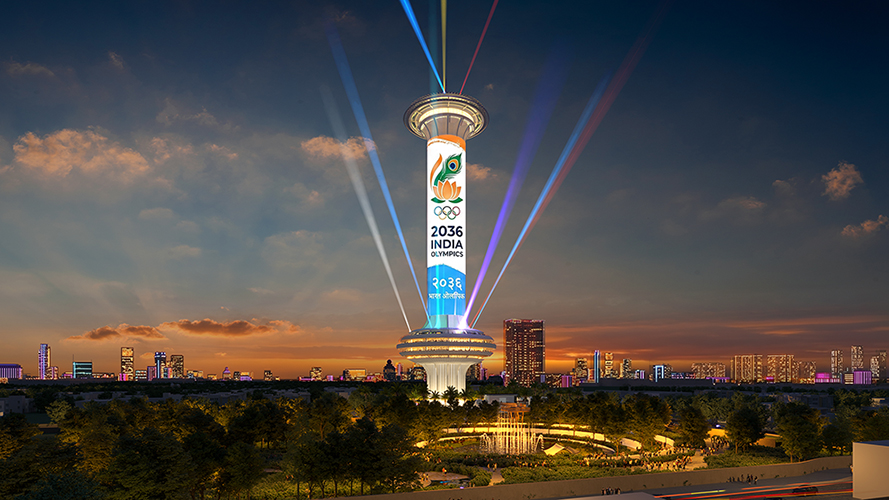
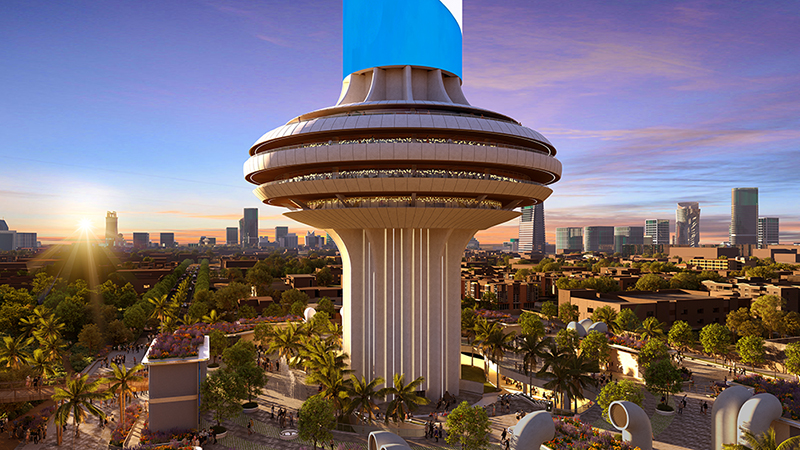
The masterplan organizes the development around a tall landmark tower that rises as a new marker in Ahmedabad’s skyline. Responding to recent development control reforms that open the possibility for high-rise, high-density mixed-use communities along the TOZ corridors within the city, the iconic vertical landmark symbolizes the aspirations of a rapidly evolving metropolis.
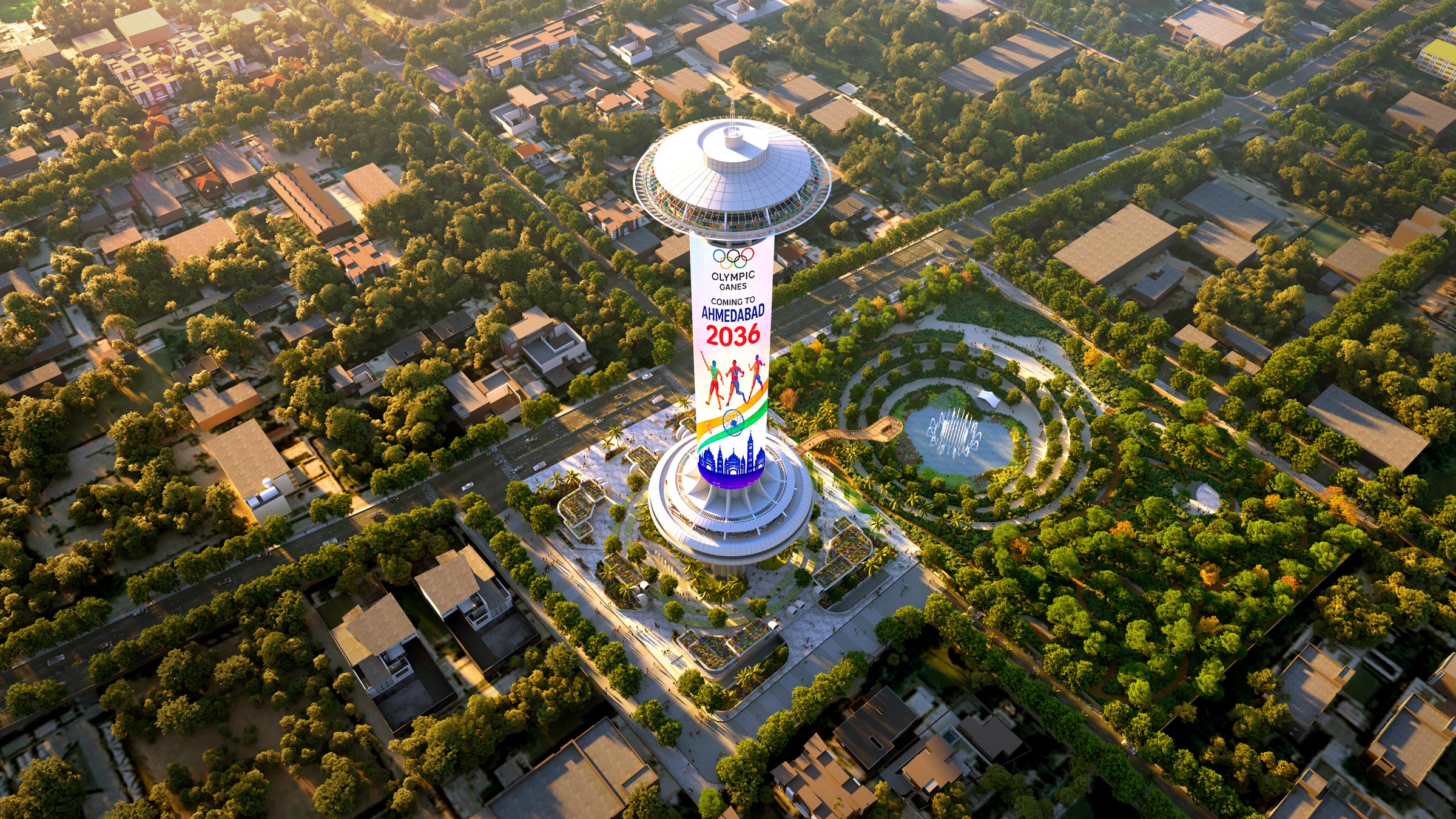
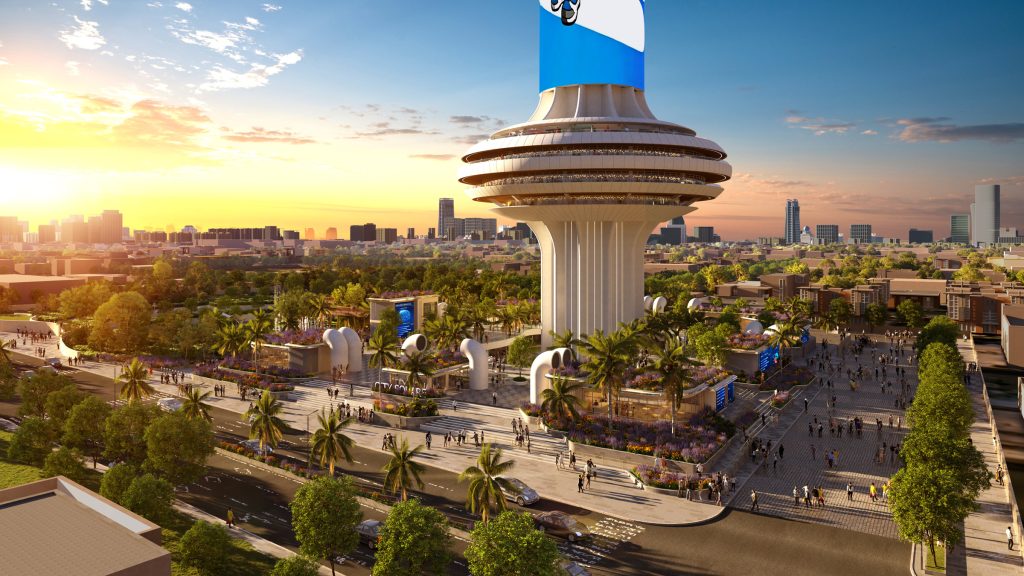
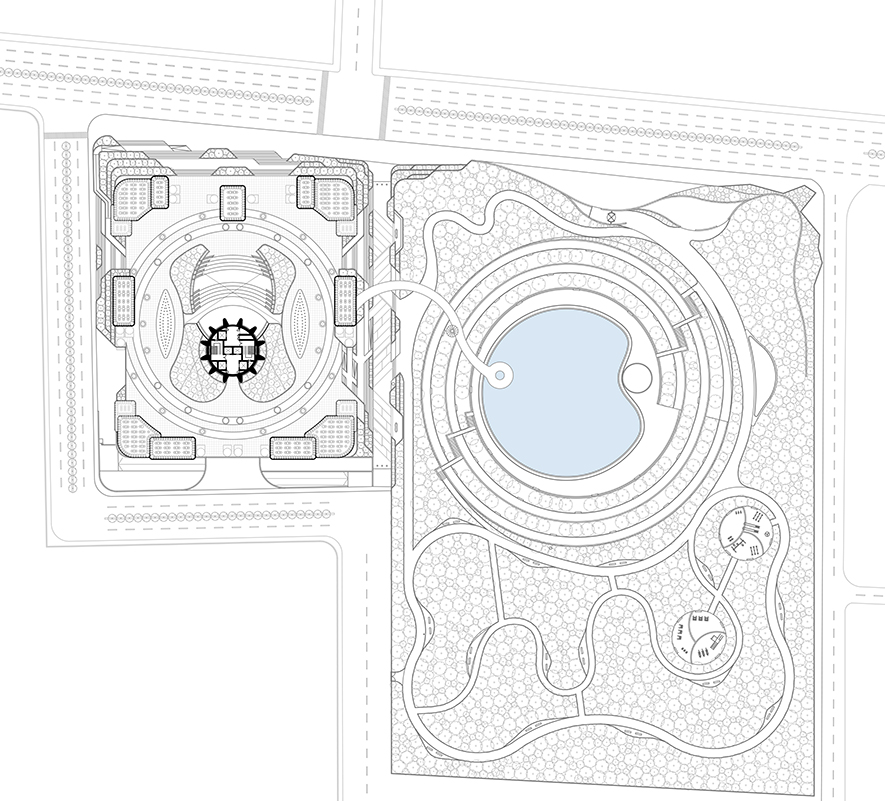
At ground level, the emphasis remains firmly on the public realm, with a civic plaza conceived as an active gathering space for the city. Much like contemporary urban stages such as Federation Square in Melbourne or Piazza Gae Aulenti in Milan, the space is envisioned as a setting where architecture frames collective civic life. Terraced landscape steps draw inspiration from the spatial memory of traditional stepwells, creating informal seating terraces that encourage people to linger, gather, and participate in public life. A central amphitheater forms the cultural heart of the plaza, hosting performances, festivals, and civic events, while food and beverage outlets positioned along the edges ensure the space remains animated throughout the day.
Extending beyond the plaza is an Oxygen Park, conceived as green “urban lungs”, creating a verdant breathing space within the dense fabric of the city. A sinuous pedestrian bridge connects this landscape to the tower precinct, creating a continuous spatial
sequence where water, greenery, and shaded pathways weave together to form an immersive urban experience.
A Layered Vertical Experience Connecting the City to the Sky
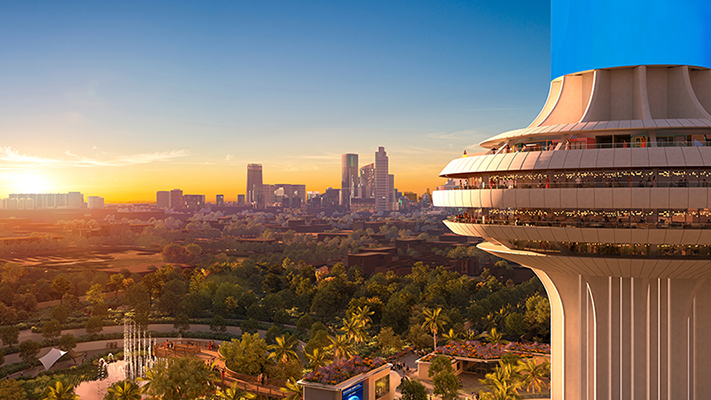
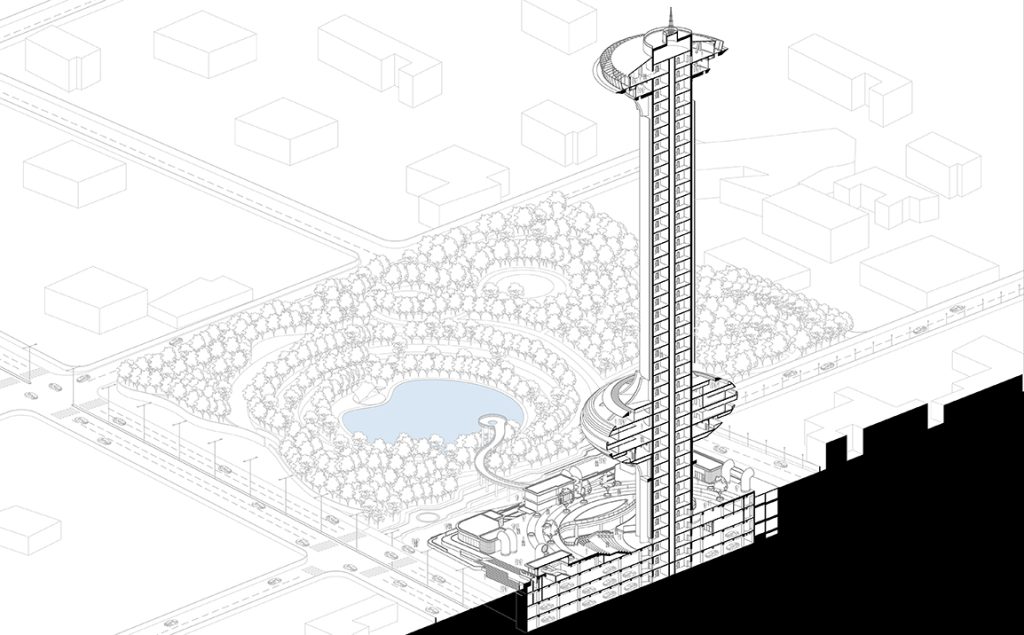
The tower itself is envisioned as a layered journey, where each level offers a distinct experience of the city. The double-height amphitheater, exhibit and retail zone at the lower level activate the base and establish a vibrant commercial interface on all four sides. Rising above this, at a height of 33.75 meters, the tower expands into a dramatic Sky Pavilion that houses two levels of high-end multi-cuisine restaurants offering panoramic views of the city, while a food court on the level above introduces a more informal dining environment.
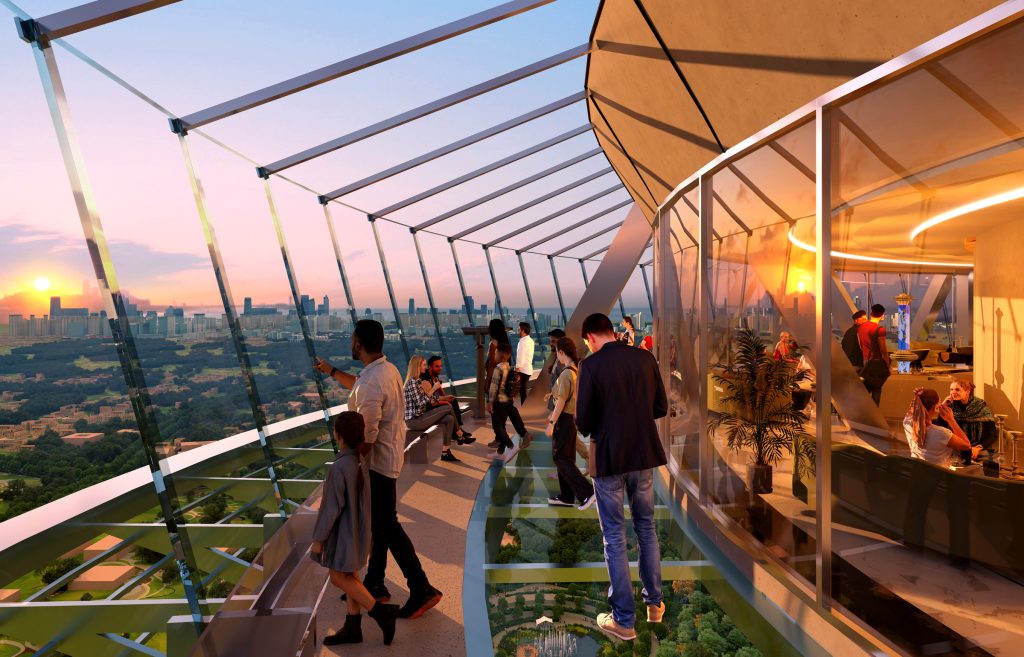
At a height of 175 meters, the ascent culminates in a Sky Gallery narrating the tower’s journey from concept to reality, while also presenting Ahmedabad’s cultural heritage. Above this, the observation deck at the summit offers sweeping views across the city and the Sabarmati landscape beyond.
A Digital Beacon Transforming the Skyline into a Living Canvas
One of the most striking elements of the design is
the tower’s cylindrical LED facade, envisioned as a
monumental digital display that wraps around the
entire height of the structure. Conceived as the
largest installation of its kind in India, the LED screen
transforms the tower into a dynamic living canvas,
broadcasting digital art, cultural narratives, live
events, and city celebrations.
Rather than a static landmark, the Ahmedabad Iconic City Square is envisioned as a defining urban destination where architecture, landscape, technology, and public life converge, creating a new civic landmark for a city stepping confidently onto the global stage.
"An Iconic Civic Landmark that integrates Architecture, Landscape, and Technology, to Shape Ahmedabad’s Global Presence."
