Masterplanning in sacred landscapes demands a sensitive negotiation between faith, nature, and the rhythms of everyday life. Such environments are not merely destinations but living cultural territories shaped by centuries of pilgrimage, community traditions, and ecological processes. Designing for these contexts requires a careful balance, strengthening infrastructure and visitor experience while preserving the spiritual character and fragile ecosystems that define the place. The masterplan for Beyt Dwarka Island responds to this challenge by envisioning a holistic framework that integrates
pilgrimage, ecology, and community life within a sustainable and culturally grounded development strategy.
Site Area : 3076.462 Acres Services :Master Planning, Architecture, Urban Design, Landscape Design, Detail Project Report (DPR), Infrastructure
Engineering, Sustainability
Share ►
Located approximately 30 km north of the prominent pilgrimage site of Dwarka along the Arabian Sea, Beyt Dwarka is revered as the residence of Lord Krishna during his reign. As an integral part of both the Char Dham yatra and the Krishna pilgrimage circuit, the island attracts thousands of pilgrims each year. With the construction of a new sea bridge connecting Okha to Beyt Dwarka and increasing tourism across the region, the need for a structured development strategy became critical. The masterplan envisions the transformation of the island into a prominent religious tourism destination while preserving its ecological character and sacred identity.
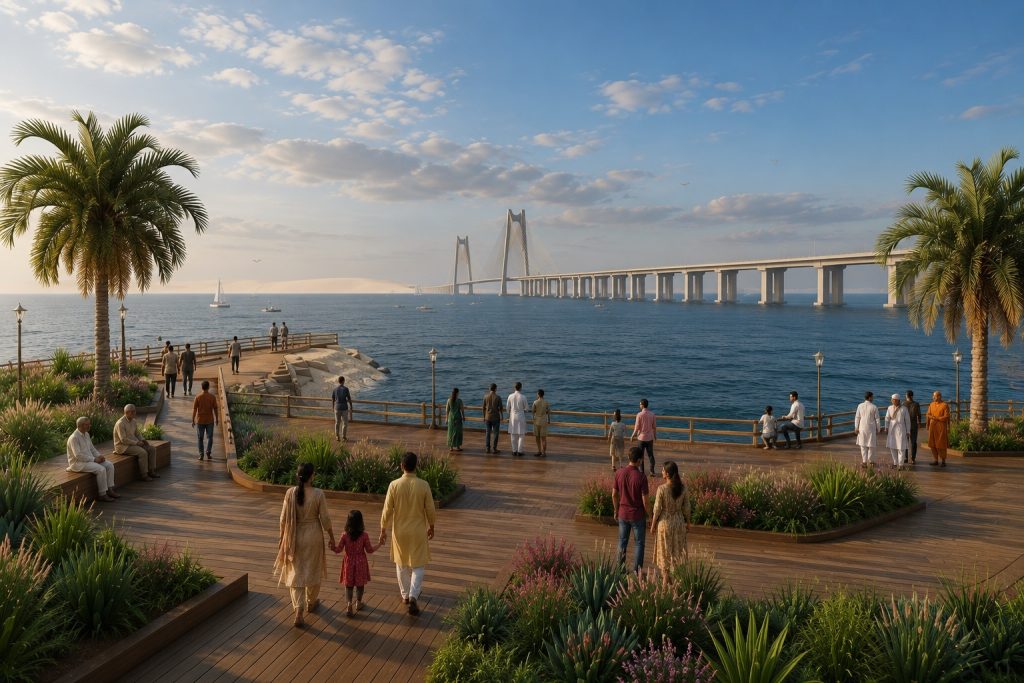
Sacred island landscape where
mythology, sea, and pilgrimage
converge
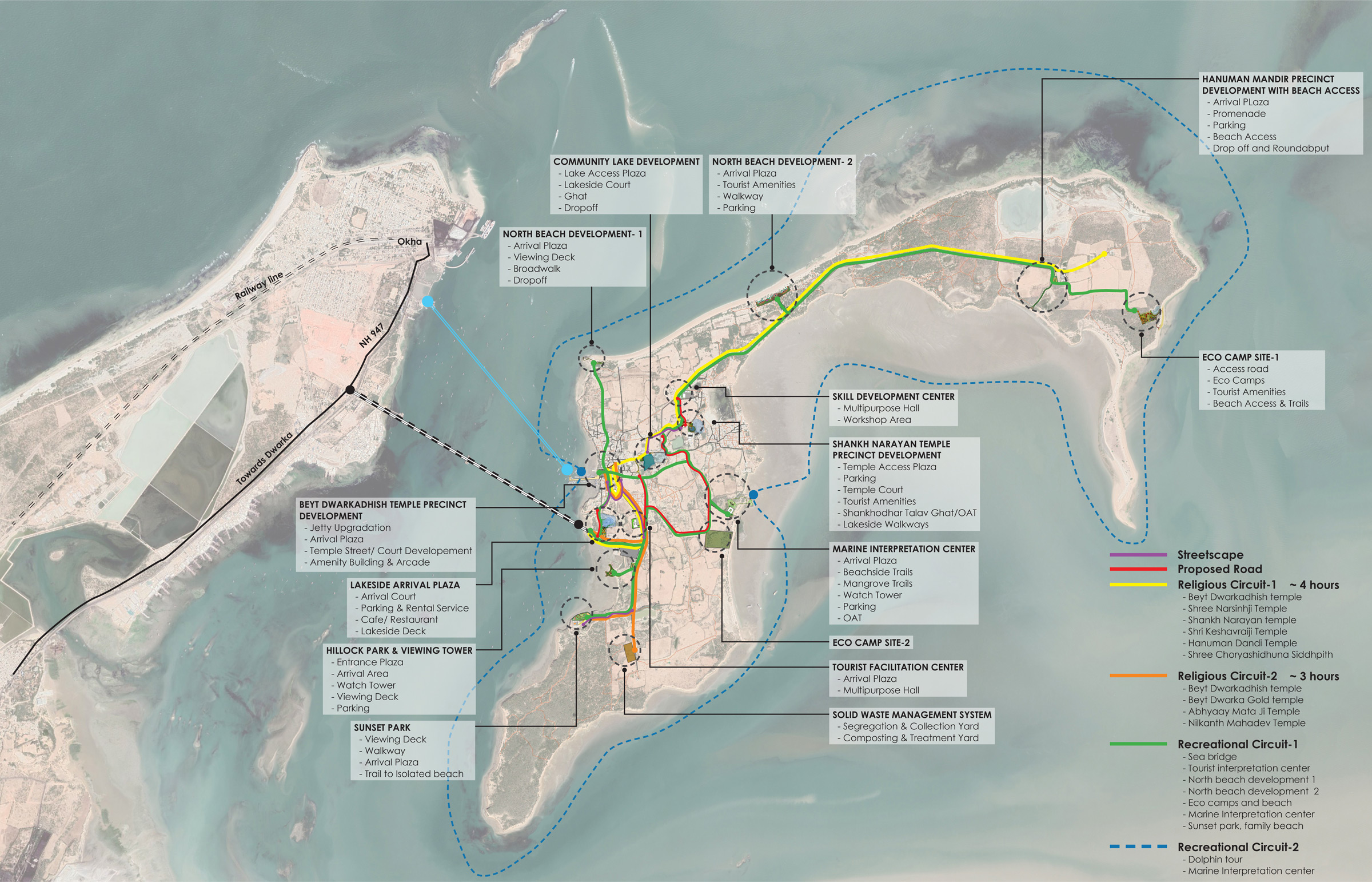
The planning approach is guided by a detailed assessment of the island’s physical, cultural, and ecological assets. Beyt Dwarka spans approximately 1,245 hectares and comprises coastal edges, mudflats, sandy beaches, mangroves, and village settlements, interspersed with temples and shrines. Despite its religious importance, the island lacks organized infrastructure, visitor amenities, and coherent public spaces. Informal pathways, unstructured arrival points, and limited waste management infrastructure pose challenges in accommodating increasing visitor numbers while protecting fragile ecosystems.
Responding to these conditions, the masterplan proposes an integrated framework that organizes pilgrimage routes, strengthens arrival experiences, and introduces sensitively designed tourism infrastructure across the island. The vision focuses on three key objectives: enhancing the spiritual journey for pilgrims, unlocking the island’s tourism potential through context-sensitive attractions, and creating sustainable livelihood opportunities for the local community.
A coherent framework shaping movement, memory, and discovery
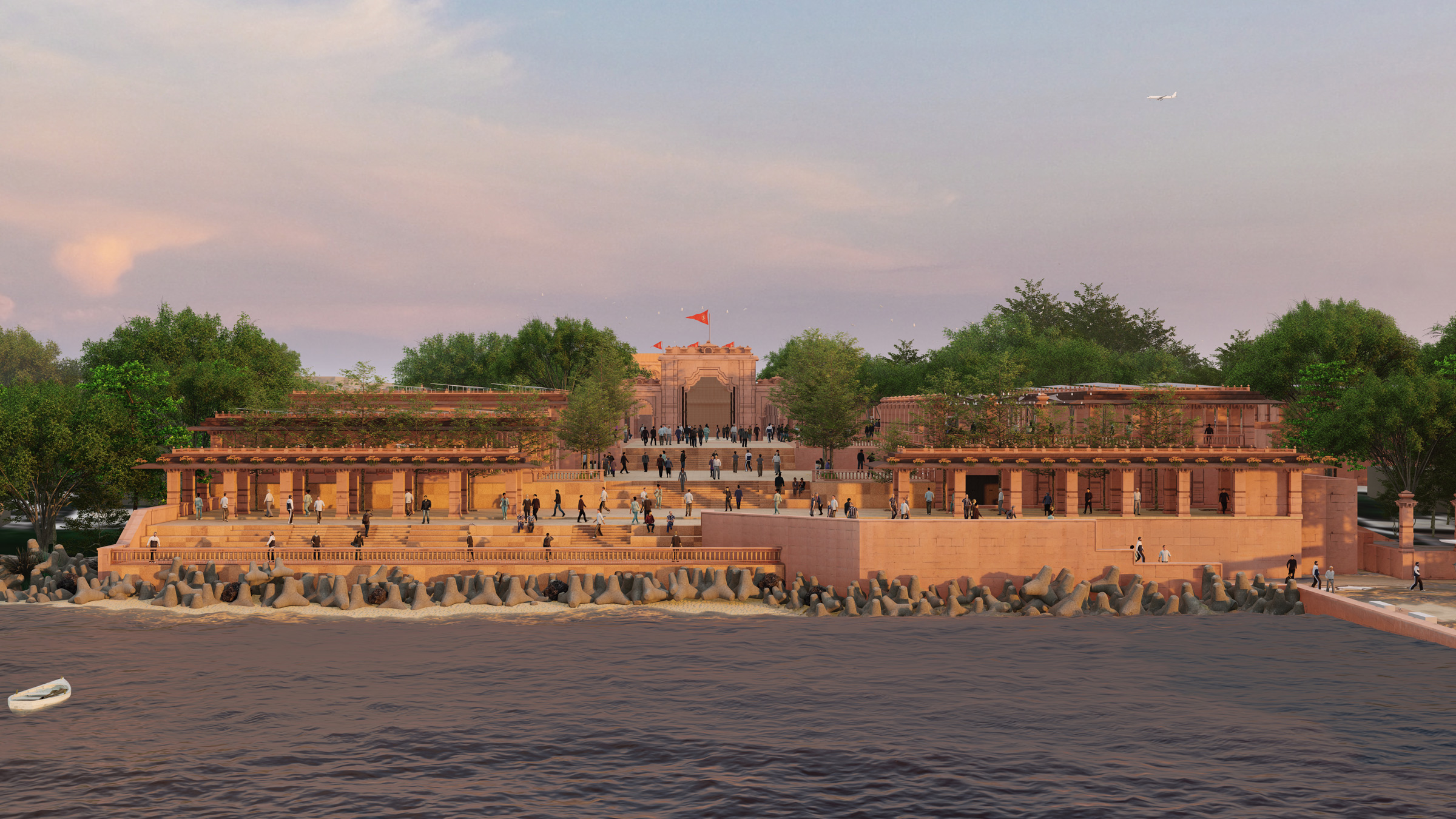
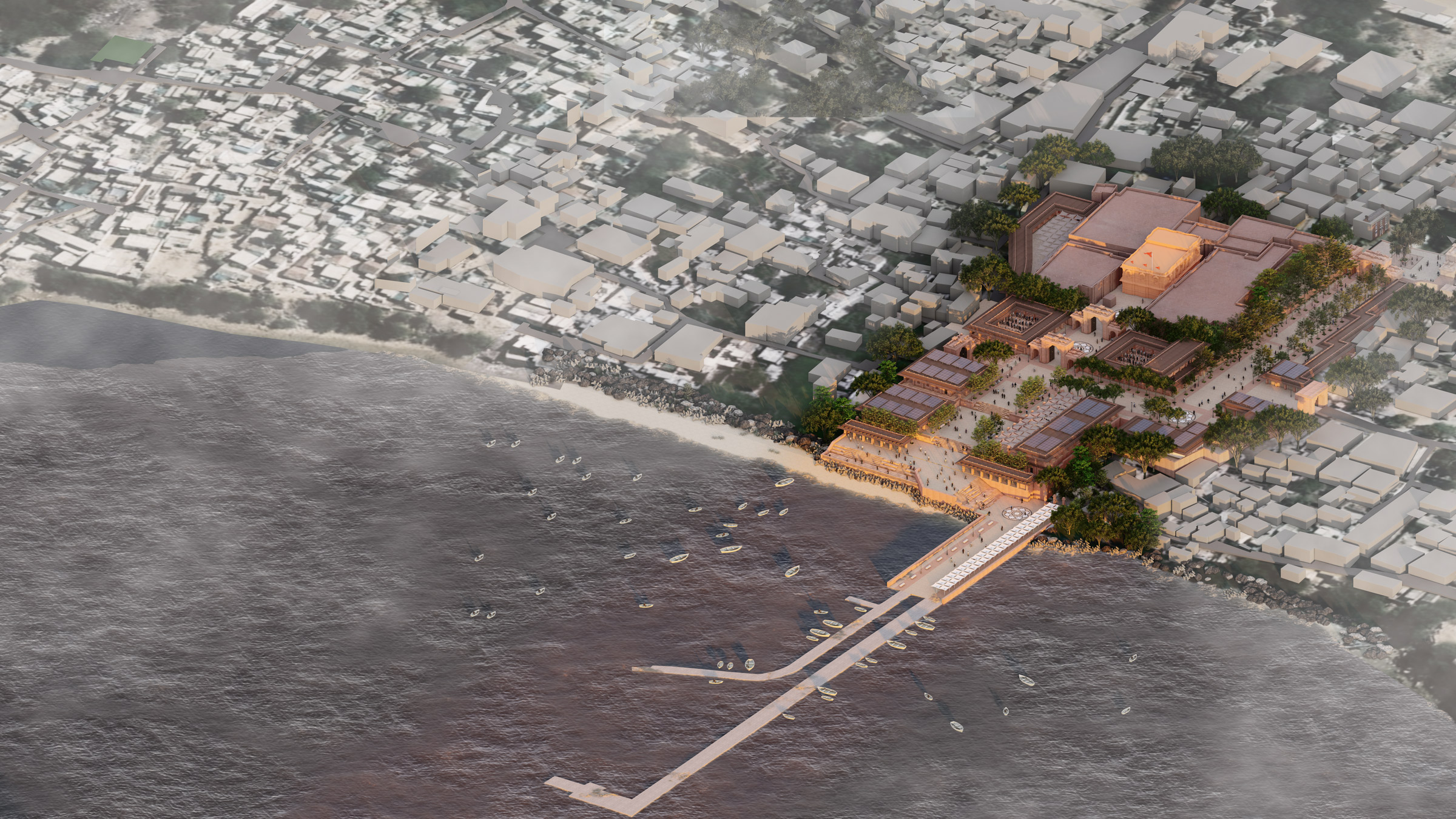
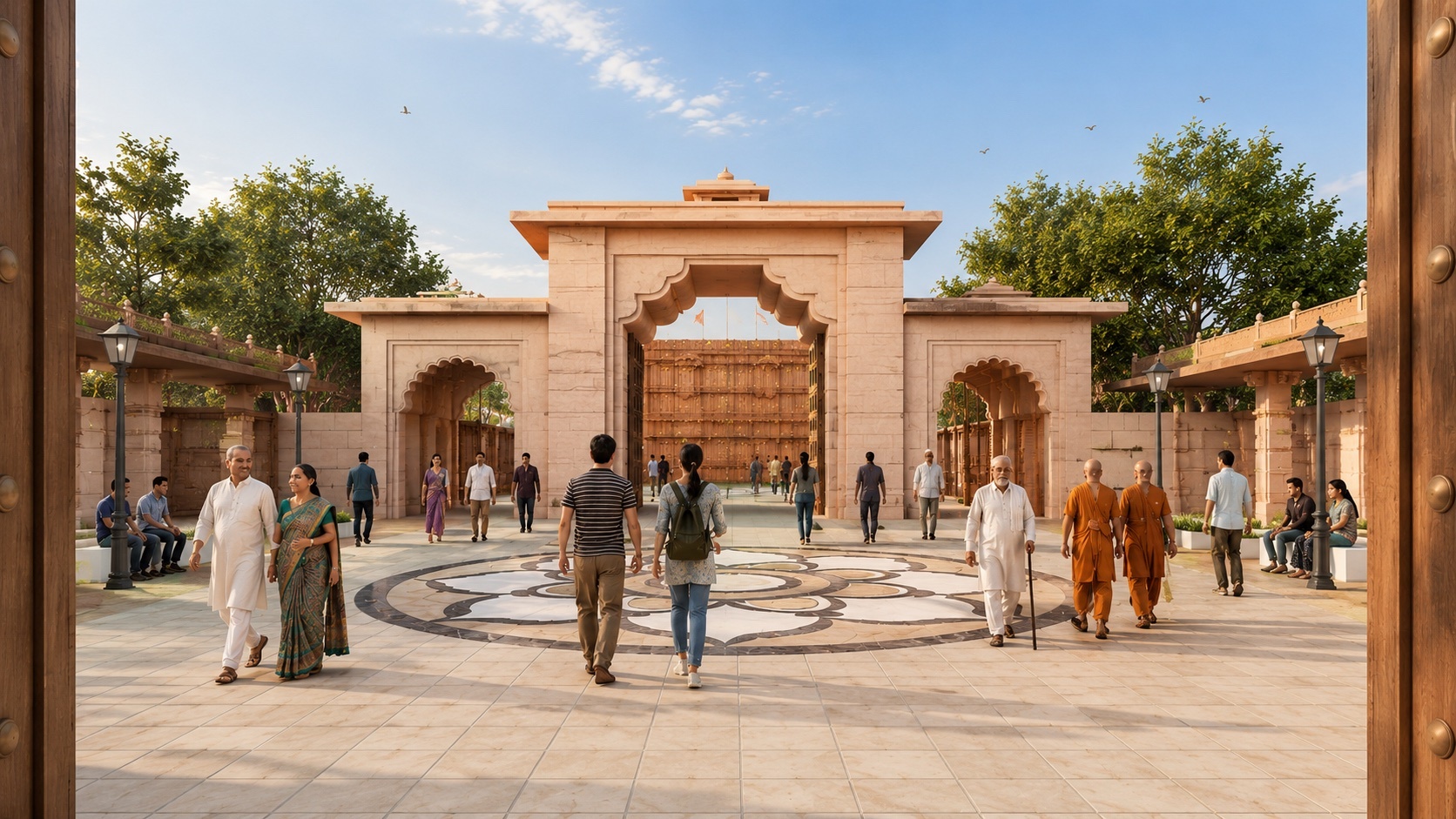
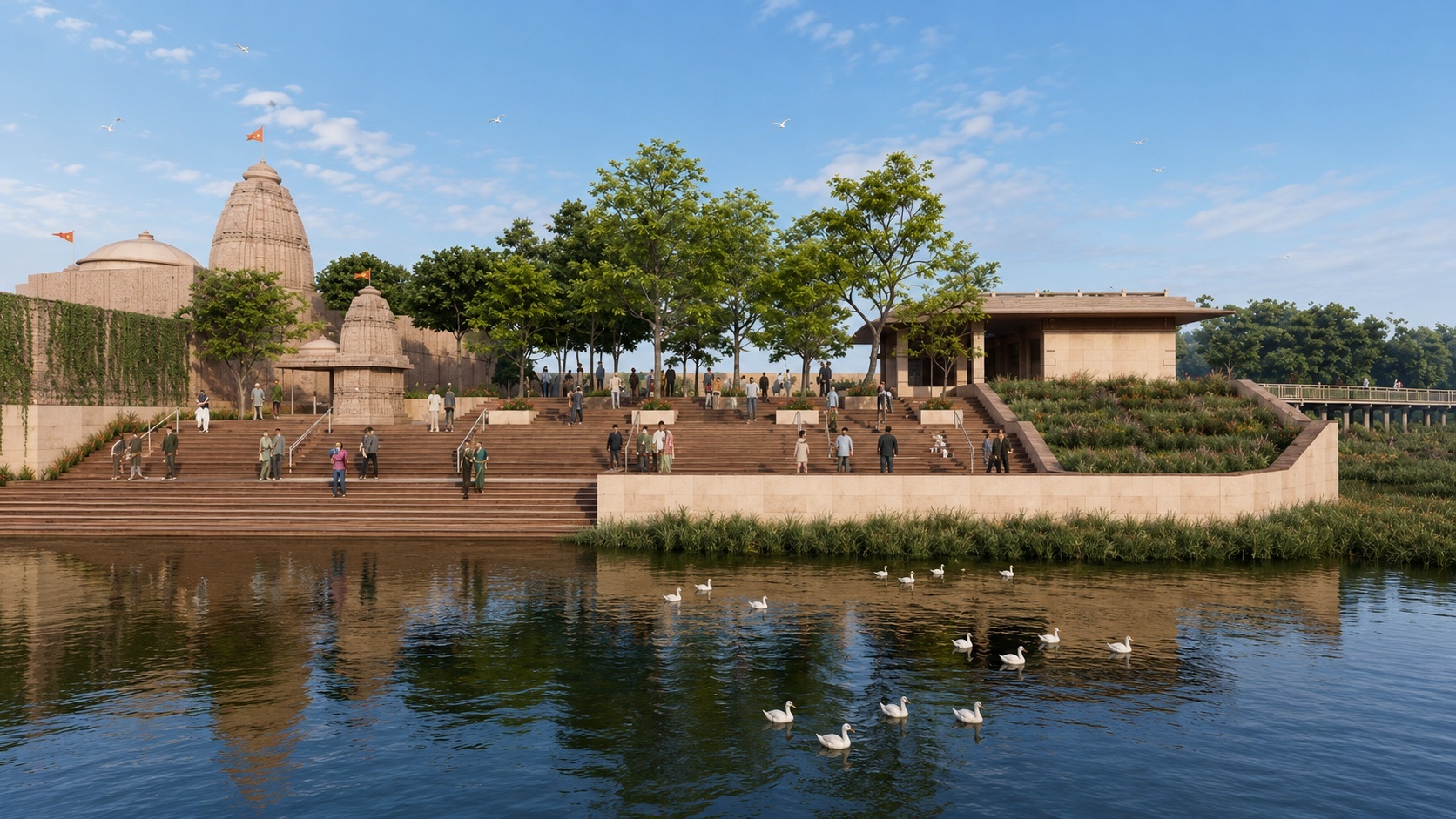
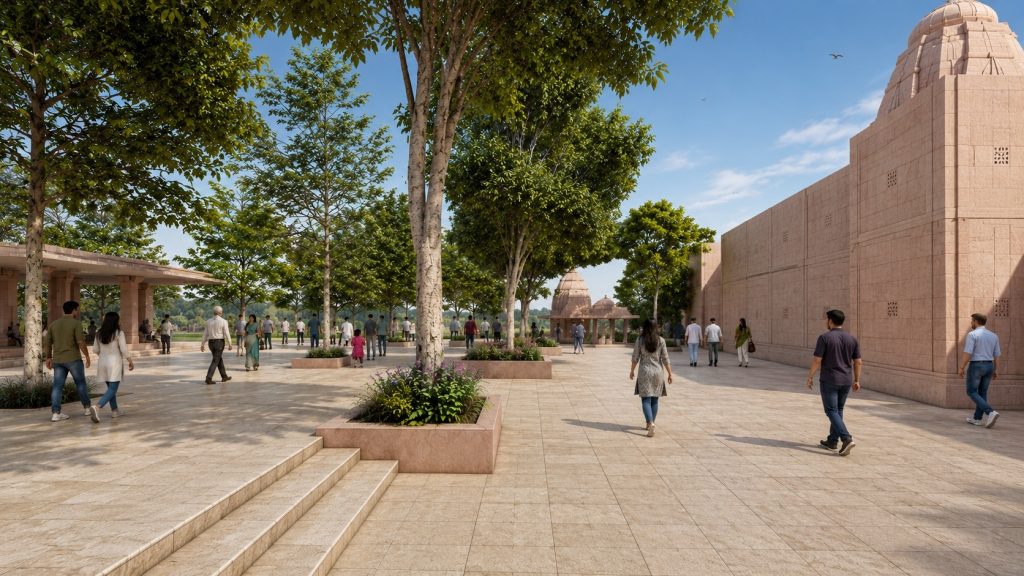
At the heart of the proposal is the redevelopment of the Dwarkadhish Temple precinct, where the majority of pilgrims arrive by ferry. The design reorganizes the jetty arrival sequence, creating a structured transition from the sea to the temple complex through plazas, shaded colonnades, and improved queue management spaces. This intervention enhances the spiritual experience while accommodating growing visitor numbers in a dignified and organized environment.
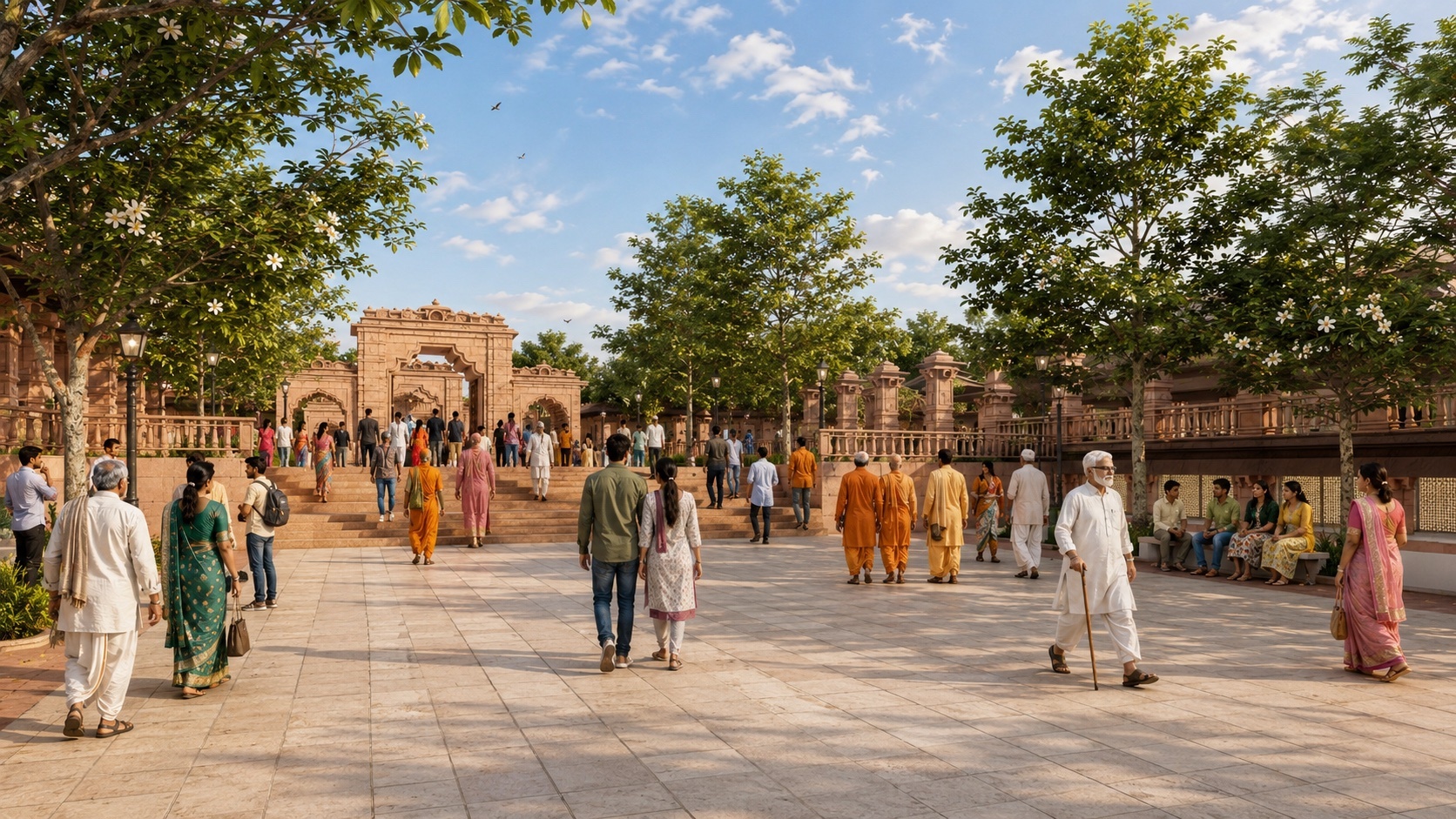
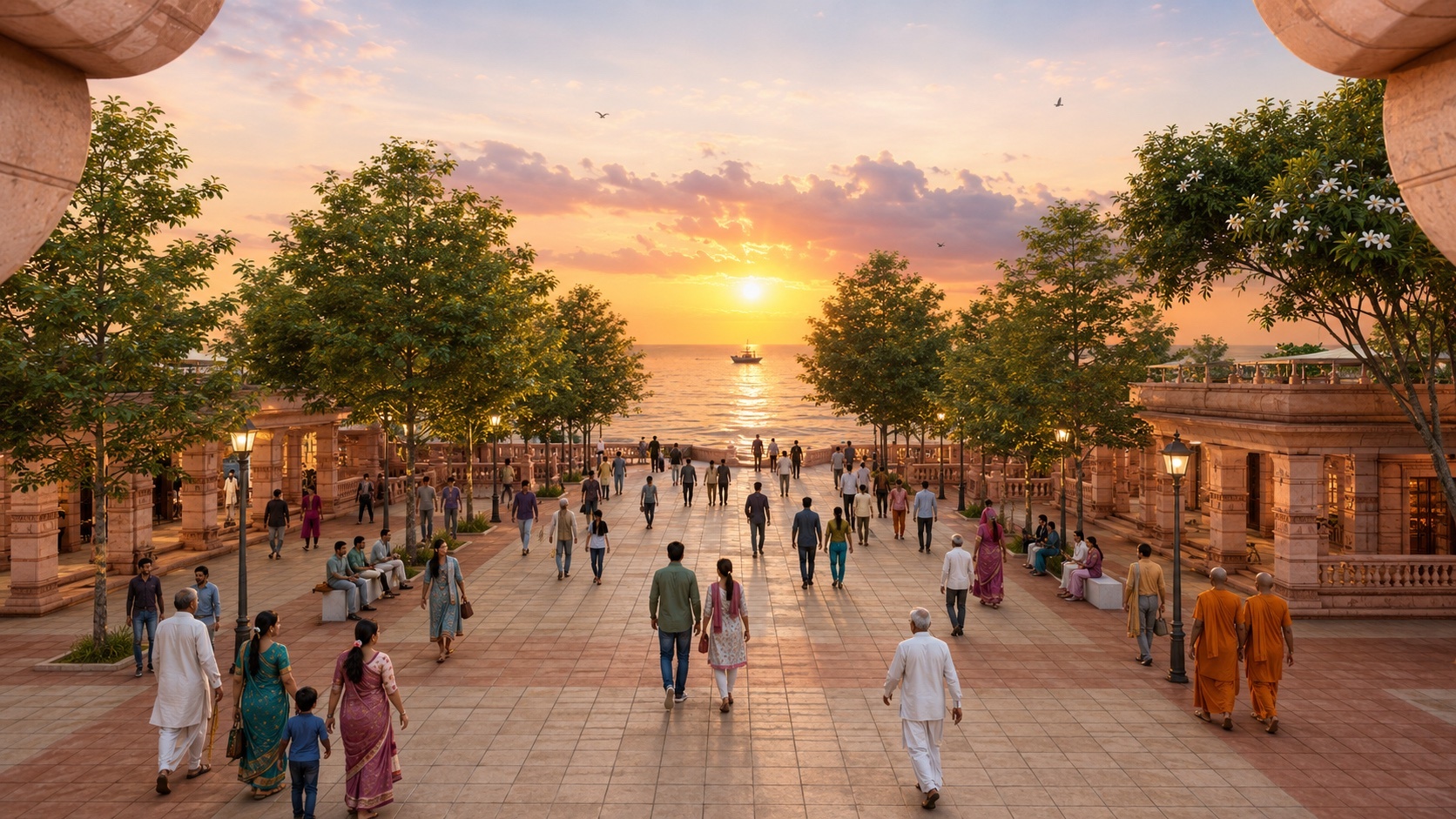
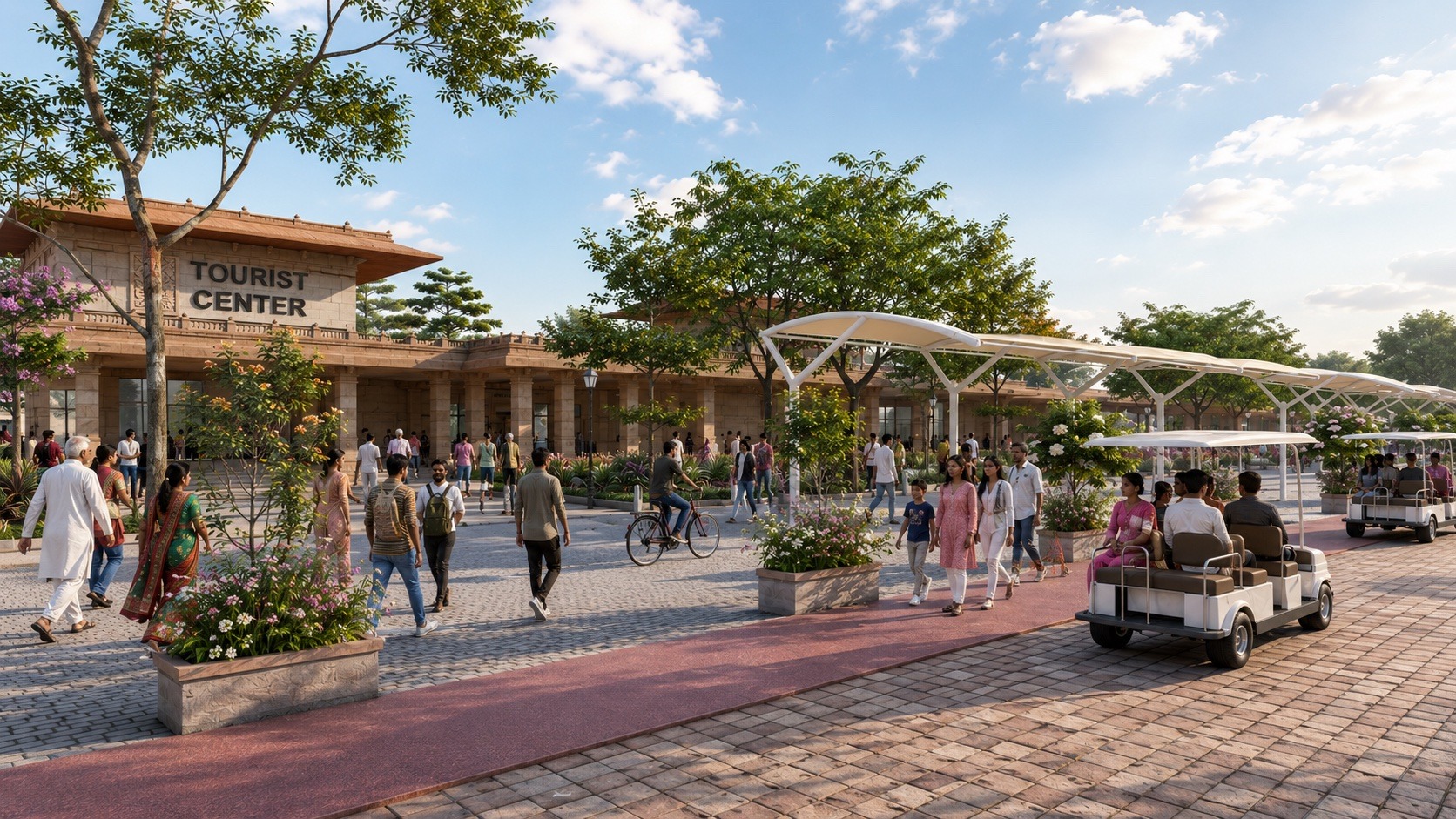
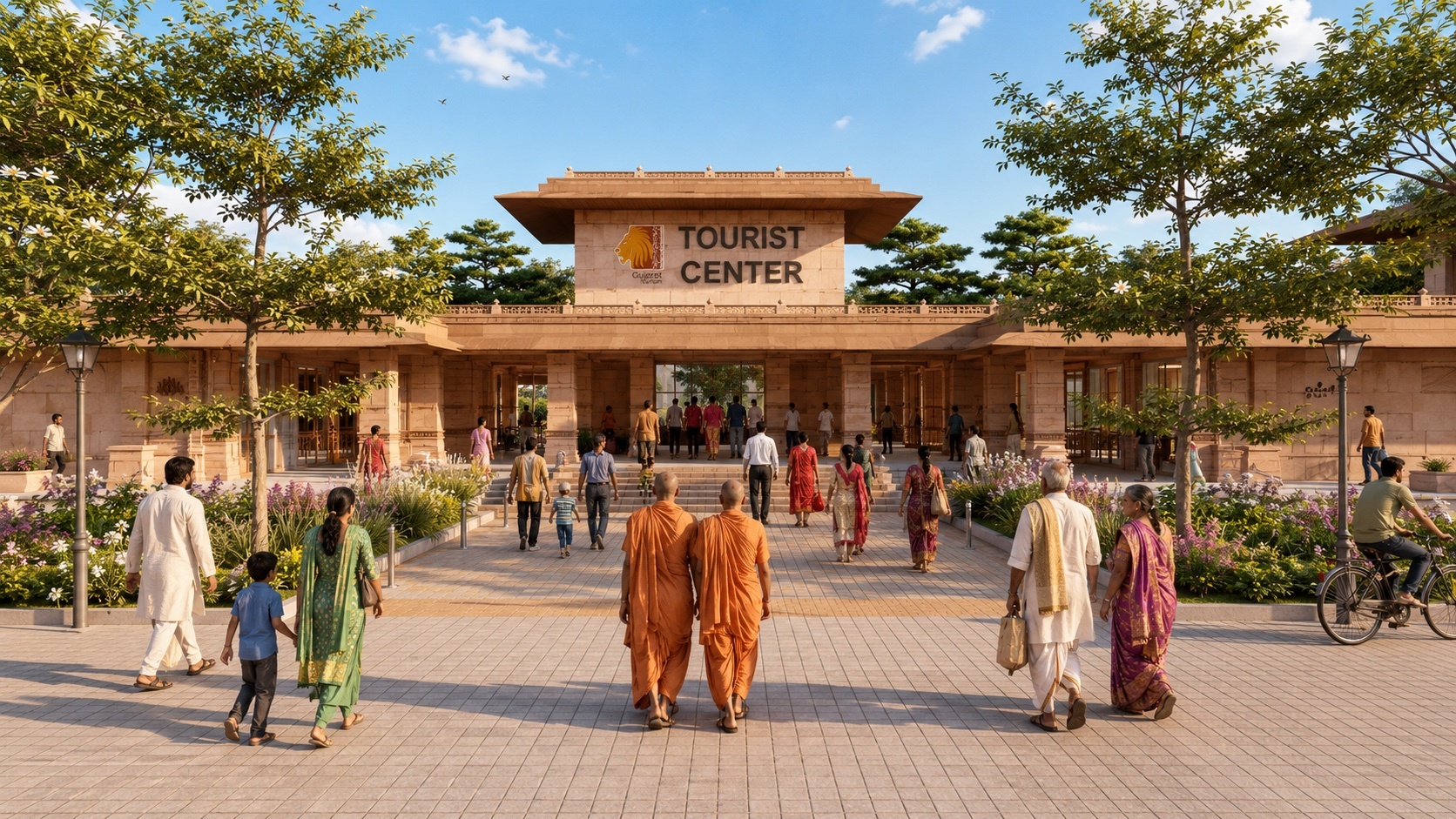
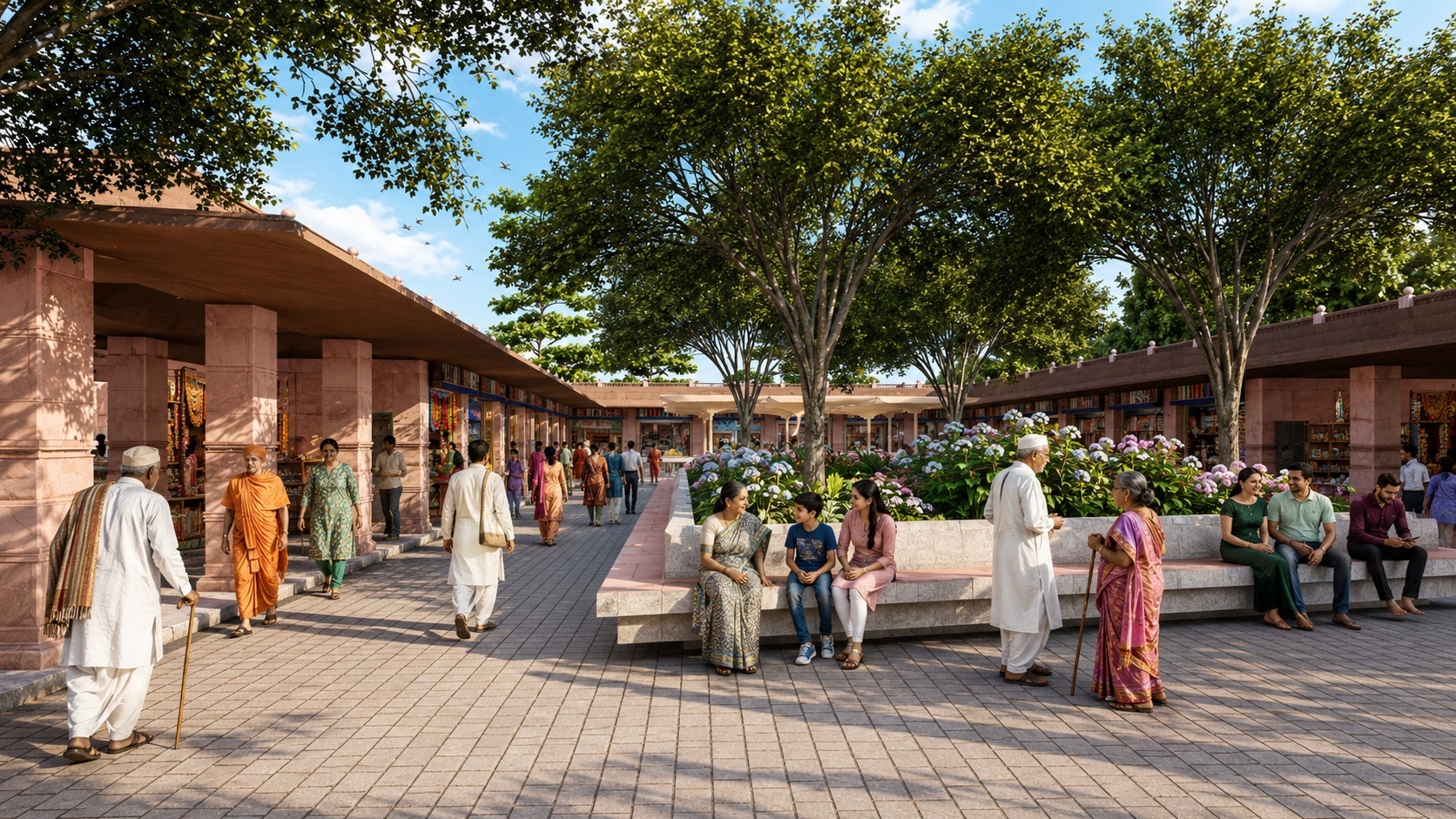
Complementing the temple precinct are a series of interconnected developments across the island. Streetscape improvements create a ceremonial pedestrian route linking the Dwarkadhish Temple to the Shankh Narayan Temple, transforming everyday streets into vibrant cultural corridors. A Tourist Facilitation Centre with a civic plaza and local haat provides orientation, visitor services, and opportunities for local artisans and vendors. The development of recreational spaces, such as Hillock Park and North Beach, encourages tourists to spend more time in the region, while a network of roads and pedestrian routes improves accessibility across the island.
Coastal horizons, sacred traditions, and
community life shaping the pilgrim
experience
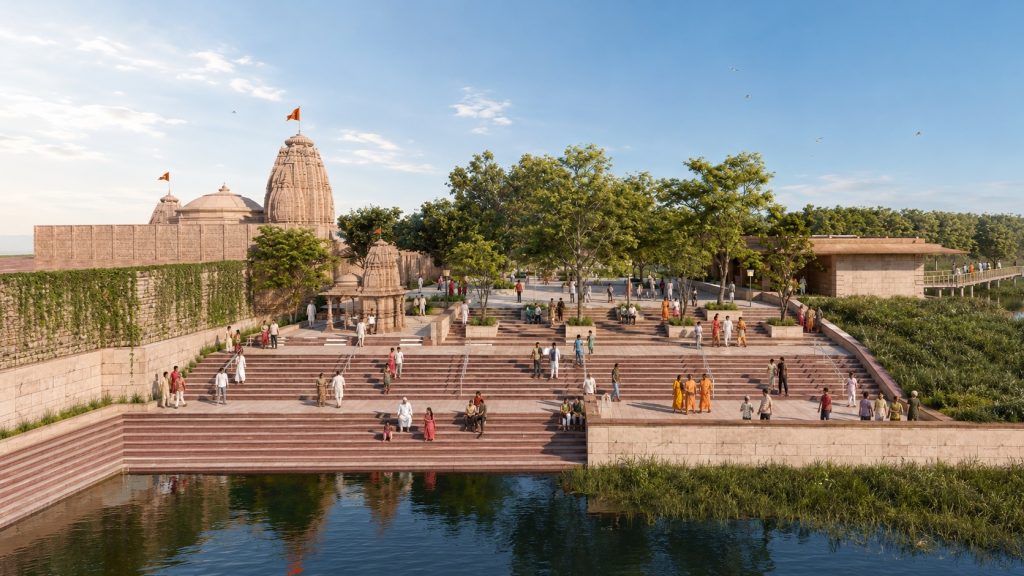
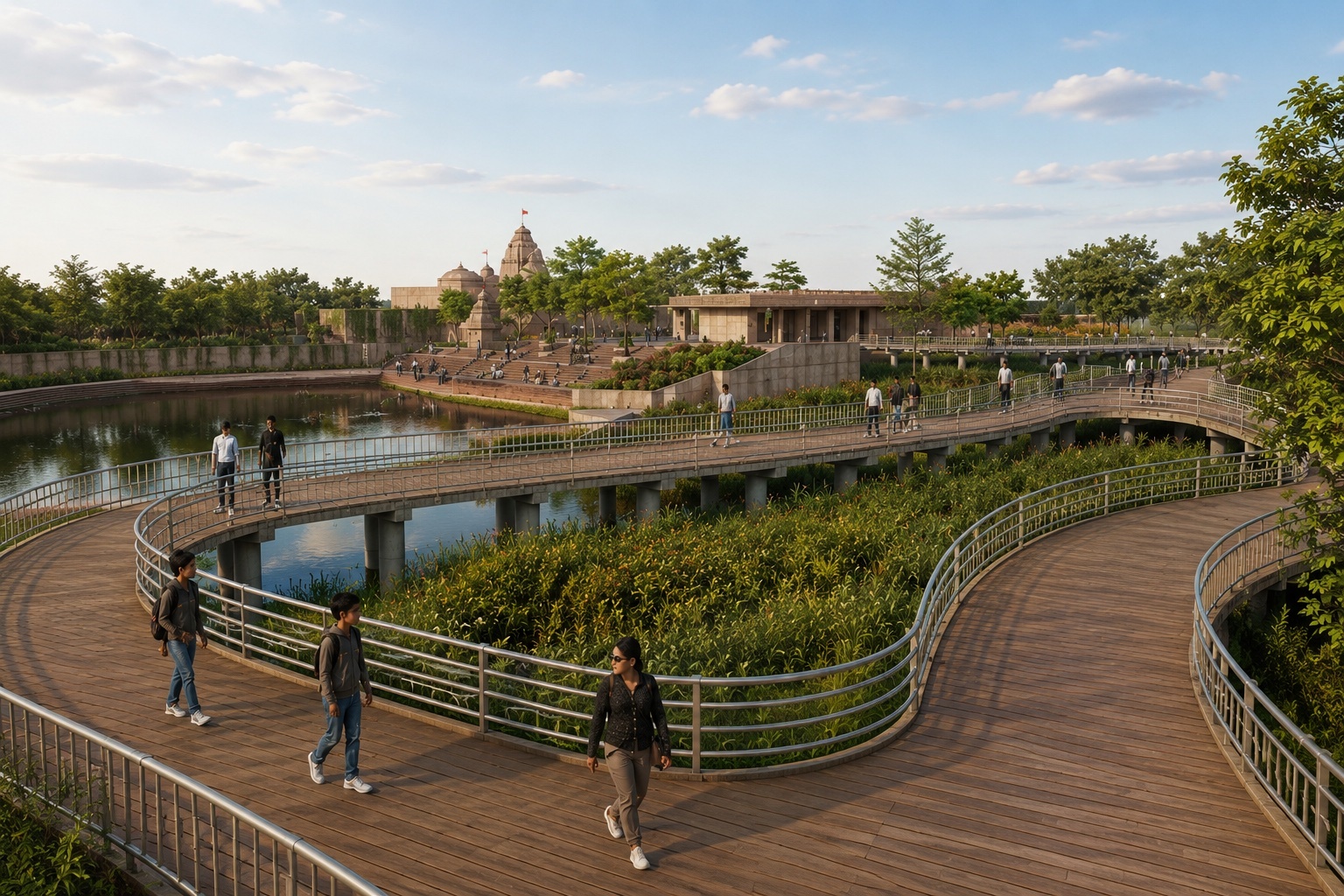
Future phases of the project extend beyond pilgrimage infrastructure to include ecological and recreational destinations such as Hanuman Temple, Sunset Park, community lakefronts, eco-campsites, and a Marine Interpretation Centre. These initiatives celebrate the island’s coastal ecosystems of mangroves and marine habitats, while encouraging responsible tourism and longer visitor stays.
Equally significant is the emphasis on community integration. Skill development facilities, improved infrastructure, and tourism-related livelihood opportunities ensure that local residents remain active participants in the island’s transformation. Through this holistic approach, the Beyt Dwarka Masterplan establishes a framework for sustainable pilgrimage destinations, where heritage, ecology, and community coexist within a carefully guided development vision.
"A holistic vision that reimagines a sacred
landscape as a coherent and sustainable
destination, shaped by faith, ecology, and
community life."
 Pune, Maharashtra, India