Set amidst the Aravalli range, the sacred town of Ambaji, home to one
of the most revered Shakti Peeth in India, draws over 80 million pilgrims
annually, with the numbers rising steadily every year. The site demands
not only conservation of its deep spiritual and mythological significance
but also a visionary reimagination to meet the needs of scale, flow, and
sanctity. The proposed 50-year masterplan envisions a future-ready,
experientially rich, and ecologically sensitive pilgrimage destination,
aiming to integrate divine geography with civic clarity.
Site Area : 45 Ha. Services :Feasibility Study,
Programming, Master Planning, Urban Design, Architecture, Engineering, Detailed Project Report (DPR), Transportation, Infrastructure Planning, Wayfinding & Signages, PMC, Landscape Design, Sustainability, Lighting Design, Art
Share ►
A Sacred Spine Uniting Temple, Terrain, and Time
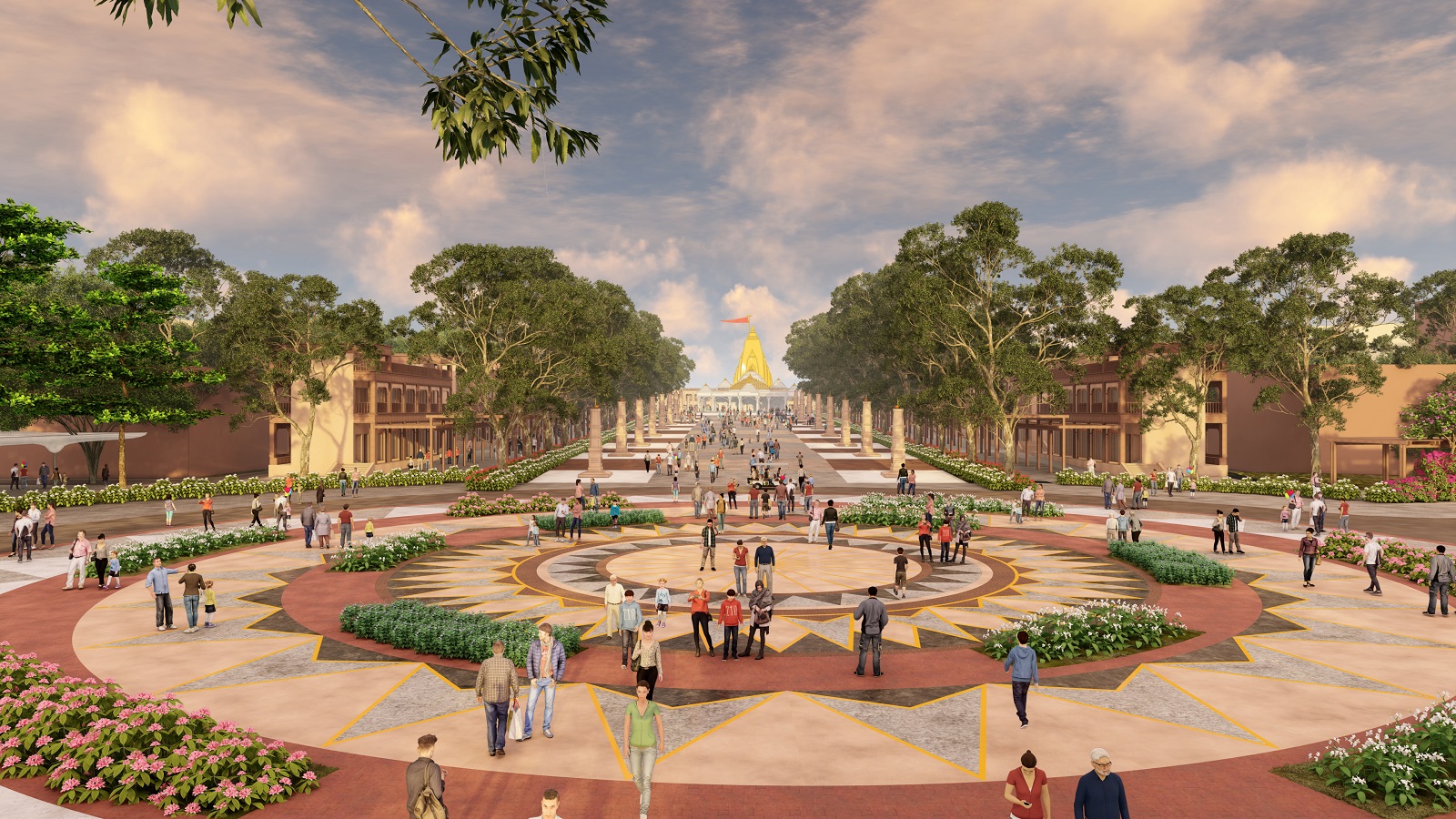
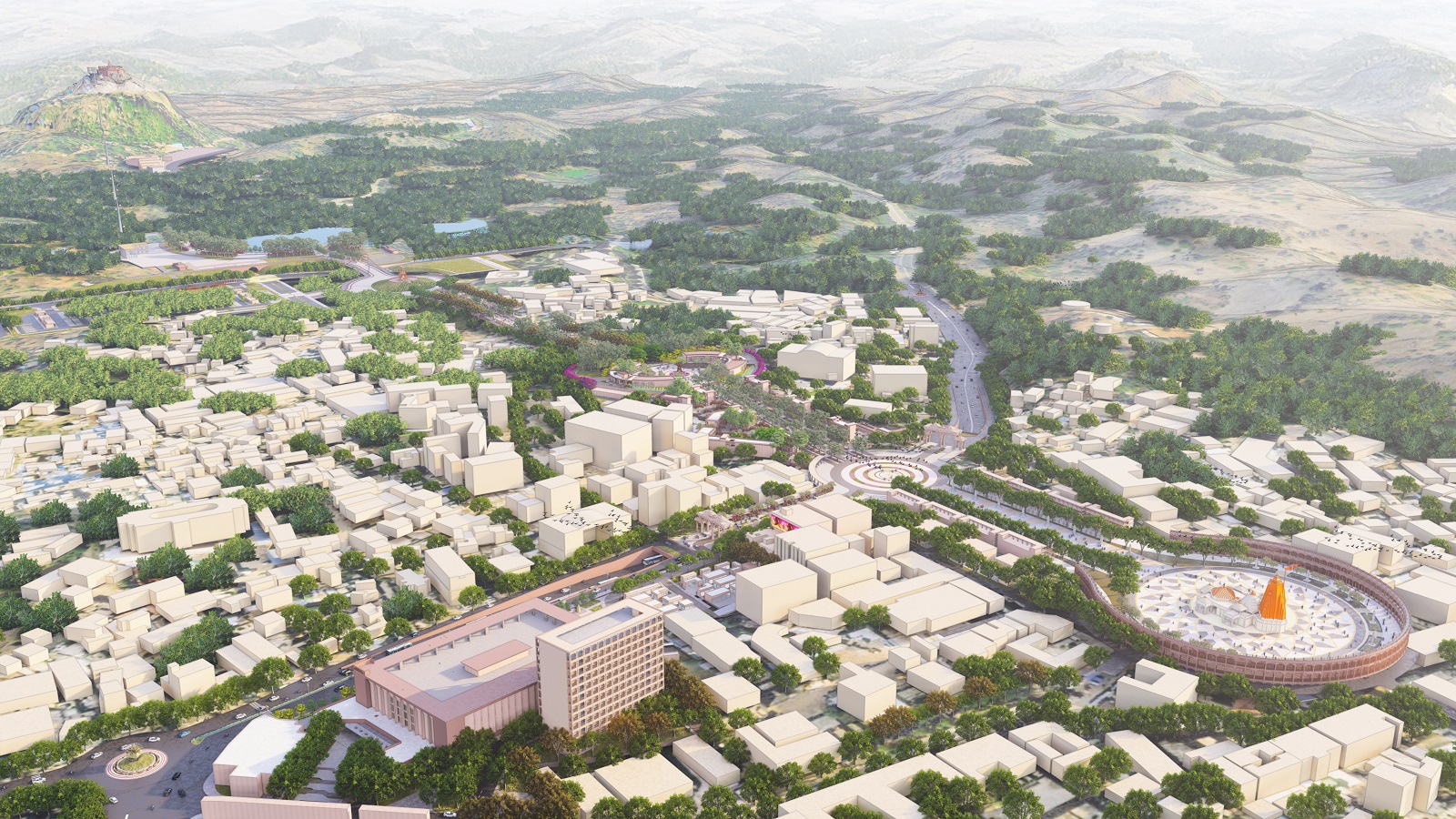
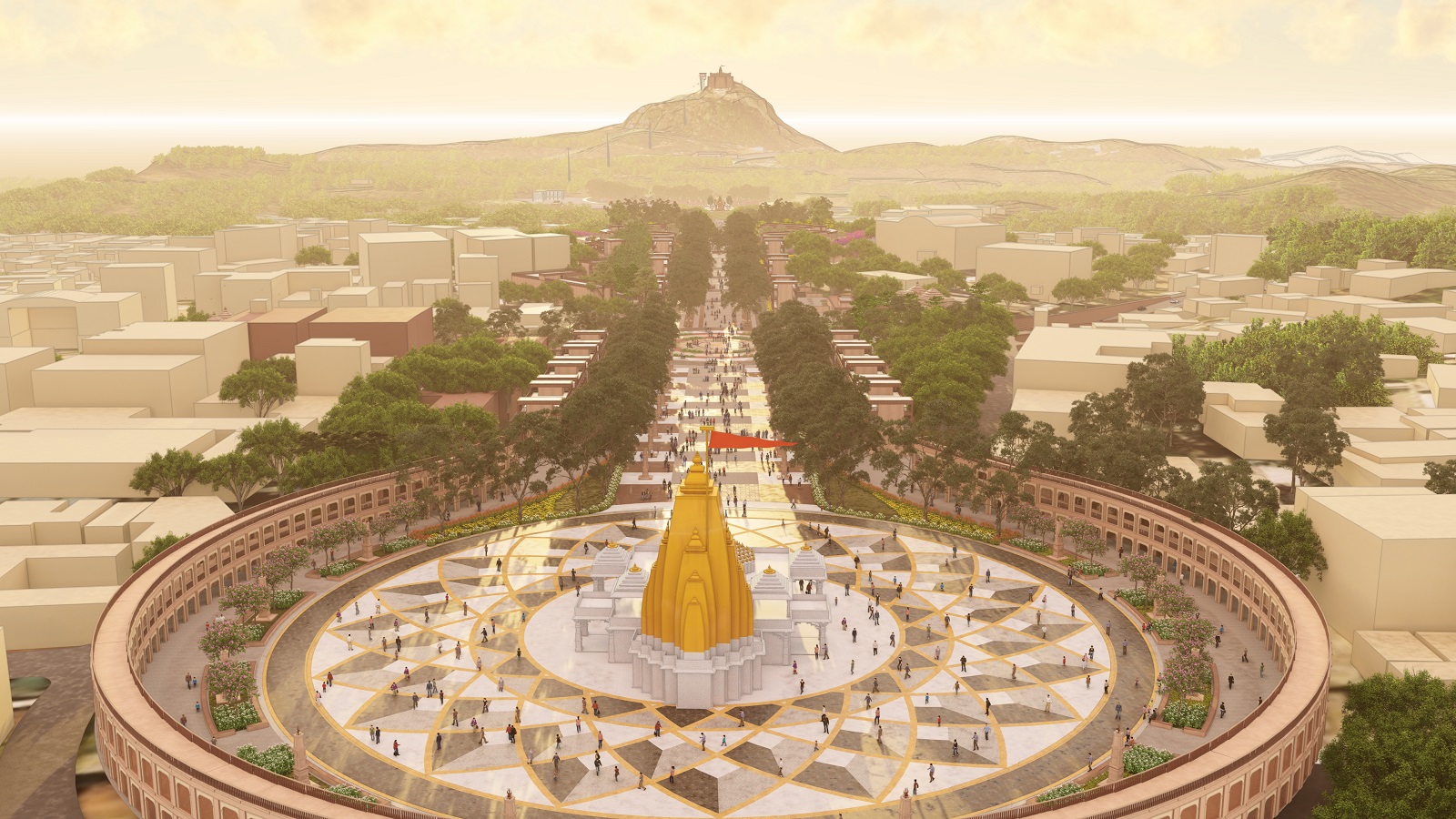
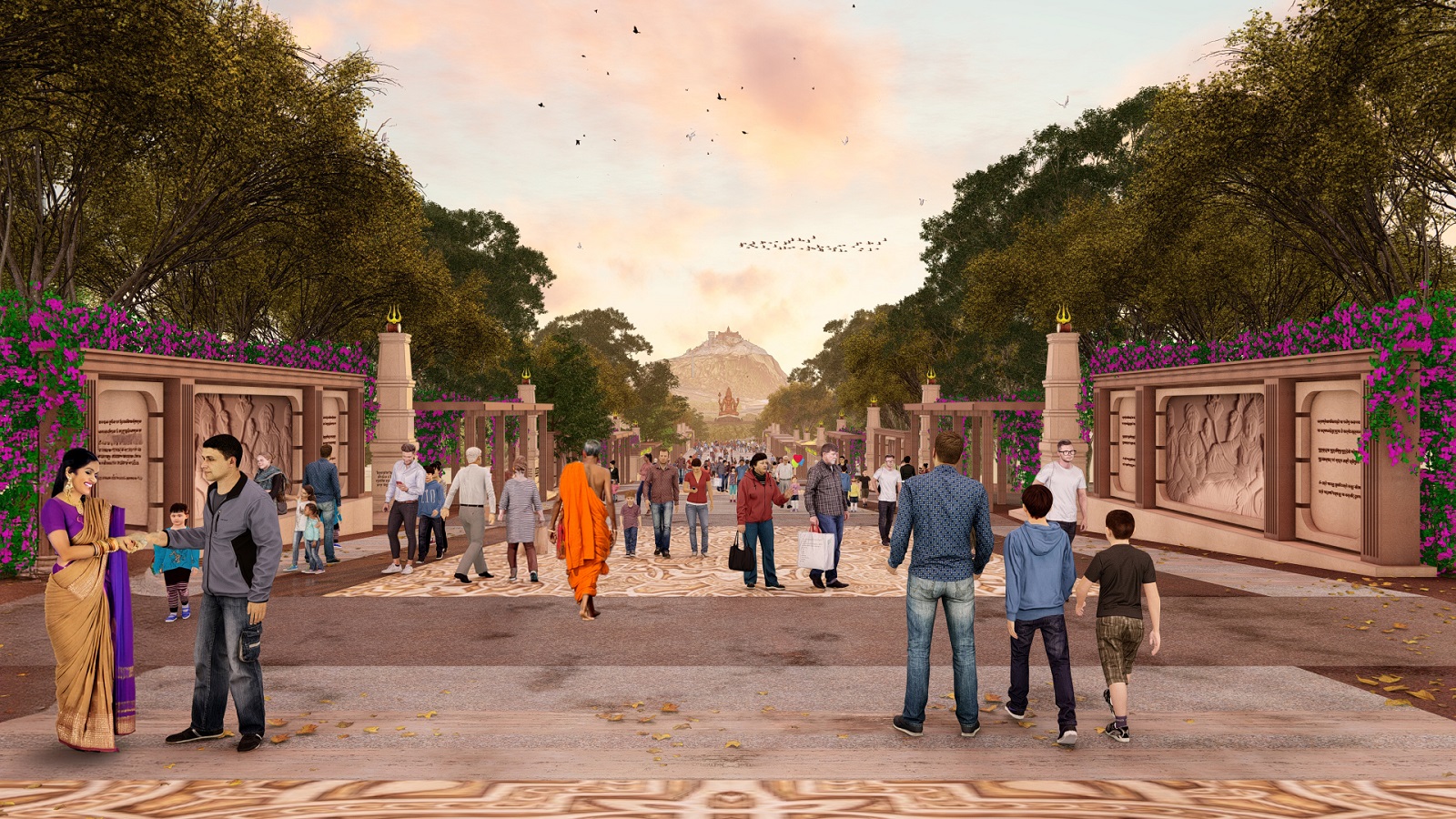
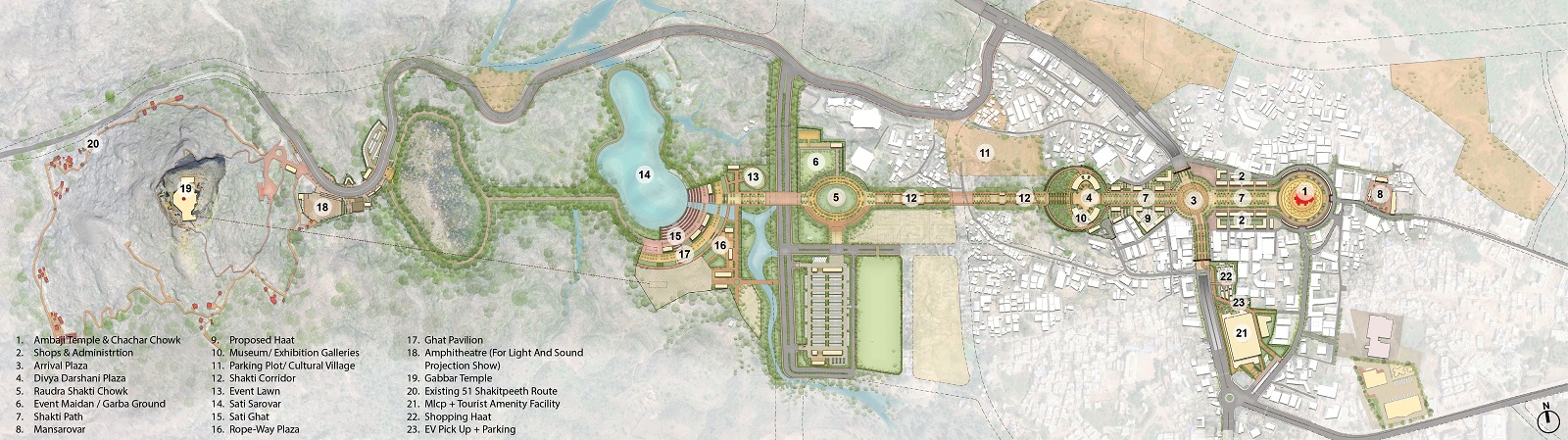
The Shakti Corridor forms a spiritual and spatial spine, aligning Ambaji Temple andGabbar Hill into a unified pilgrimage experience. More than the infrastructure, it restores the physical and cosmic connection between Visha Yantra at Ambaji and Gabbar Hill, where Sati’s heart is believed to have fallen.
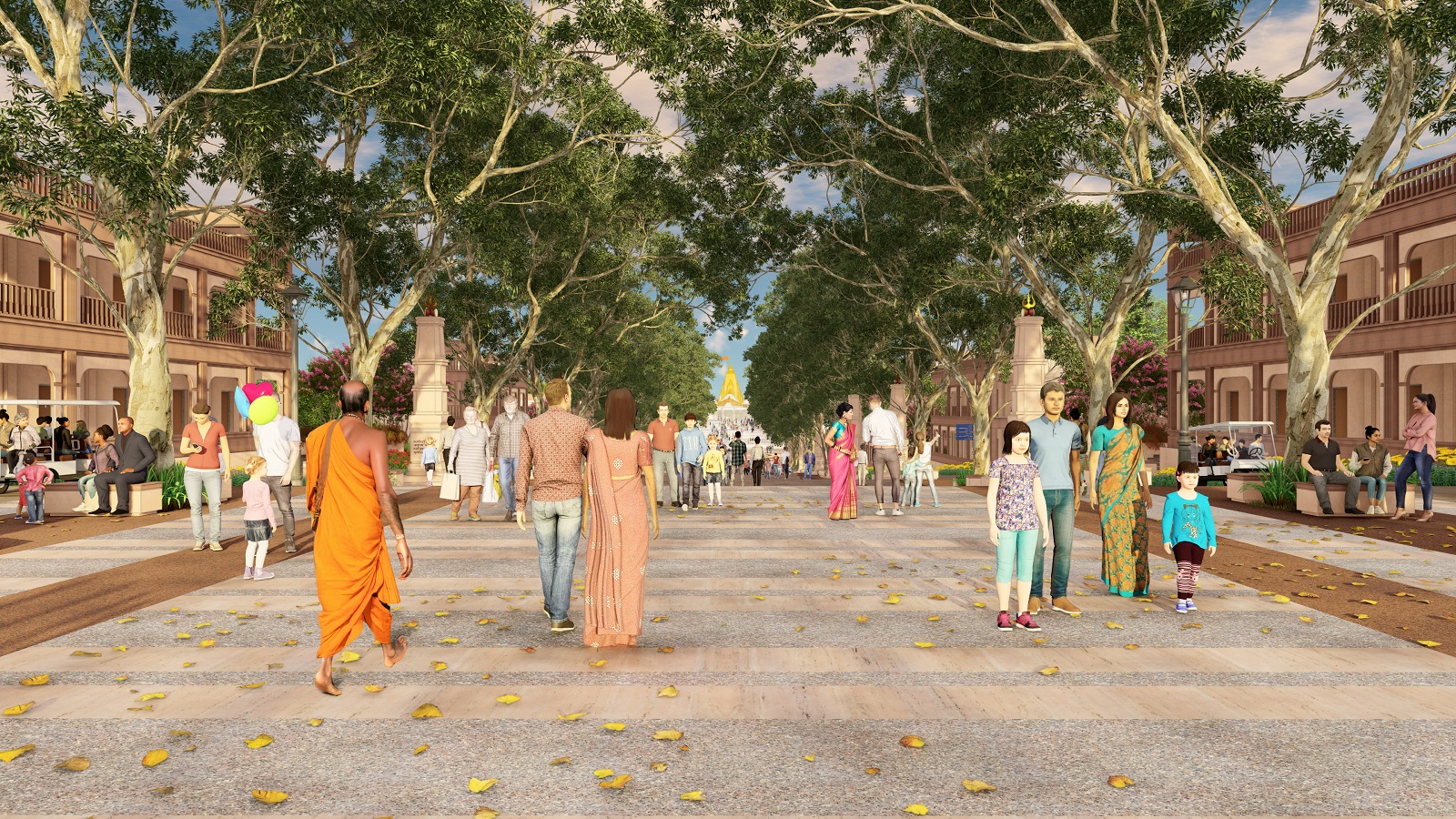
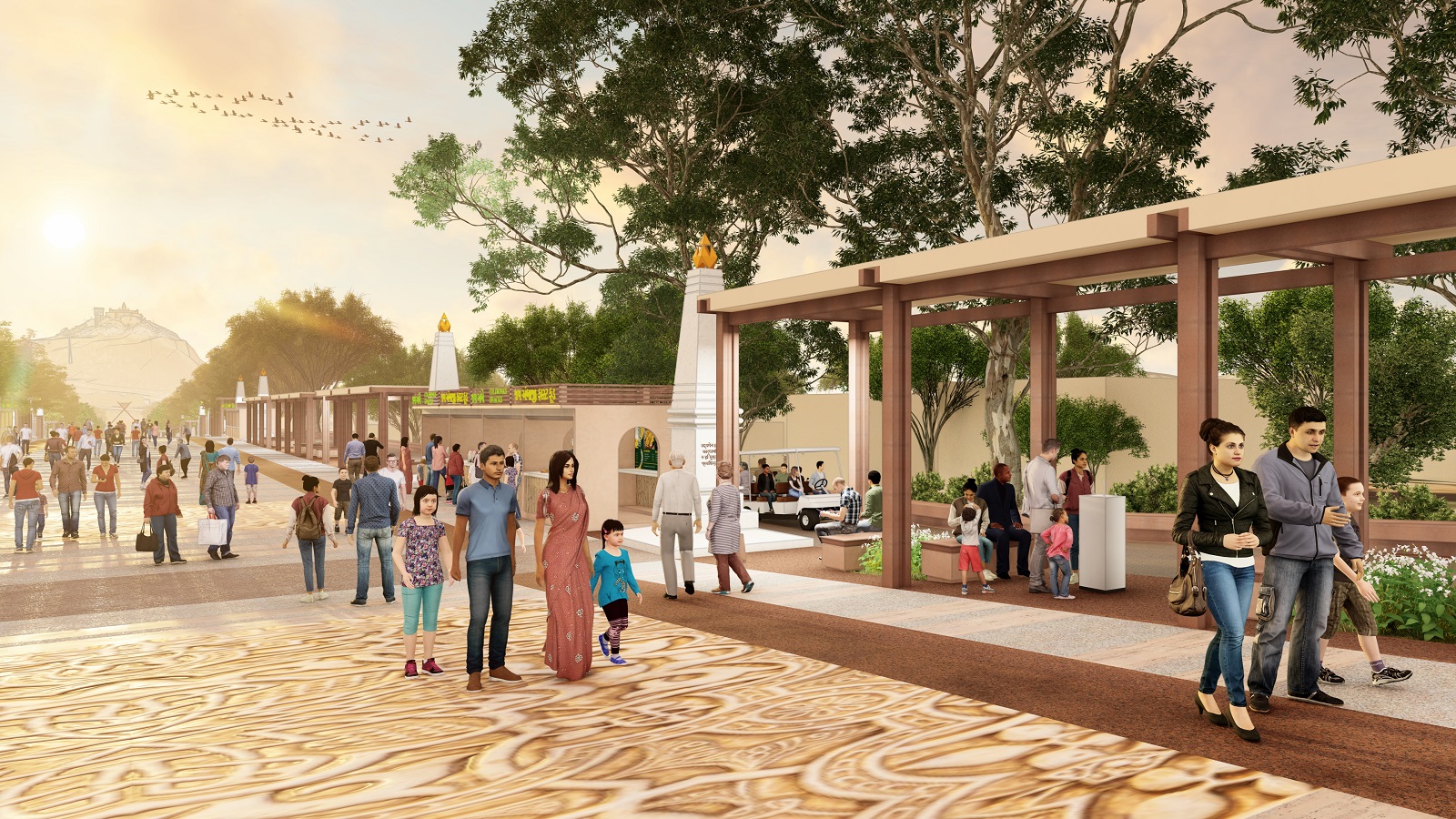
The masterplan translates this into an immersive journey by embedding narrative episodes from the legend of Sati into the spatial structure of the corridor. Themes like the union of Shiv and Sati, the sacrificial Yagya, Sati’s agony, and the divine dismemberment that created the 51 Shakti Peeths are interpreted as spatial moments along the path, unfolding through a series of mandalas, sculptural installations, processional routes, and pause points. Along this corridor, dedicated spaces for local artisans and performers have been created—platforms where traditional craft, mural-making, and storytelling are not merely displayed but lived, reinforcing the living culture of pilgrimage.
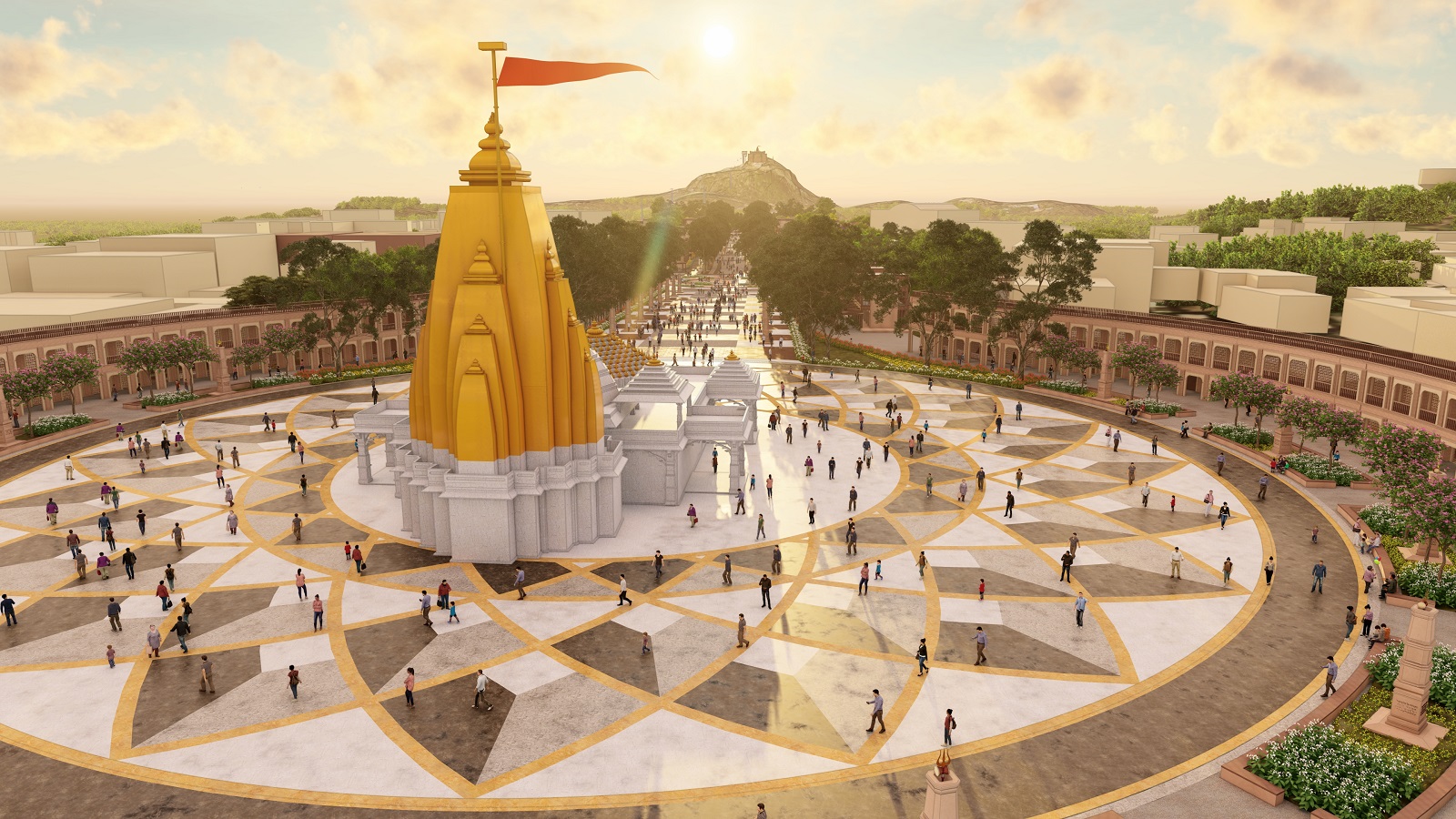
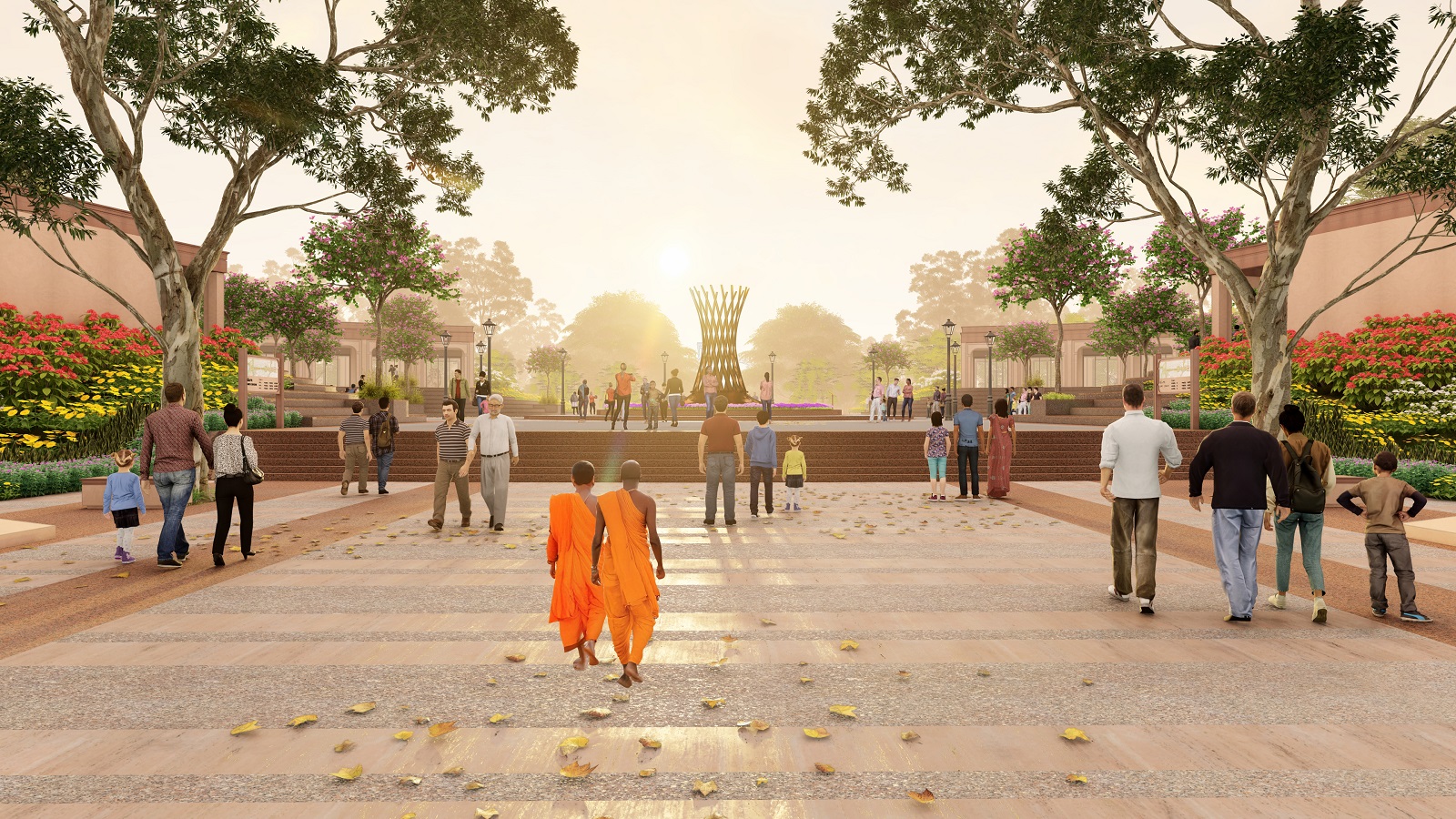
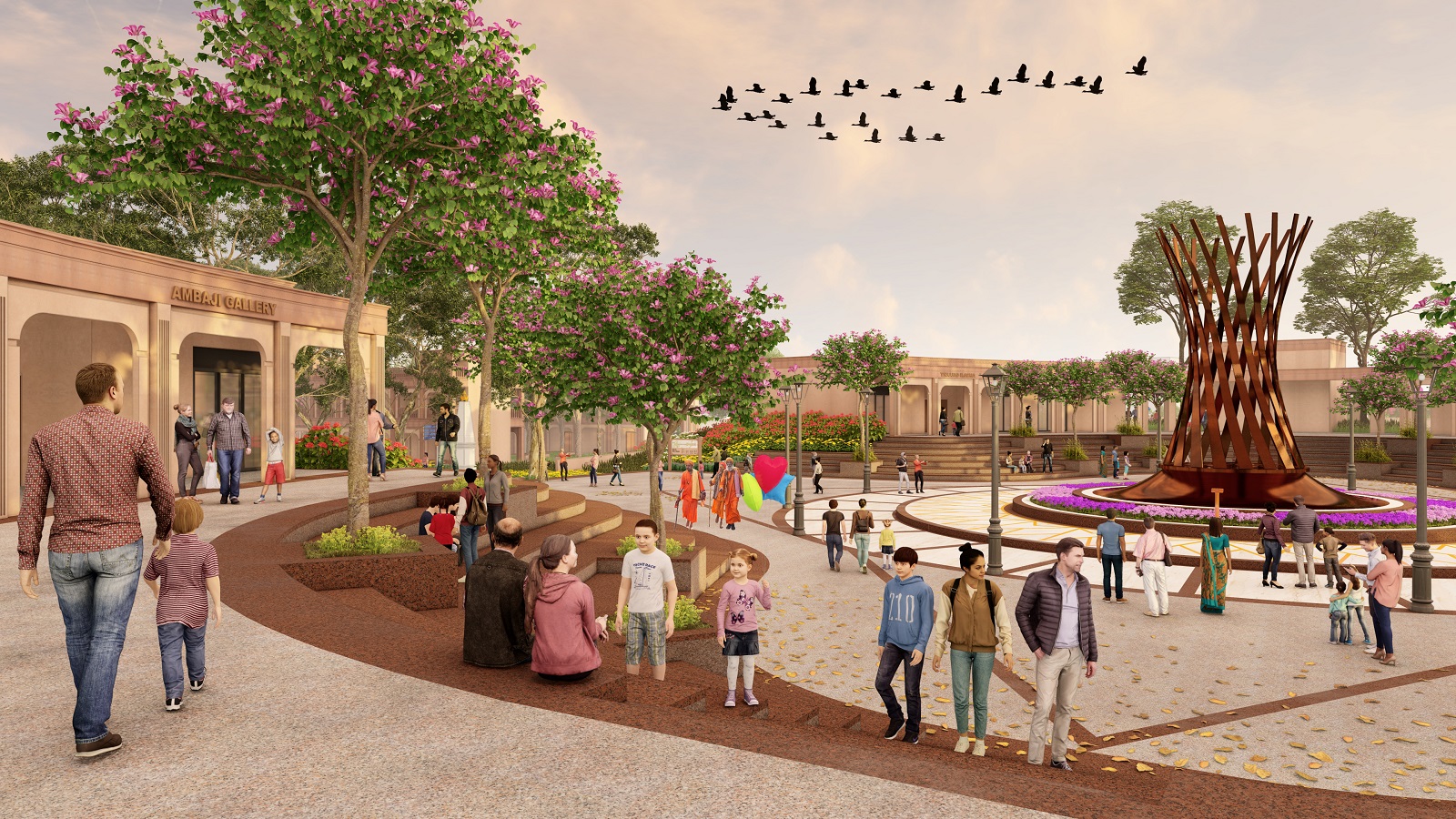
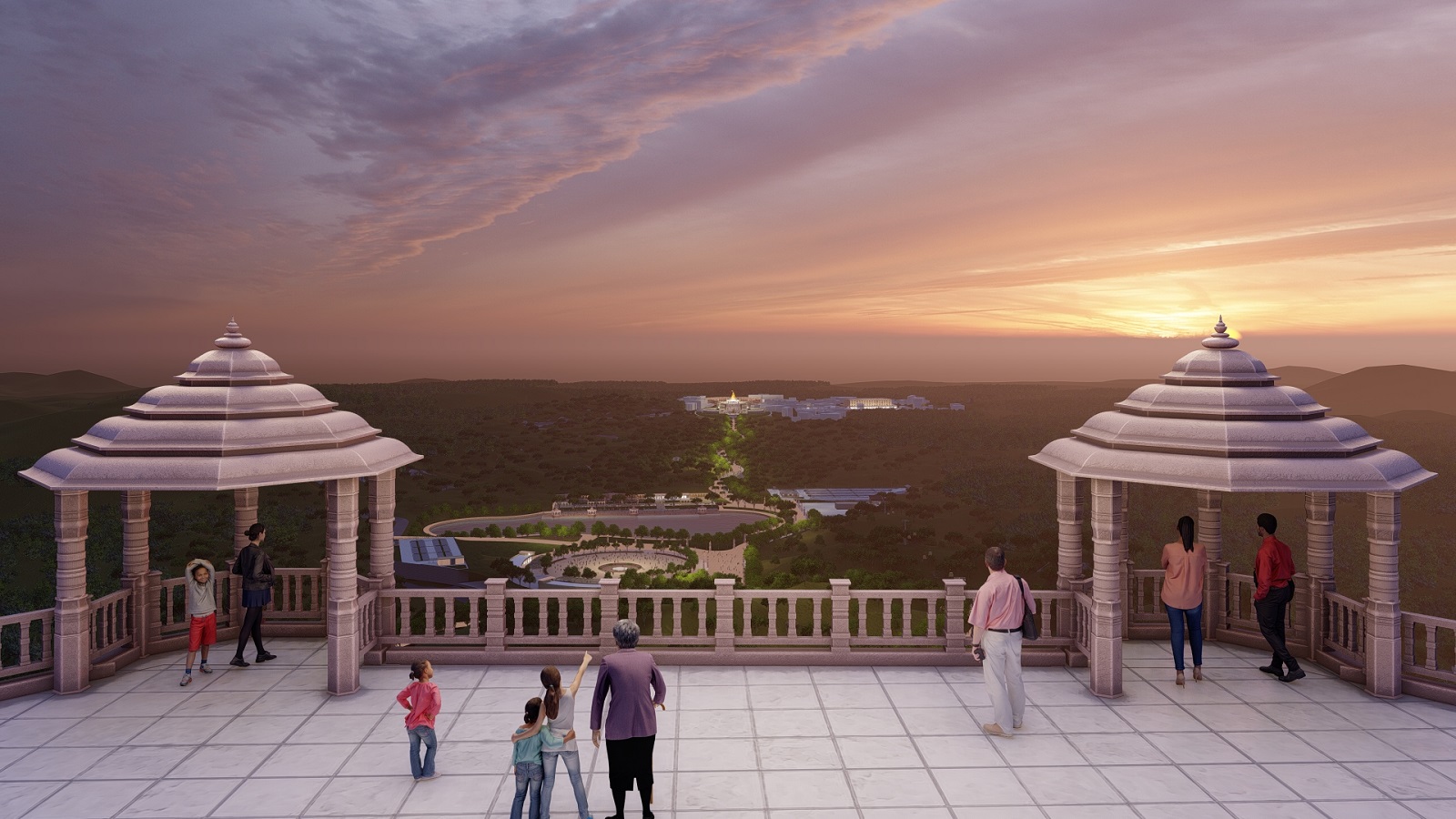
The Gabbar Hill is reimagined as a spiritually and experientially rich node, with an expanded temple complex, a defined Parikrama path, improved ropeway connectivity, viewing decks and gathering spaces. The arrival forecourt, Gabbar Darshani Chowk, with its monumental Jyot sculpture, exhibition spaces, and thematic pavilions, transforms the Hill into a magnetic summit in the larger pilgrimage journey—elevated both literally and spiritually.
A sanctified landscape shaped by faith, and walked by those who seek it
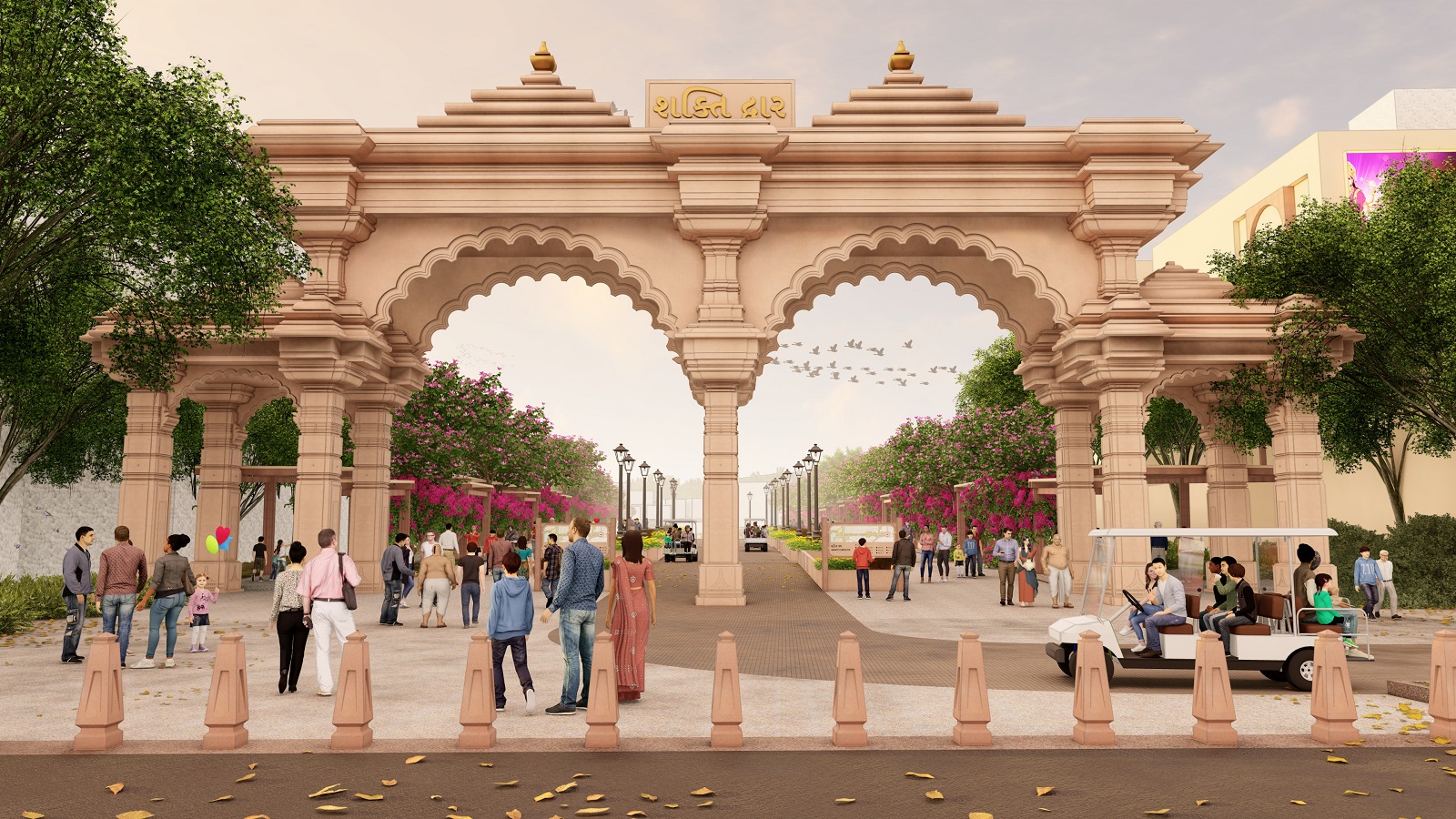
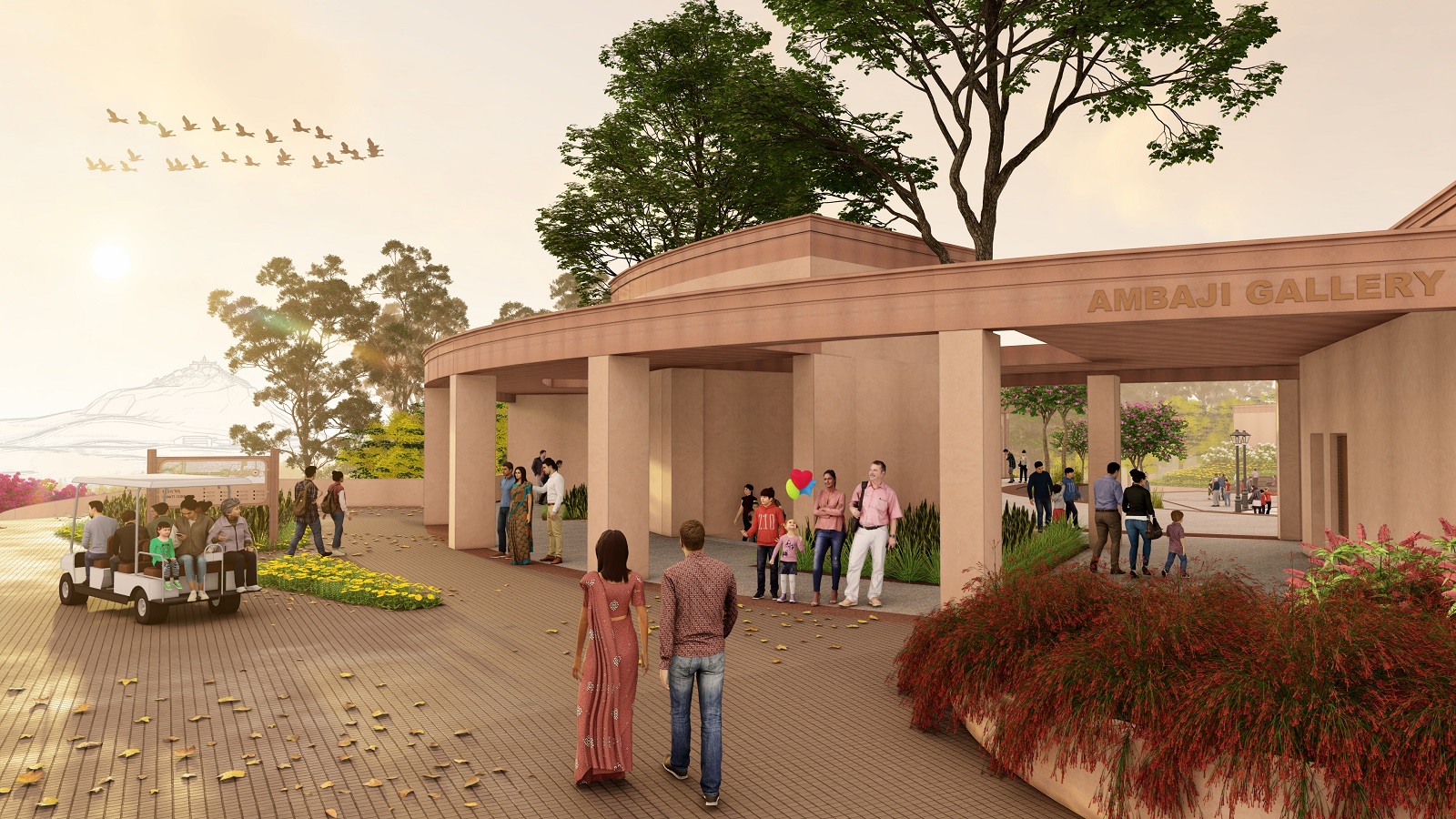
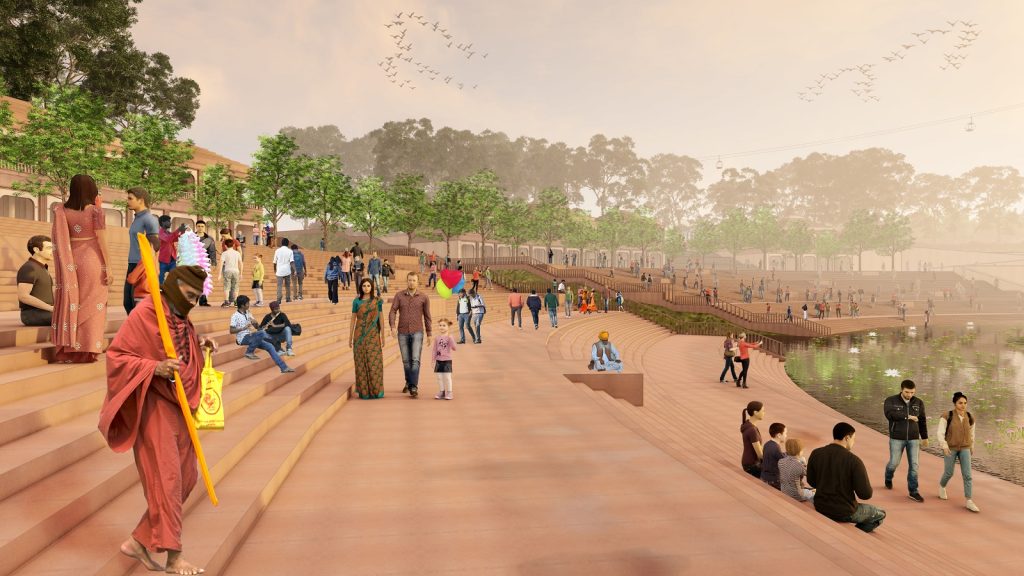
Within the Ambaji Temple Precinct, the design balances reverence with scalability. The complex will be expanded nearly threefold to accommodate growing footfall while preserving spiritual sanctity. A reimagined Chanchar Chowk forms the ceremonial arrival, enabling seamless entry and procession. Pedestrianization, underpasses, and shaded corridors ensure uninterrupted spiritual movement. In tandem, the hydrology of the region has been revived—a once-forgotten stream has been transformed into a vibrant lake, and the newly created Sati Ghat anchors water, land, and light into the religious narrative. The temple’s axis realigns with the Jyot on Gabbar Hill, reinforcing sacred geometry, while Mansarovar Lake is reintegrated into the religious landscape, allowing water, land, and light to echo the elemental balance inherent in Shakti worship
A Spiritual Renaissance where Civic Systems
and Sacred Memory flow together
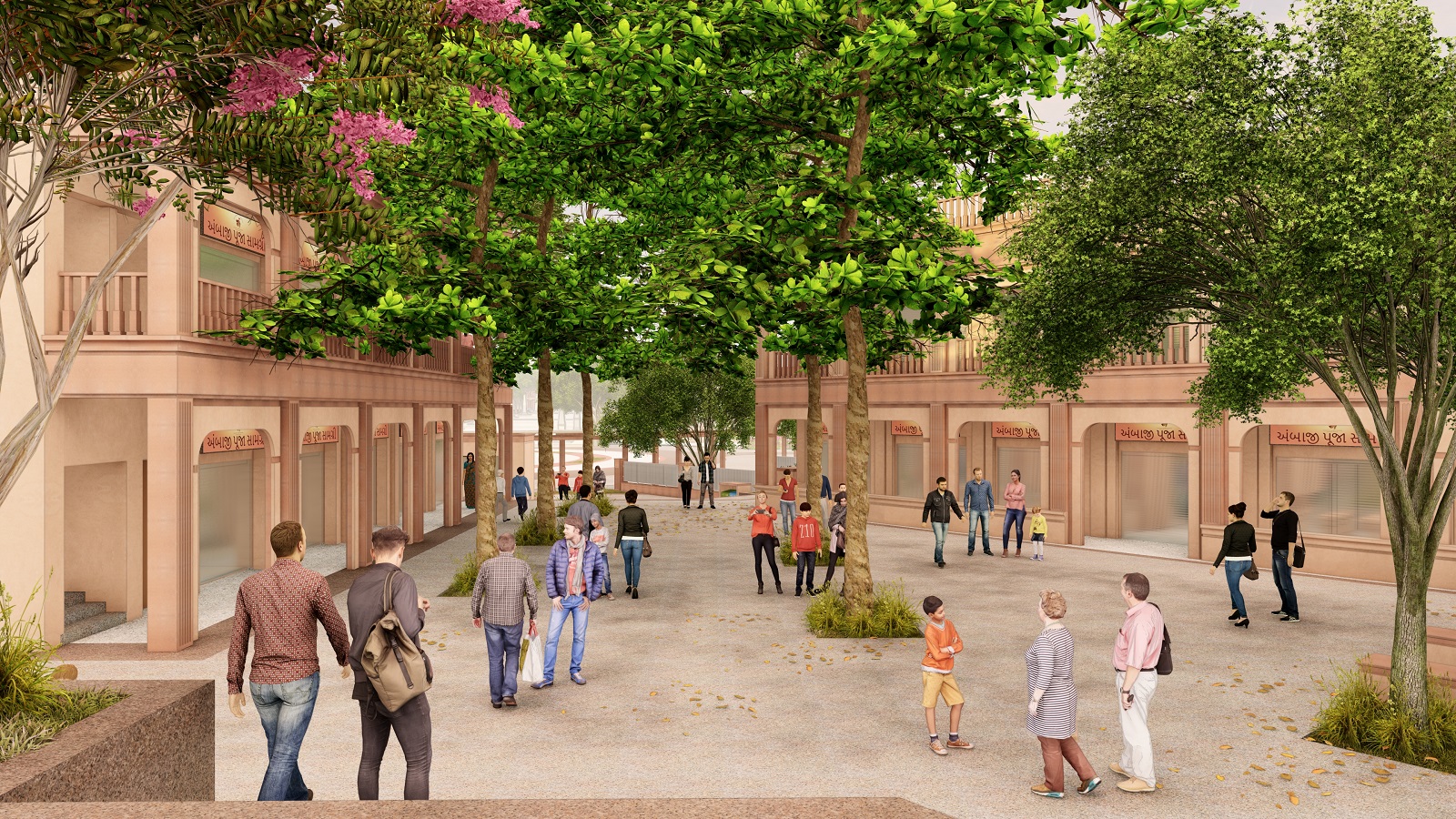
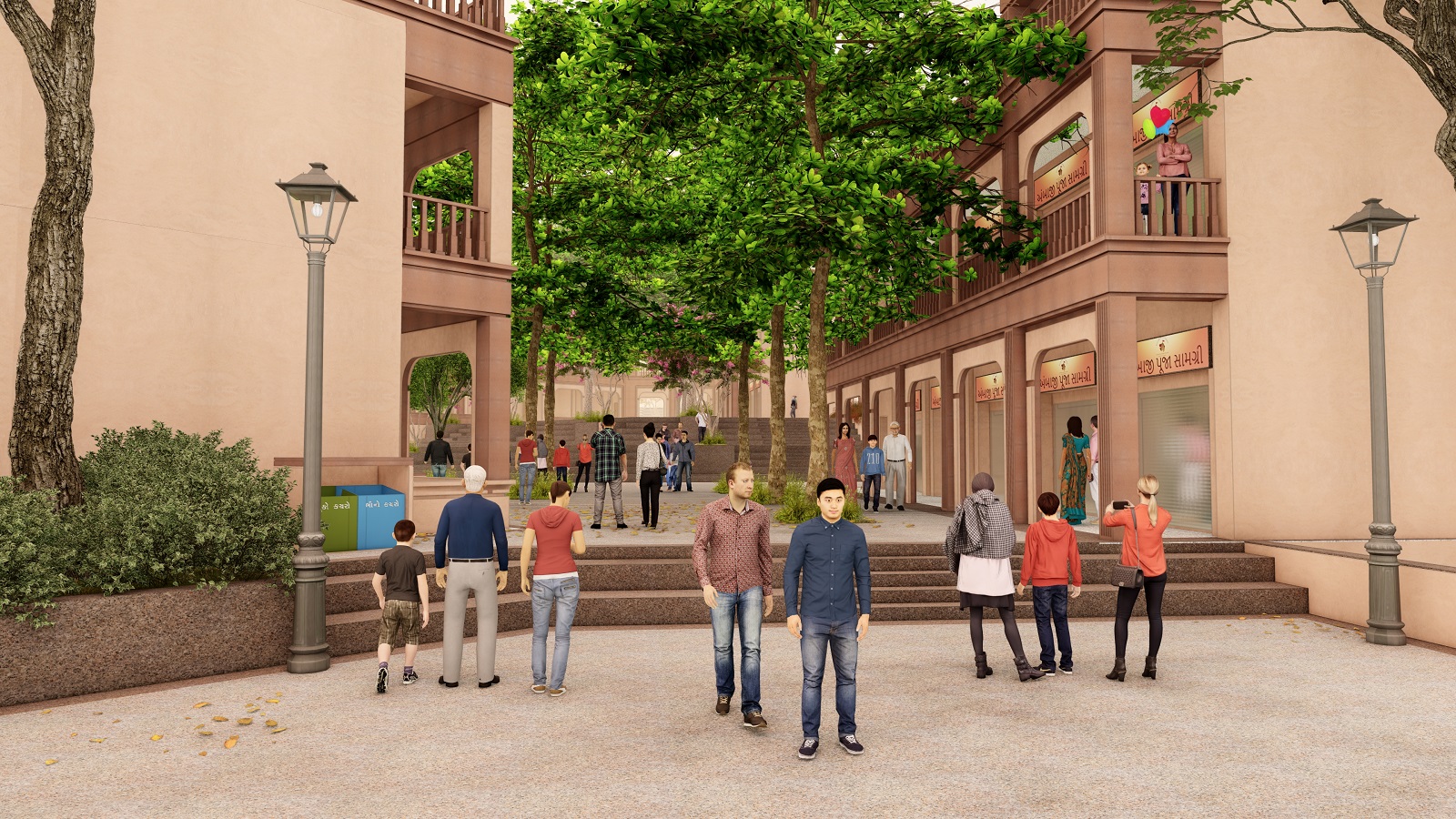
The architectural language across the precinct is informed by the symbolism of the heart, drawing from principles of continuity, rhythm, and concentricity, mirroring the pulse of sacred energy. Floors and columns are inscribed with fire motifs; wall murals interpret the goddess’s journey through allegorical forms; and open courtyards serve as lungs within the built fabric. Locally sourced stone, stone jaalis, and daylight-responsive shading systems create a timeless and climate-responsive material palette.
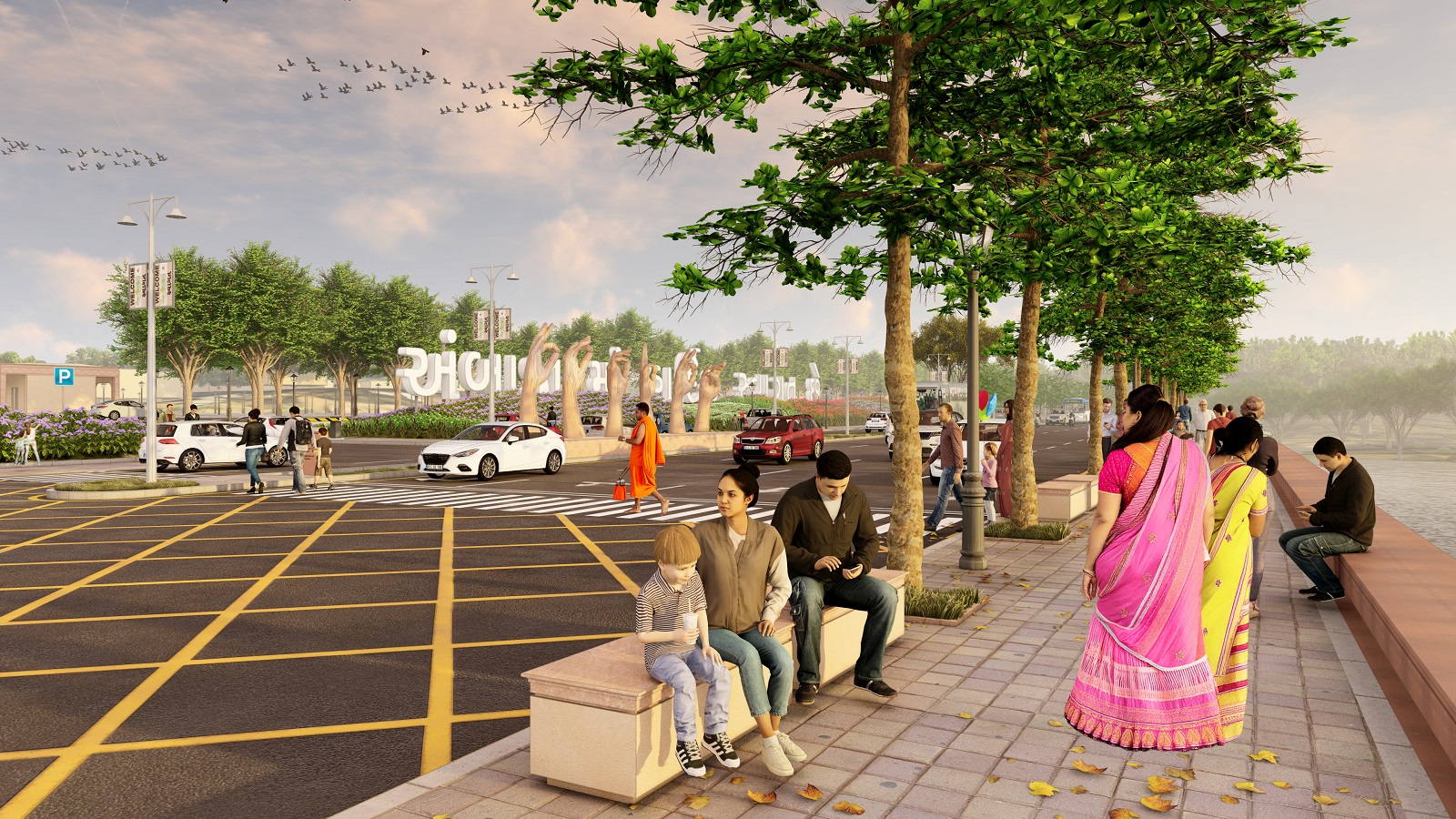
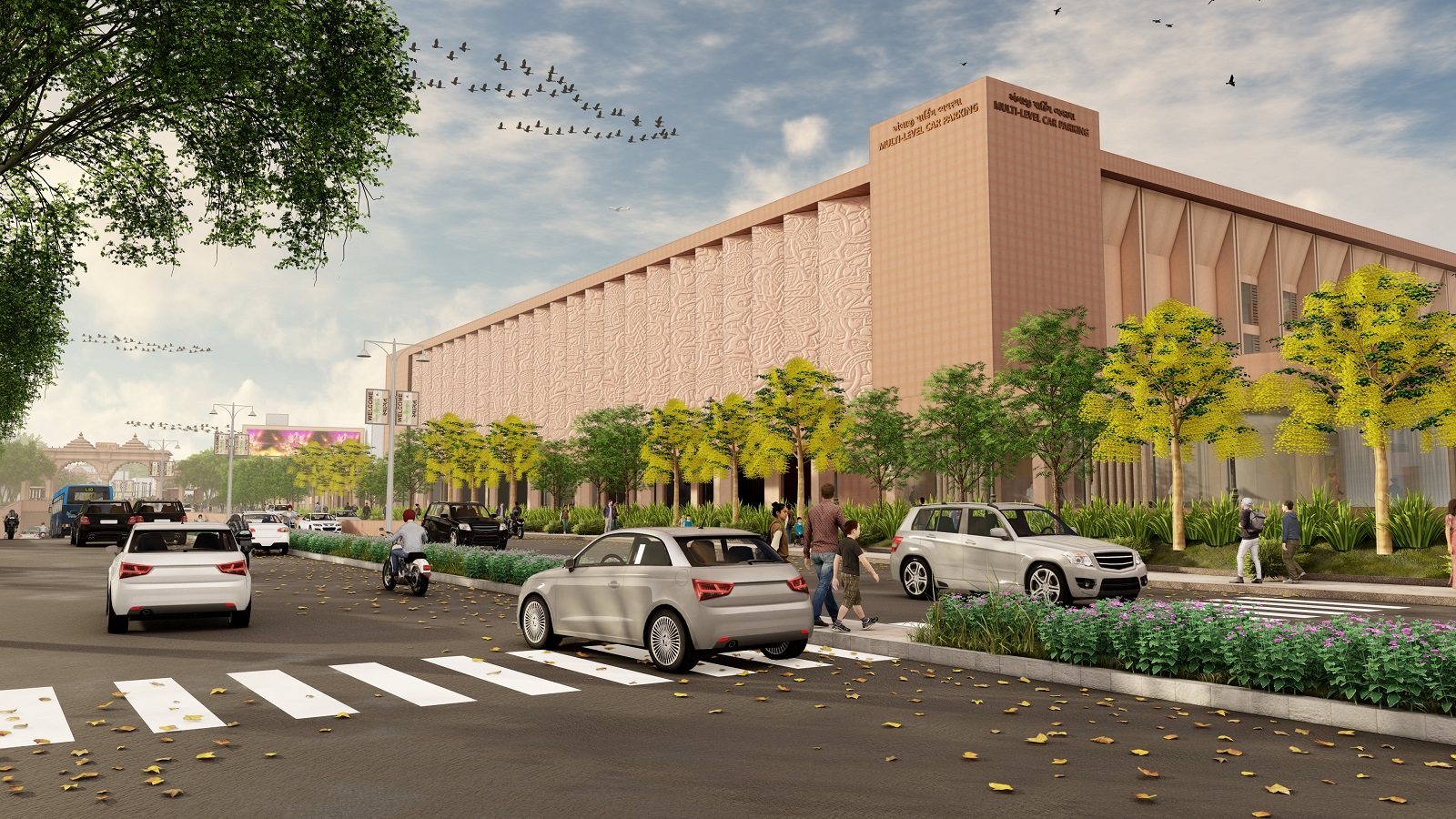
Beyond the temple precinct and Gabbar Hill, the masterplan introduces a robust civic and mobility framework to support large-scale pilgrimage. The decentralized arrival zone integrates parking, amenities, and orientation. Upgraded rail access, an EV corridor, and an intermodal hub manage peak crowds, especially during Poshi Purnima. Visitor experience is enhanced through health retreats, amphitheatres, rest zones, campsites, and shaded walkways—ensuring accessibility, comfort, and contemplation.
This masterplan for Ambaji is not merely about infrastructure or expansion—it is a spiritual, civic, and cultural renaissance. By drawing from mythology and embedding it into site-sensitive architecture and experiential planning, it redefines what a temple town can be. The plan does not treat faith as static, but as something living—evolving with each generation, growing in scale, yet rooted deeply in sacred memory.
"A Living Pilgrimage Landscape Where Sacred
Geometry, Mythic Memory, and Civic Design
Converge to Shape the Temple Town of the Future."
 Ahmedabad, Gujarat, India