International Branch Campus, GIFT City
GIFT City, Gandhinagar, Gujarat, India
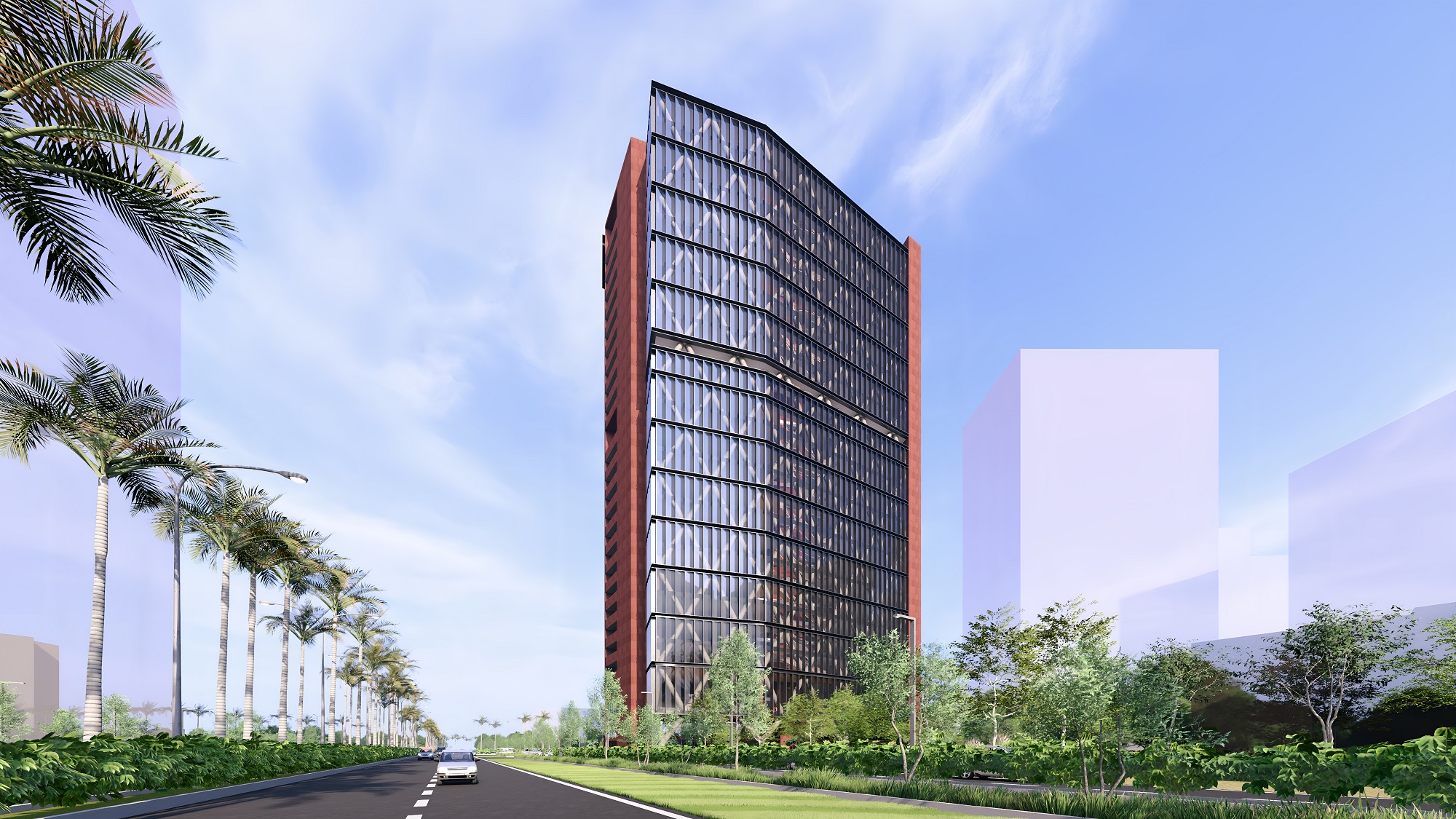
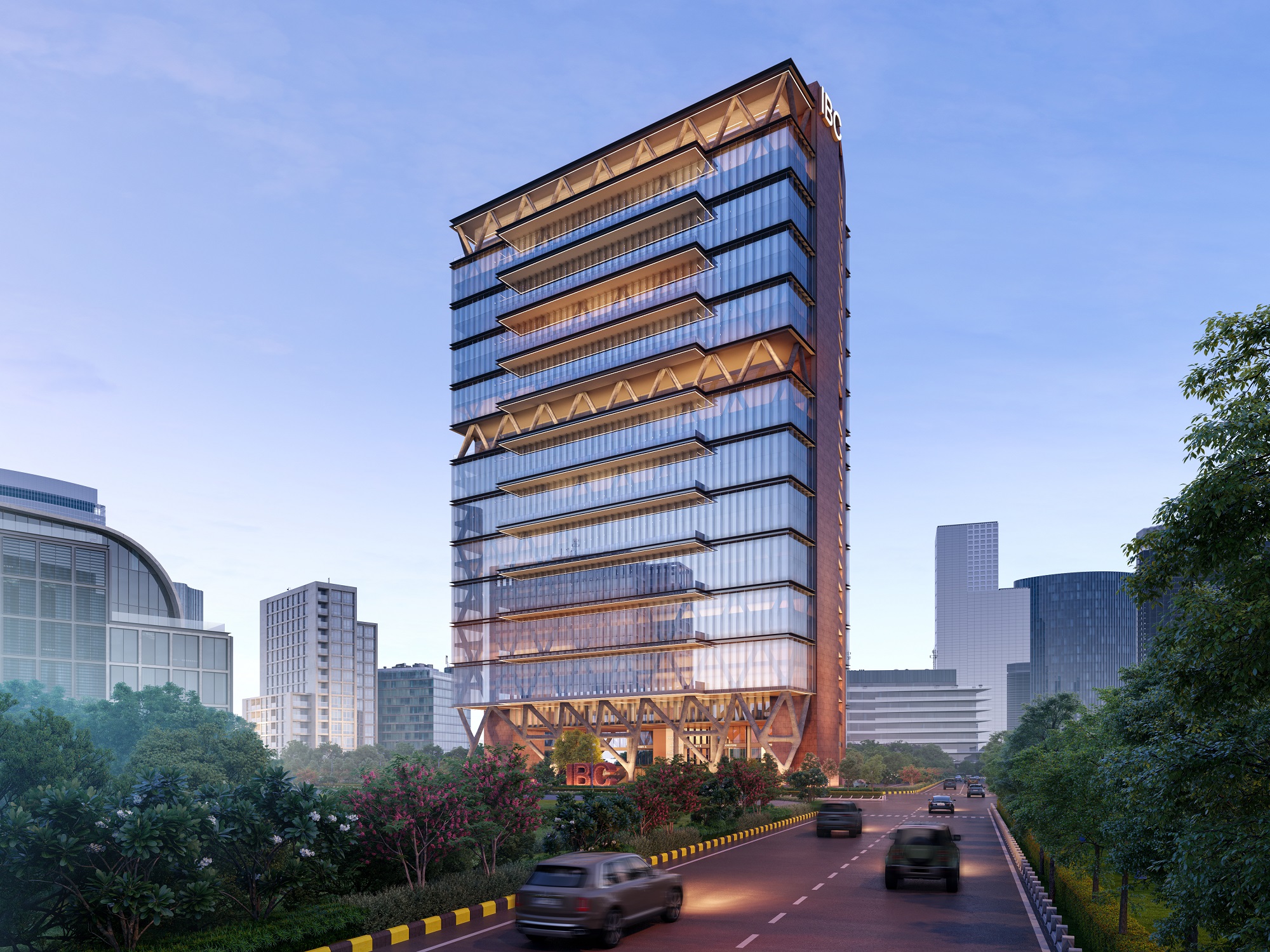
Set within the dynamic precinct of GIFT City, the International Branch Campus reimagines higher education infrastructure—redefining how learning occupies vertical space in dense urban contexts. Addressing the challenge of land scarcity, the campus turns to verticality as both a pragmatic and iconic response, consolidating academic, social, and administrative functions into a single, sculpted high-rise that embodies the aspiration of knowledge rising toward the sky.
Site Area : 55,715 SF
Builtup Area : 10,90,638 SF
Services : Programing & Feasibility,
Architecture, Landscape Design,
Engineering, Facade Design, Lighting
Design, Sustainability (International Bid
Entry)
Share ►
Blending Architectural Symbolism and Academic Synergy within a Compact Footprint
In land-starved metros, the horizontal campus becomes unsustainable. This vertical model stacks classrooms, labs, residences, faculty zones, cultural spaces, and recreational programs within a unified tower. Its compact footprint minimizes sprawl, optimizes form, and coexists efficiently within the city’s high-performance urban fabric. Energy efficiency is enhanced through centralized systems and shared utilities, while green strategies—solar harvesting, rainwater management, and a climate-responsive façade—underscore its sustainable intent.
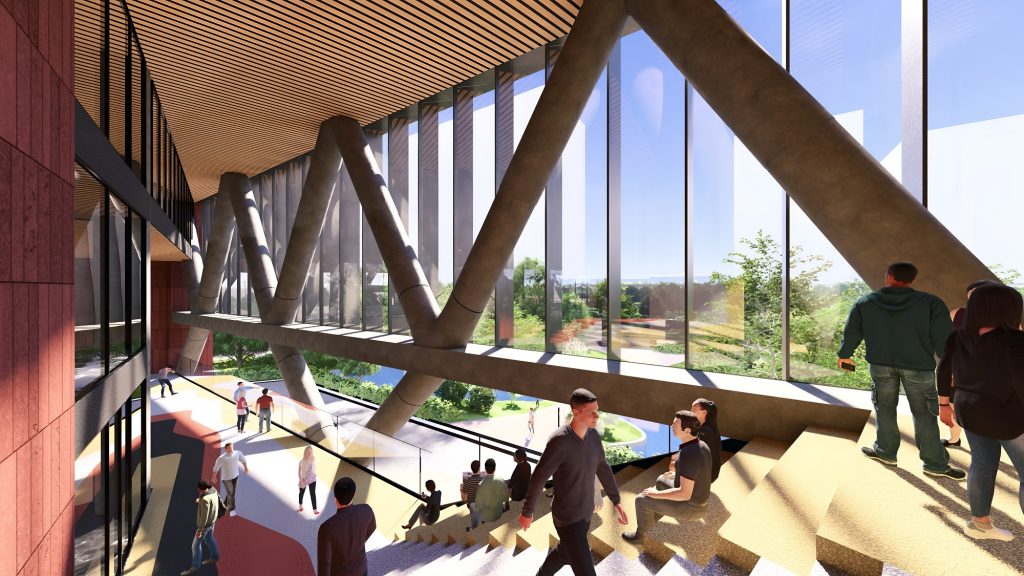
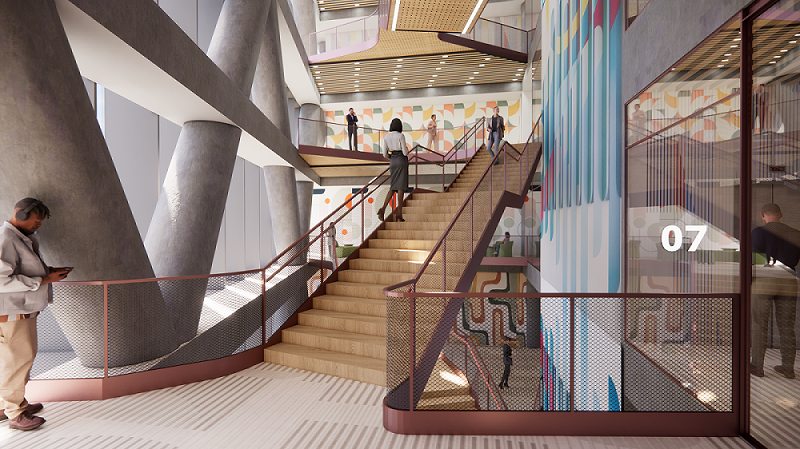
The architecture fosters interdisciplinary collaboration and agile learning. Smart classrooms, modular labs, co-working pods, and informal lounges offer adaptable, hybrid environments. Its verticality is supported by advanced circulation systems—high-speed elevators, universally accessible ramps, and an expressive social staircase that doubles as an architectural experience, ensuring inclusive mobility for all users. Embedded in a well-connected urban grid, the campus enables access to industry, infrastructure, and cultural assets, crafting a vibrant and future-ready academic ecosystem.
A Vertical Campus Inspired by the Tree of Knowledge
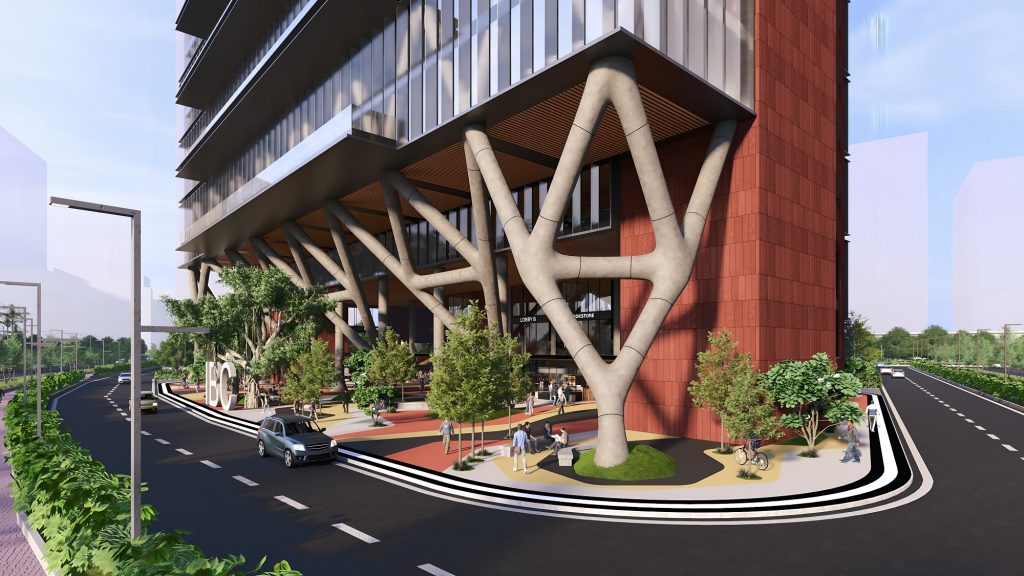
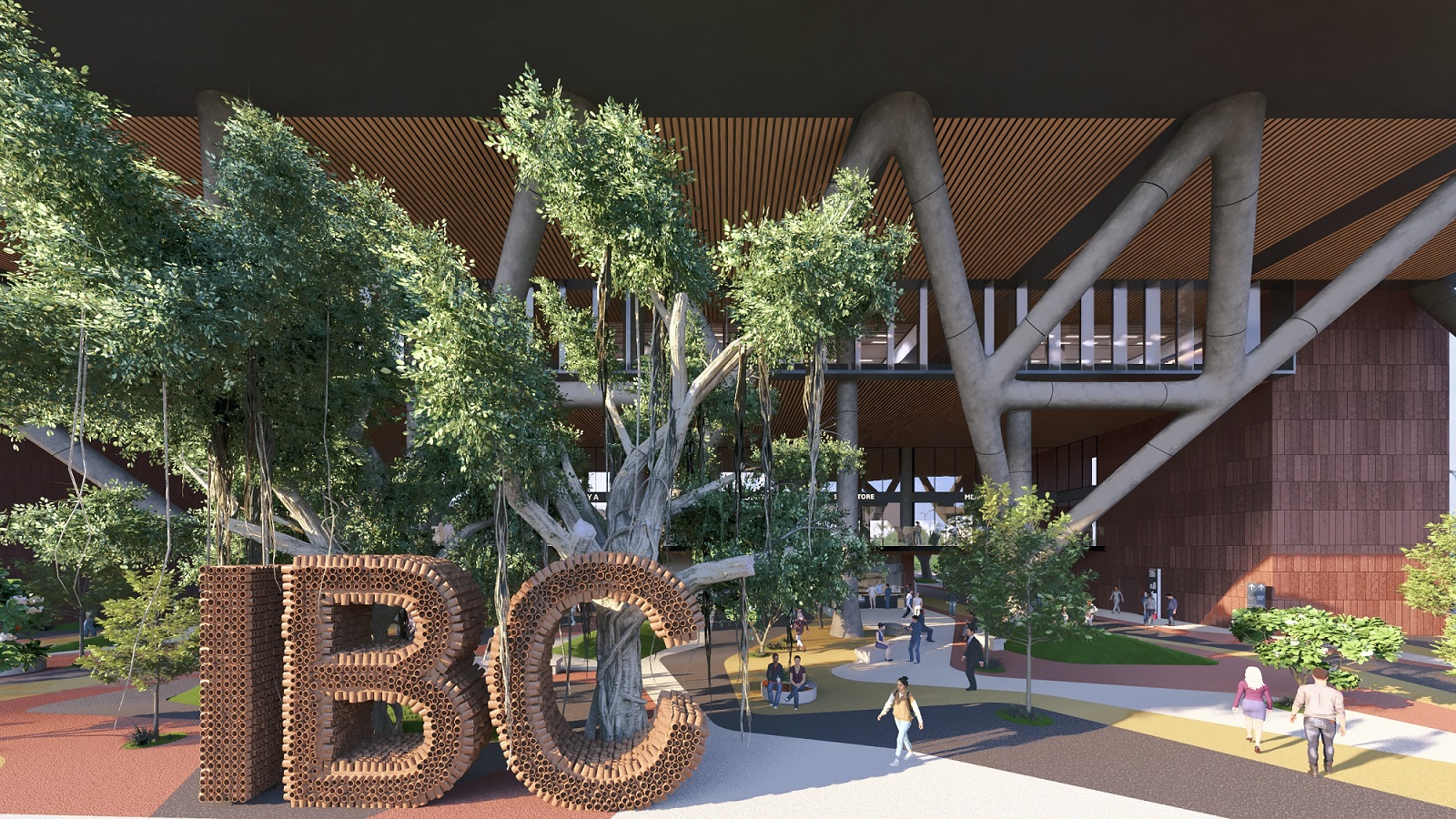
Architecture and metaphor converge through the
concept of the “Tree of Knowledge.” A soaring,
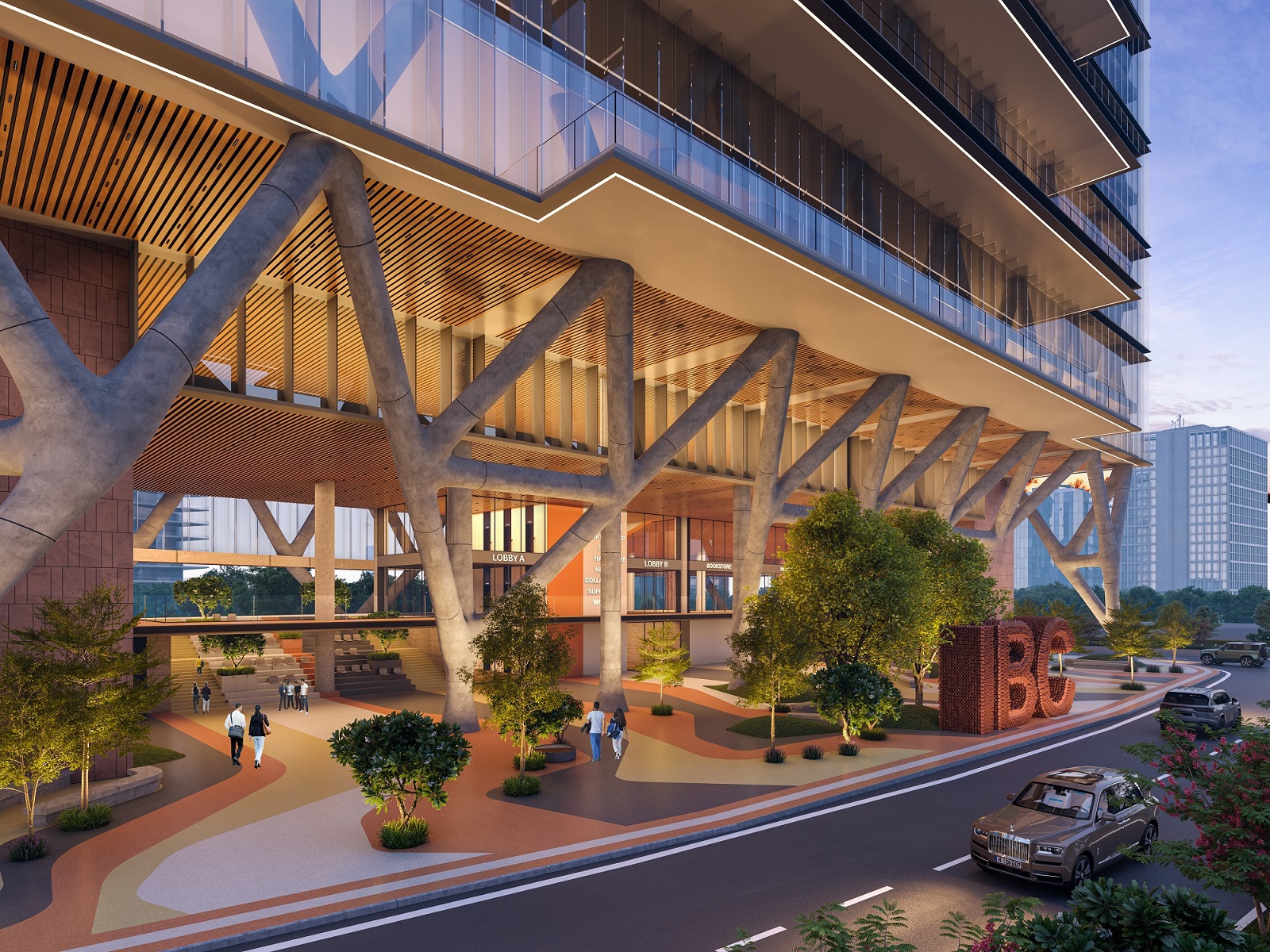
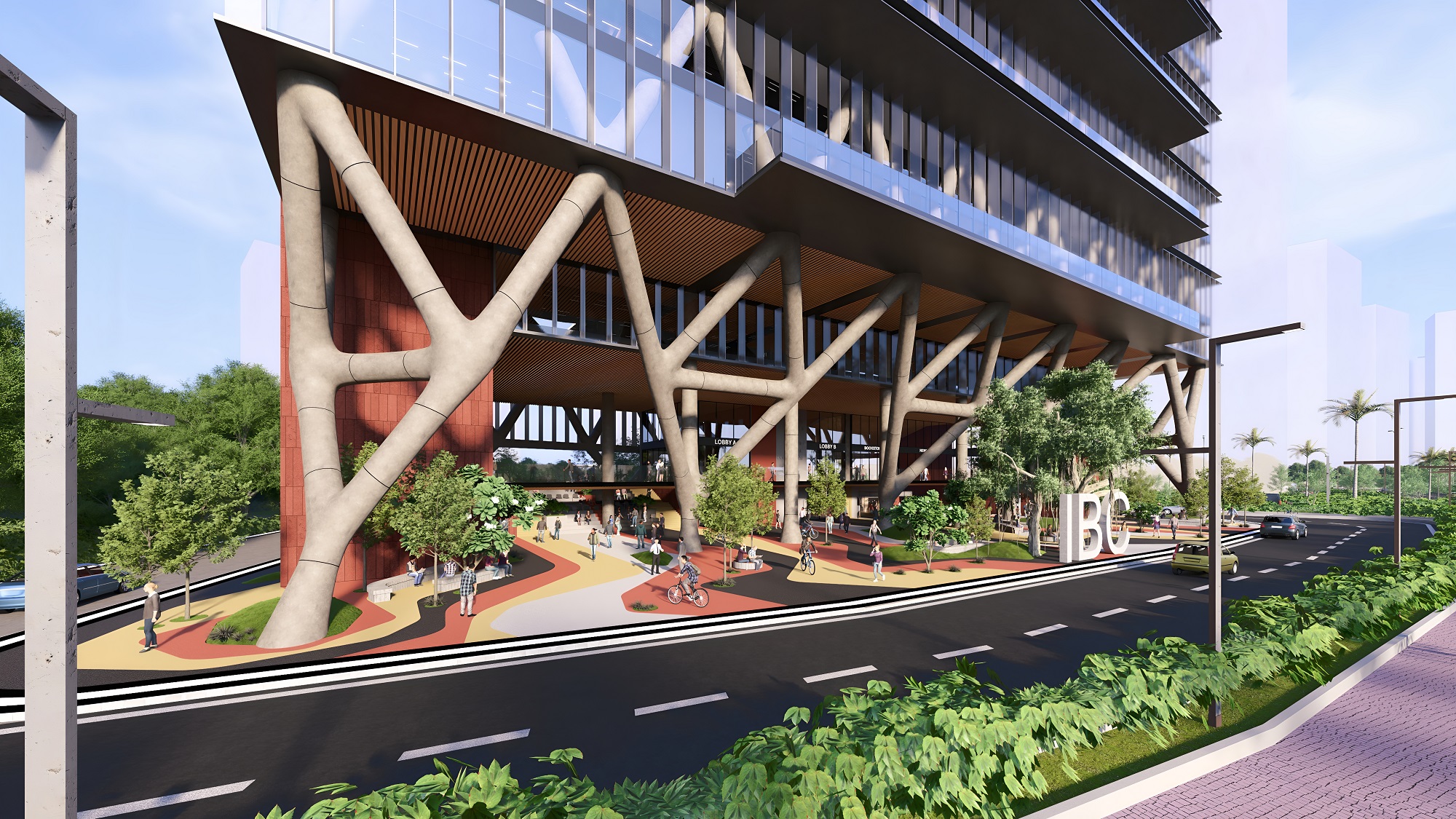
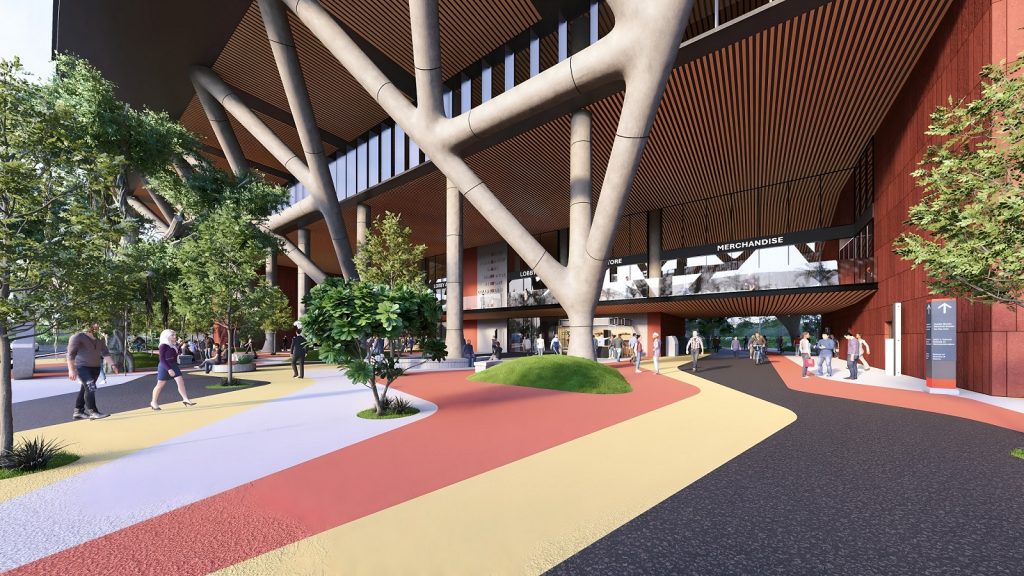
triple-height entry plaza marks the threshold of intellectual ascent, anchored by tree-like columns that rise from the ground as symbolic roots. These evolve into a branching diagrid structure above—interlacing space, structure, and the layered disciplines of a contemporary university. The metaphor is spatialized into a living framework where tradition and aspiration coalesce.
Stacked Synergy of Space, Structure, and Intent
The massing evolves from a maximum permissible volume into a rationalized form shaped by performance and precision. Central and perimeter cores enhance structural and thermal efficiency. A north-facing atrium, animated by the social staircase, creates a luminous void for vertical interaction and reflection. Volumetric shifts generate social terraces, culminating in a double-height rooftop commons that opens to the skyline.
A clear spatial hierarchy defines the vertical zoning: lower levels house public-facing amenities; the 4th to 25th floors contain modular academic spaces with flexible open floorplates and a diagrid system; uppermost levels accommodate wellness and recreation, offering elevated zones for rest and renewal. Breakout lounges, wellness pods, and co-learning spaces are interwoven throughout the building—nurturing both intellectual and emotional wellbeing.
Harnessing Verticality to Merge Pedagogy, Place, and Purpose
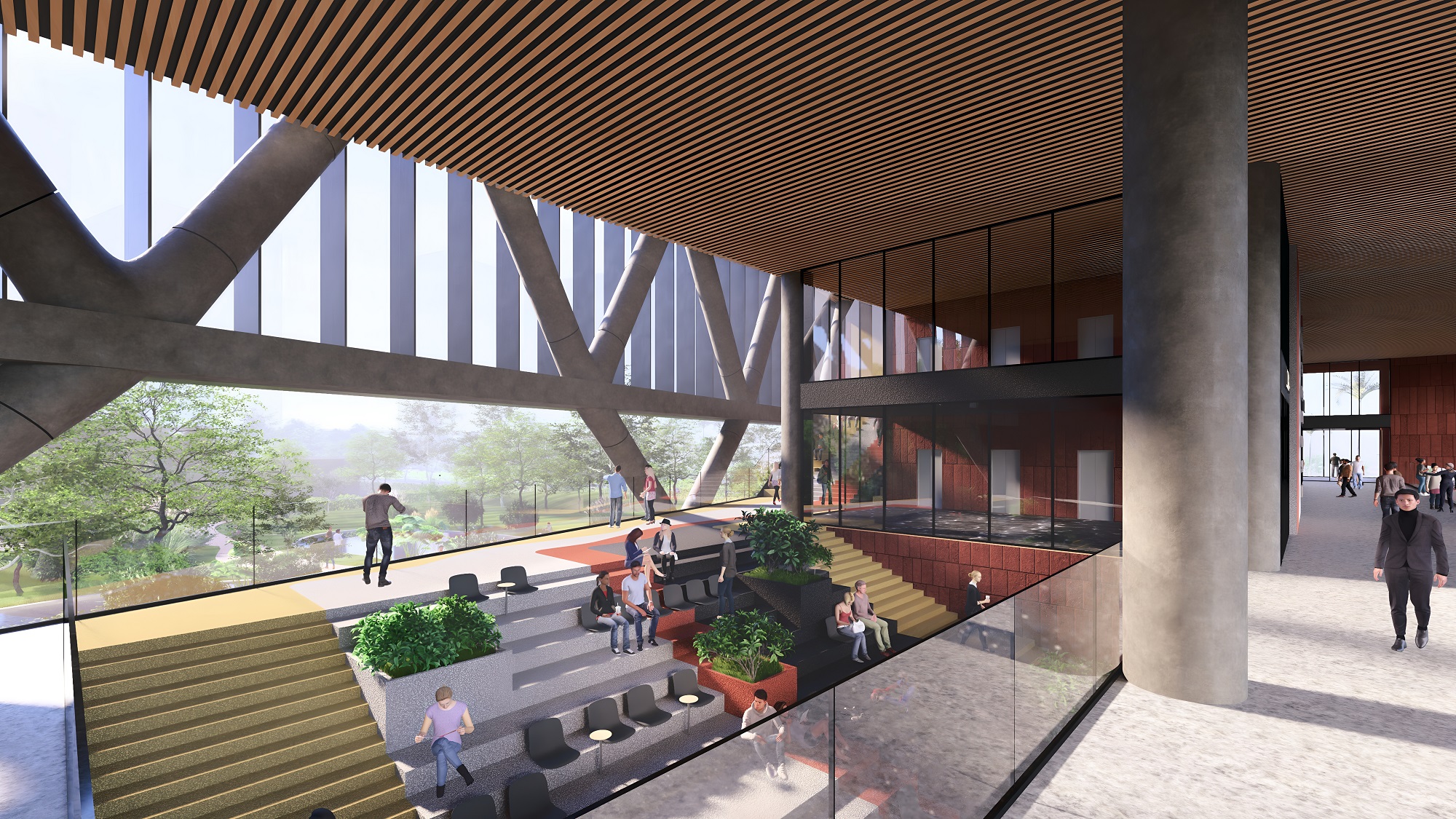
Circulation is a central narrative device within the design. The social staircase— embedded within the atrium —serves not only as vertical transit but also as a symbolic spine. With root-like motifs and pause points along the way, it traces the journey of knowledge, encouraging exchange,
discovery, and community. Structurally and
technically, the building employs optimized
spans, modular systems, and functionally
integrated cores to meet evolving pedagogical models, ensuring spatial resilience.
In essence, the International Branch Campus
at GIFT City is a profound rethinking of educational space—where compactness and verticality foster connection. It is not simply a tall building—it is a vertical campus, a tree of knowledge, and a symbol of education rooted in wisdom and striving for a sustainable, collaborative future.
"An Ascending Ecosystem of Thought — A Vertical Campus that Merges Symbolism, Structure, and Sustainability to Redefine Learning in the Urban Skyline"
