The Development of Secretariat and
Directorate in New Shillong Township
Shillong, Meghalaya, India
Set against the dramatic hills and valleys of New Shillong, the proposed
Meghalaya Secretariat represents a landmark vision— an
administrative campus where governance is interwoven with culture,
nature, and sustainability. The complex is imagined as a powerful
symbol of the “New Aspiring Meghalaya,” reflecting the state’s
progressive ambitions while being firmly grounded in its ecological and
cultural heritage. Designed across a 53-acre forested site with
significant terrain variation, the Secretariat integrates with the land
through minimal disturbance and contextual sensitivity, forming a
development that is as much about place as it is about purpose.
Site Area : 53 Acres Builtup Area : 13,40,419 SF Services : Masterplanning,
Programming & Planning & Feasibility
Study, Architecture, Interior Design,
Landscape Design, Engineering,
Infrastructure, Environmental Graphics
& Signage
A campus where natural contours
shape civic form and institutional
identity
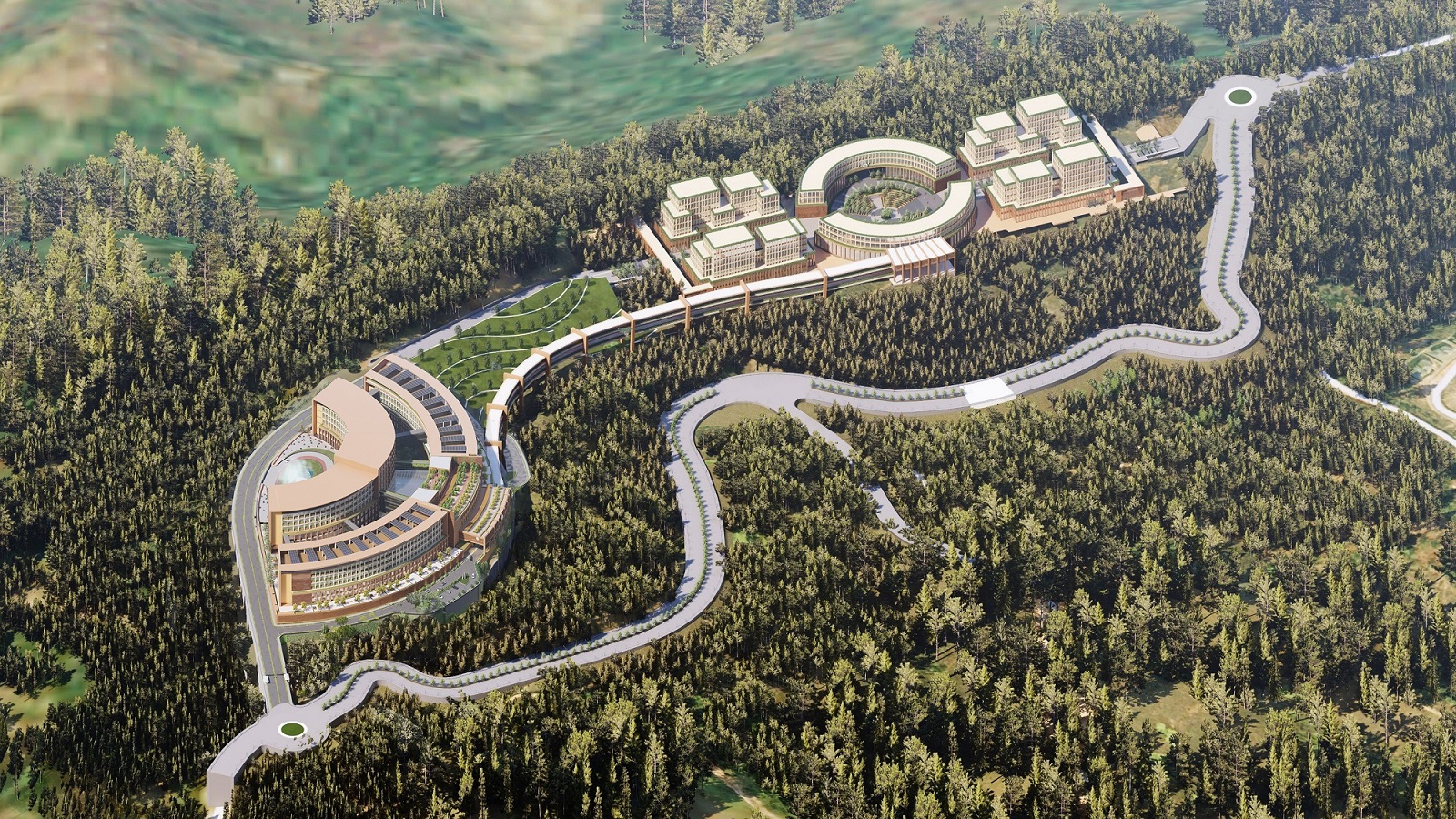
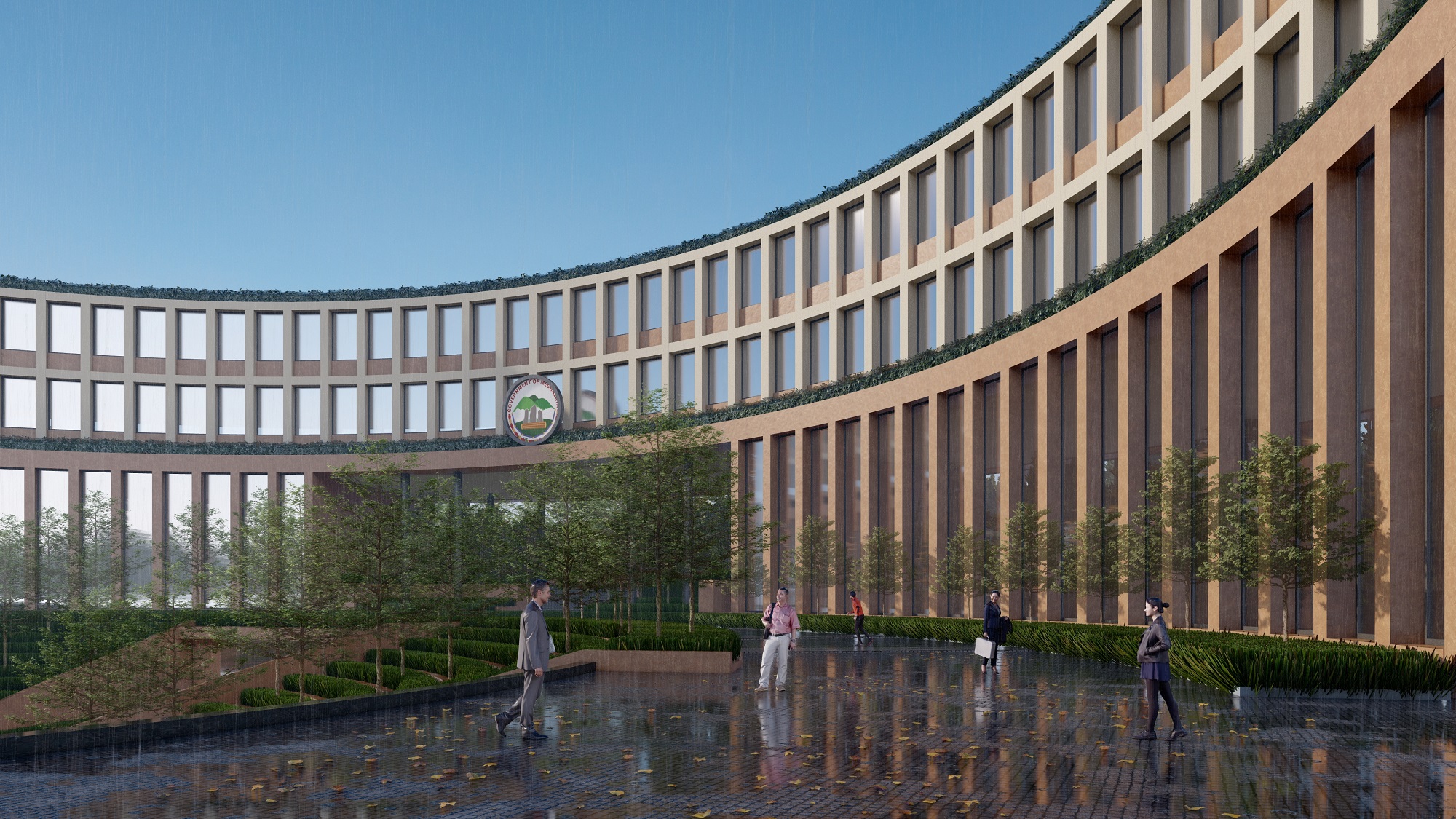
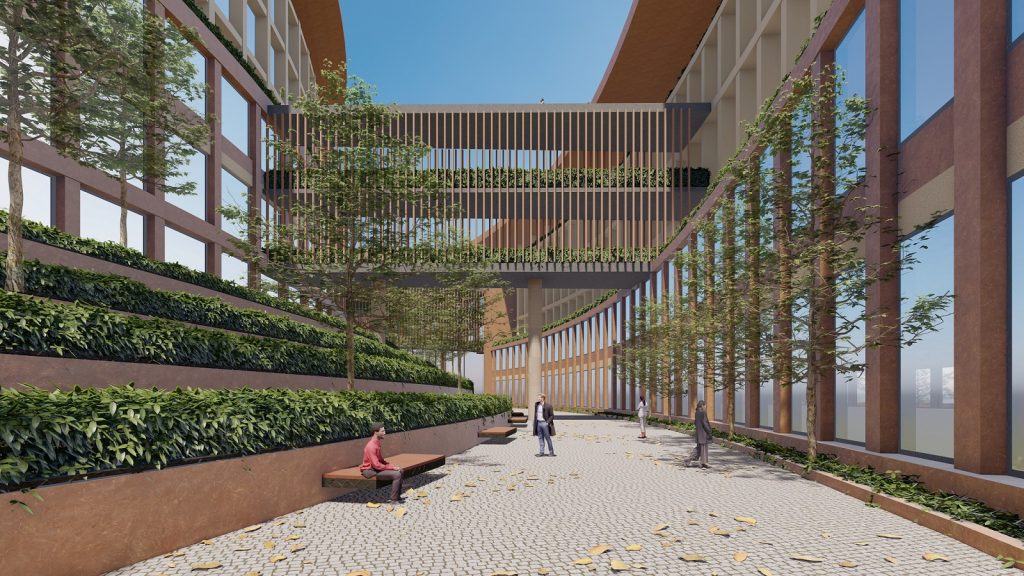
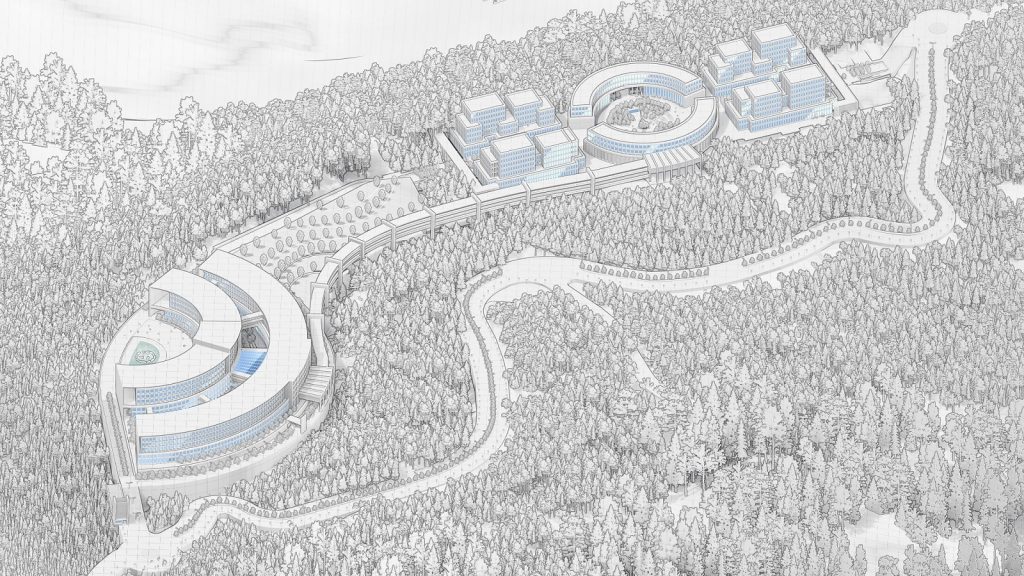
The masterplan responds to the site’s natural contours, with the Secretariat and Directorate clusters anchored along a north-south ridgeline and watershed zones. Respecting steep slopes and forest edges, the design minimizes hardscape and lets terrain shape the built form. Massing evolves as interlocking blocks, stepped platforms, shaded paths, and elevated connectors—each tuned to land and climate. The two main clusters—Secretariat for ministerial and public-facing functions, and Directorate for departmental offices—are linked by a 500-meter shaded bridge that offers both utility and experience. Together, they form a compact, legible, and symbolic civic ensemble.
A civic landscape that balances administrative
gravitas with social vibrancy
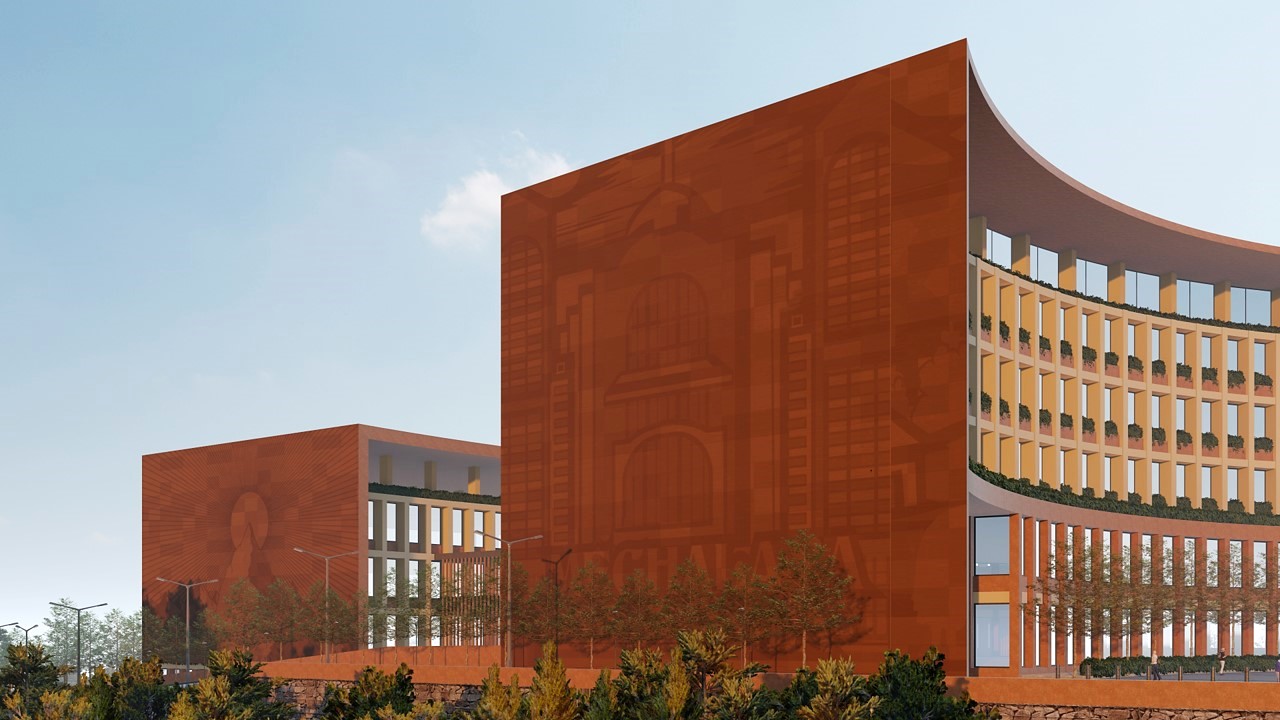
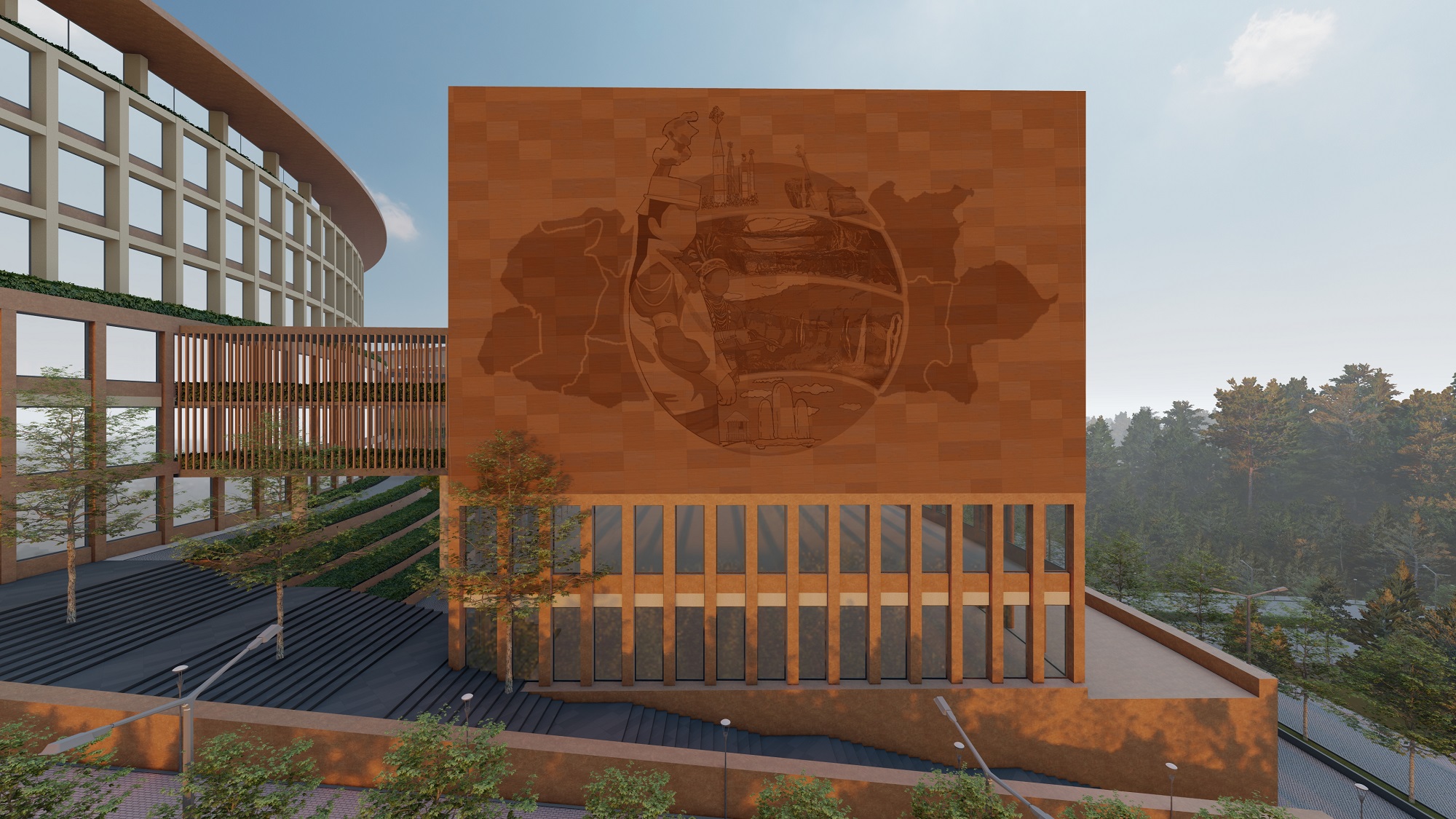
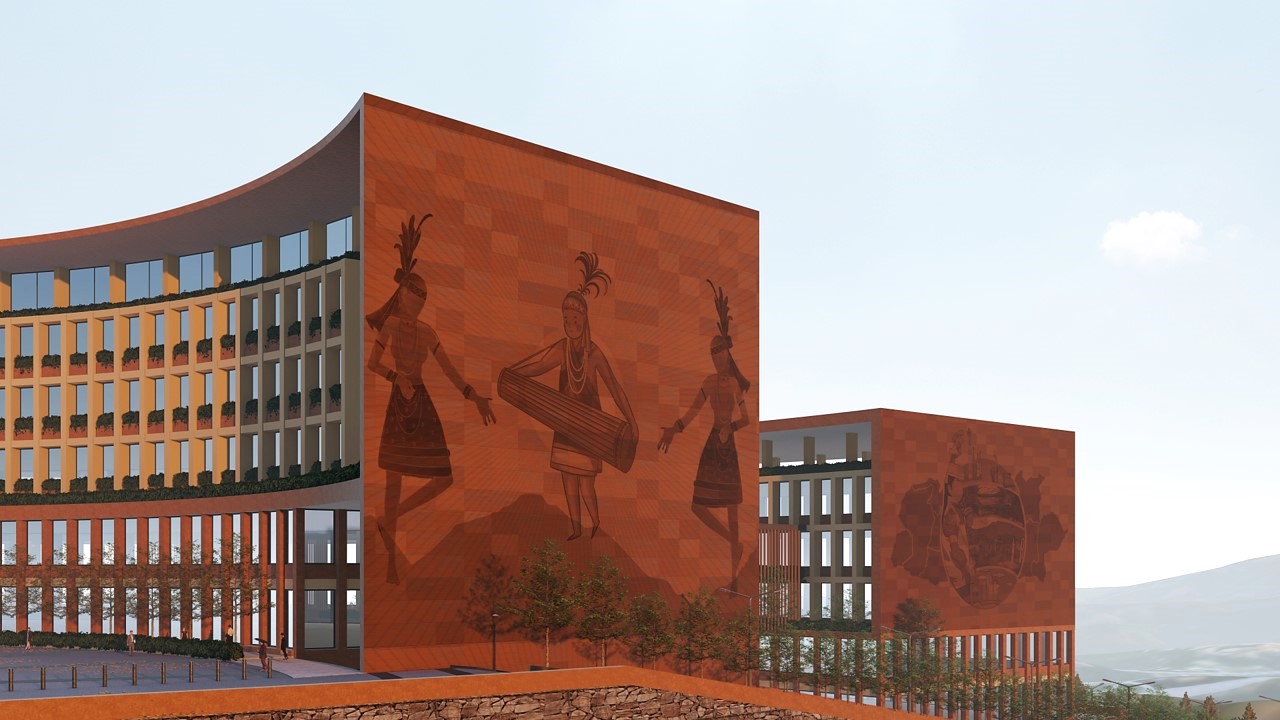
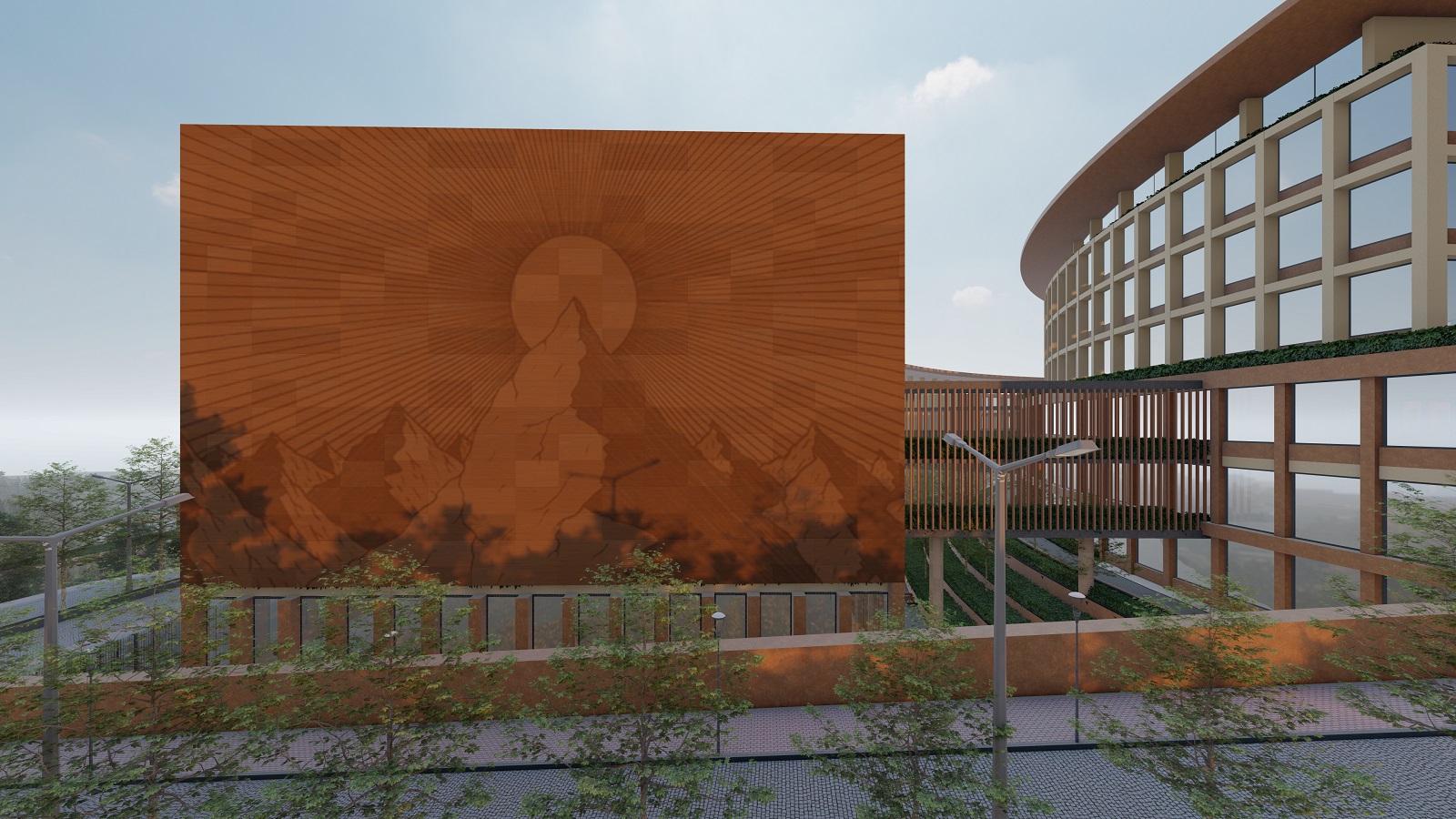
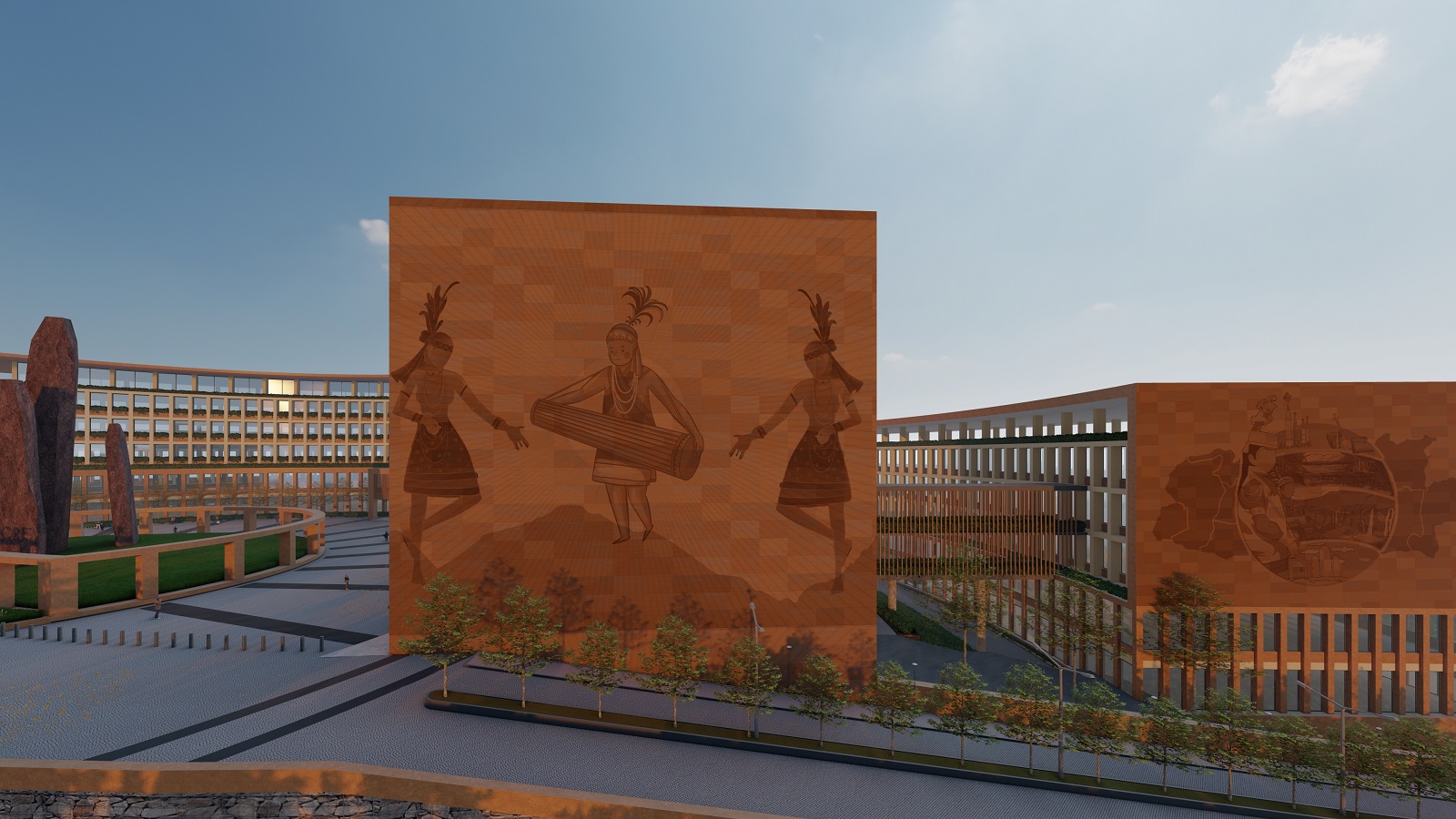
The architectural vocabulary is shaped by principles of compactness, context, and monumentality, expressed through bold geometries, strong axiality, and locally rooted material articulation. A central arrival plaza leads to a grand stepped forecourt—both civic stage and cultural threshold—while the built form unfolds in concentric rings with courtyards, shaded corridors, and bridge connectors facilitating inter-departmental flow. The facades integrate stone jaalis patterned on traditional weaves, bamboo and cane-inspired screens, and murals depicting the Khasi, Jaintia, and Garo tribes—transforming the complex into a contemporary institution that reflects Meghalaya’s identity through craft, climate-responsiveness, and symbolism.
A civic realm where transparency and
accessibility shape institutional engagement
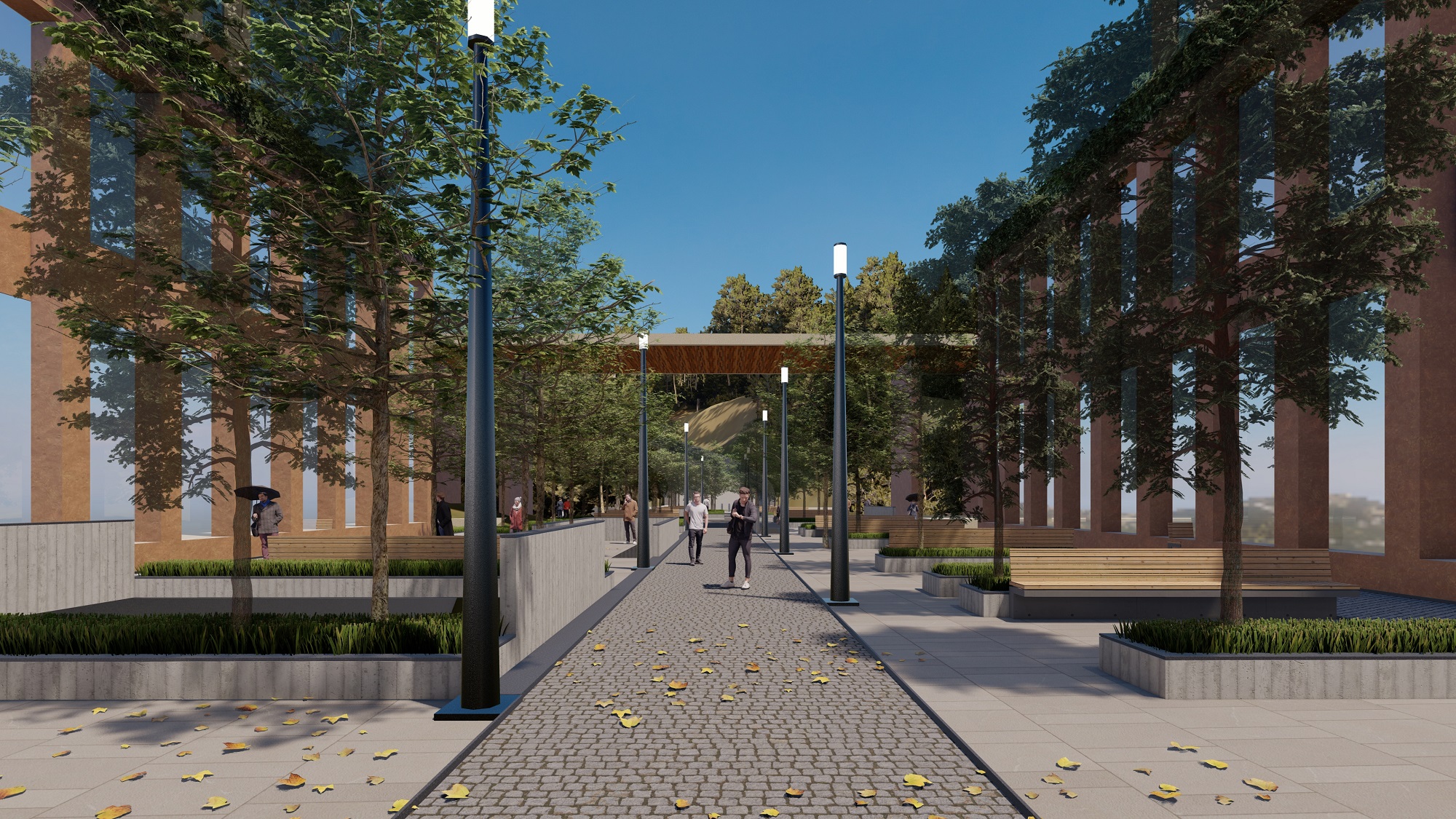
Envisioning governance as open and inclusive, the design prioritizes public interface, universal accessibility, and intuitive wayfinding through a series of shaded pedestrian routes, accessible ramps, and legible signage systems. The public is invited to interact with the complex—not only through formal access but through walkable boardwalks, viewing decks, and green corridors that blur the boundary between institution and citizen.
Each component—from the CM’s Office to administrative work halls—is scaled to balance security, function, and accessibility. Public thoroughfares pass through landscaped courts, while internal connectors provide breakout zones and visual relief for staff.
A framework where green thinking informs
structure, space, and systems
In line with global and national sustainability goals, the Meghalaya Secretariat is designed to perform at every level—passive, active, and systemic. Built on the philosophy of “minimum footprint, maximum resilience,” the planning incorporates climate-responsive orientation, solar energy generation, water-sensitive landscaping, and material efficiency. Green courts, rooftop gardens, and shaded pathways thread through the site, creating a rhythm of work, pause, and interaction.
The masterplan encourages Live–Work–Leisure integration, blending public spaces with the functionality of a state headquarters-a place where governance is not hidden behind walls but expressed through transparency, openness, and inclusivity.
"A Civic Landmark that Weaves Together
Tradition, Terrain, and the Aspirations of a
New Meghalaya."







 Noida, Uttar Pradesh, India