
Steel Structure Is Not an Alternative.
It Is the Future.
By Ar. Jayesh Hariyani, Founding Director, Senior Principal
India is building at an unprecedented pace. Cities are expanding vertically, skylines are evolving, and the demand for faster, more efficient building construction continues to grow.
Yet, despite this rapid transformation, much of our urban development still relies on conventional construction materials.
The question is no longer whether we can build taller. It is whether we are building better.
Because the future of high rise building design and tall buildings will not be defined by scale alone—but by how intelligently we use structure, materials, and time.
Is Concrete Limiting India’s Construction Potential?
For decades, reinforced concrete has been the backbone of most construction materials used in commercial buildings across India. It is familiar, widely accepted, and deeply integrated into the construction ecosystem.
But familiarity often comes at the cost of innovation.
This is where the shift toward steel structure begins to make sense—not as an alternative, but as an evolution.
Concrete-based systems:
01
Extend construction timelines
02
Restrict flexibility in structural design
03
Limit large, column-free spaces
04
Increase environmental impact
As cities become denser and more dynamic, these limitations become more visible.
Steel Structure: Designing Beyond Constraints
Steel changes the way architects think—not just about structure, but about space and time.
Unlike conventional systems, a steel frame structure allows:
This becomes even more relevant in tall structures, where efficiency, adaptability, and long-term performance are essential. Buildings are no longer static—they evolve with changing users, technologies, and functions. This also raises a larger question about how we evaluate construction
materials today—not just by cost, but by performance, lifecycle impact, and adaptability. Steel enables that evolution.
Speed, Precision, and the Rise of Prefabrication
One of the most transformative aspects of steel is its compatibility with prefabricated construction and modular construction systems.
Instead of building everything on-site, components are manufactured with precision off-site and assembled efficiently.
This leads to:
Systems like PEB buildings (pre engineered buildings) demonstrate how construction can shift from a labor-intensive process to a precision-driven system. In fast-growing urban environments, this shift is not just beneficial—it is essential.
Case Studies: When Steel Becomes Strategy, Not Just Structure The potential of steel becomes most evident when it is not treated as a material choice, but as a design strategy.
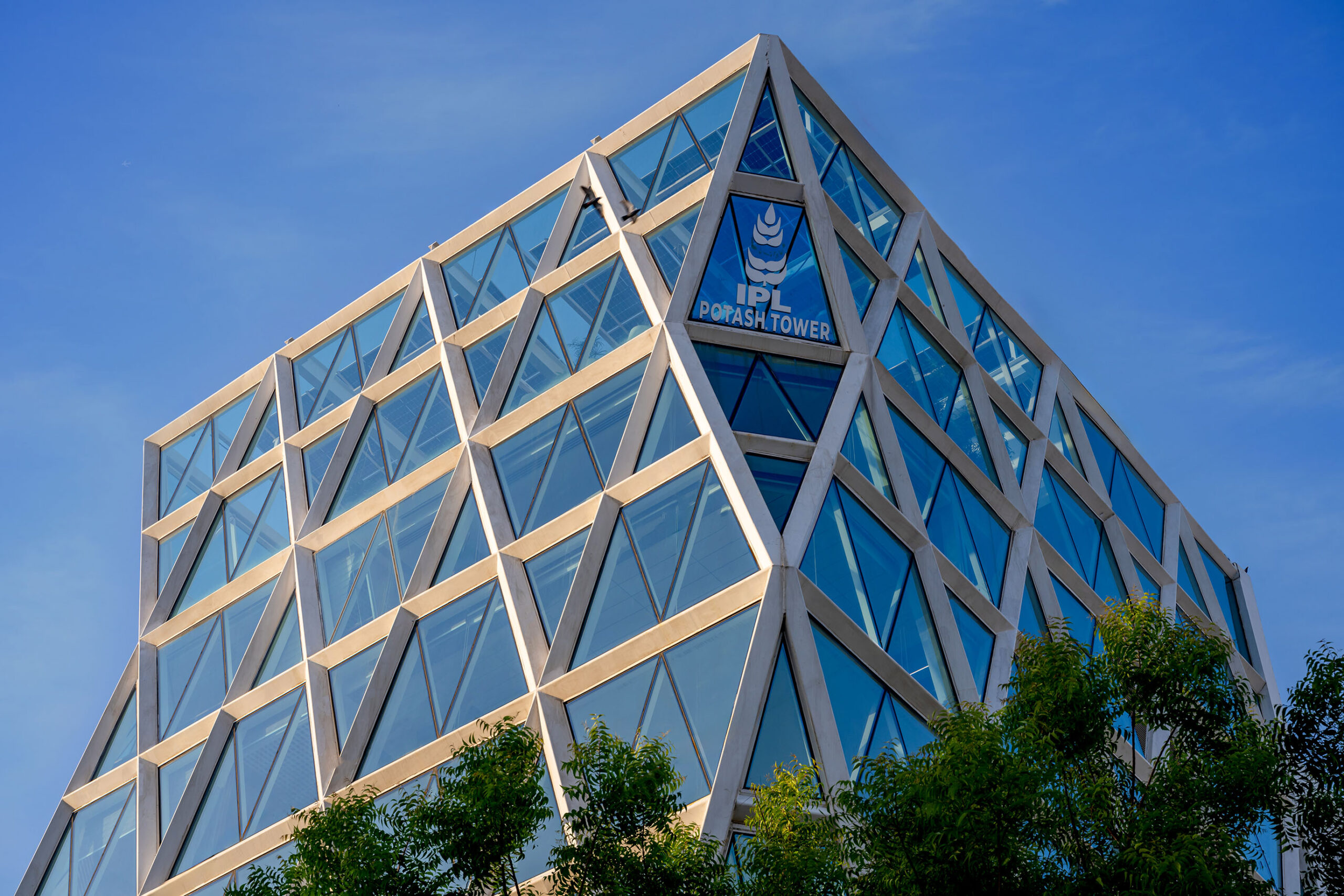
Rethinking High-Rise Efficiency: Potash Tower
In high-rise construction, structure often dictates spatial limitations. But when approached differently, it can become a generator of flexibility.
Here, the structural system is integrated with the building envelope, allowing efficient load distribution while creating large, column-free interiors. The result is not only structural efficiency, but also enhanced adaptability in how spaces can function over time.
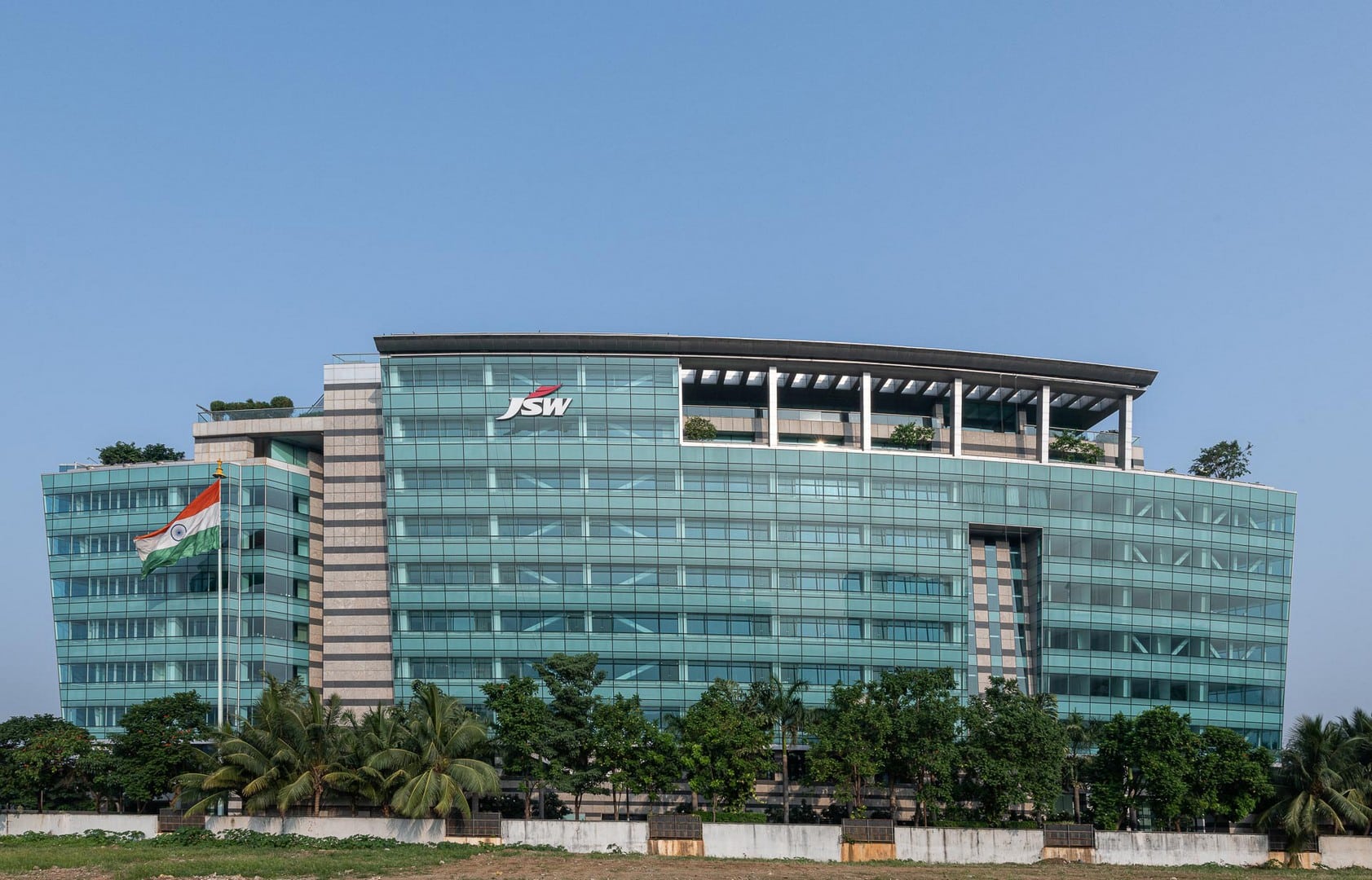
Future-Ready Workspaces: JSW Headquarters
Corporate environments today demand openness, collaboration, and adaptability.
The adoption of a complete steel structure system enabled large-span, flexible workspaces organized around a central atrium. The integration of structure with façade performance created a high-efficiency workplace that responds to both environmental and functional needs.
This demonstrates how sustainable construction is not just about materials—but about systems that perform better over time.
Lightness and Scale: Nashik Airport
Infrastructure projects require a balance between scale, efficiency, and user experience.
The use of long-span steel structure in airport design allows the terminal to achieve column-free interiors and a fluid architectural form. The roof structure, inspired by movement and lightness, creates a dynamic spatial experience while maintaining structural efficiency.
This is where steel moves beyond engineering—it begins to shape experience.


Transforming Public Spaces: Eden Gardens
Large public venues demand clarity, safety, and seamless movement.
The use of long span structures in public infrastructure helped unify a previously fragmented complex into a cohesive, high-performance environment. The integration of structure and façade improved not just the building’s performance, but also the overall user experience. This highlights how steel can redefine large-scale public architecture.
Beyond Structure: Performance-Driven Design
Steel allows architecture to move from constraint-based design to performance-driven thinking.
Advanced systems such as diagrid structure frameworks and long span structures enable:
It is not just about building faster—it is about building better.
When combined with sustainable construction strategies, steel contributes to:
01
Lower environmental impact
02
Energy-efficient buildings
03
Smarter use of resources
It is not just about building faster—it is about building better.
Why Steel Hasn’t Fully Taken Off—Yet
Despite its advantages, steel adoption in India is still evolving.
The reasons are less about capability and more about ecosystem:
However, this is changing.
As projects demand greater speed, flexibility, and performance, the industry is beginning to shift toward systems that can deliver more value over time.
Beyond Concrete: The Future of Construction in India
The future of construction will not be defined by a single material—but by systems that respond to changing needs. Steel offers:
It aligns with the realities of modern cities—where time, space, and sustainability are critical.
Steel Is Not an Alternative. It Is the Future.
The future of construction will not be defined by a single choice of construction materials, but by systems that deliver better performance.
The conversation is no longer about replacing concrete.
It is about asking:
What kind of buildings do we need for the future?
Steel structure systems answer these questions—not as an option, but as a direction.
Because the future of India’s skyline will not just rise higher.
Buildings that are:
01
Faster to build
02
Flexible to adapt
03
Efficient to operate
It will become smarter, lighter, and more responsive.