Rapid urbanization, climate stress, and shifting lifestyles are placing
unprecedented pressure on cities and the systems that sustain them.
As land becomes scarce, water more fragile, and supply chains longer
and more vulnerable, the question of how cities produce, access, and
consume food has moved from the periphery to the center of urban
discourse.
Site Area : 4000 SM Builtup Area : 5500 SF Services :Feasibility Study,
Programming, Architecture, Engineering,
PMC, Landscape Design, Sustainability,
Lighting Design, Turnkey - Design Build,
Process Engineering Collaboration : Green Sikka Foundation
Share ►
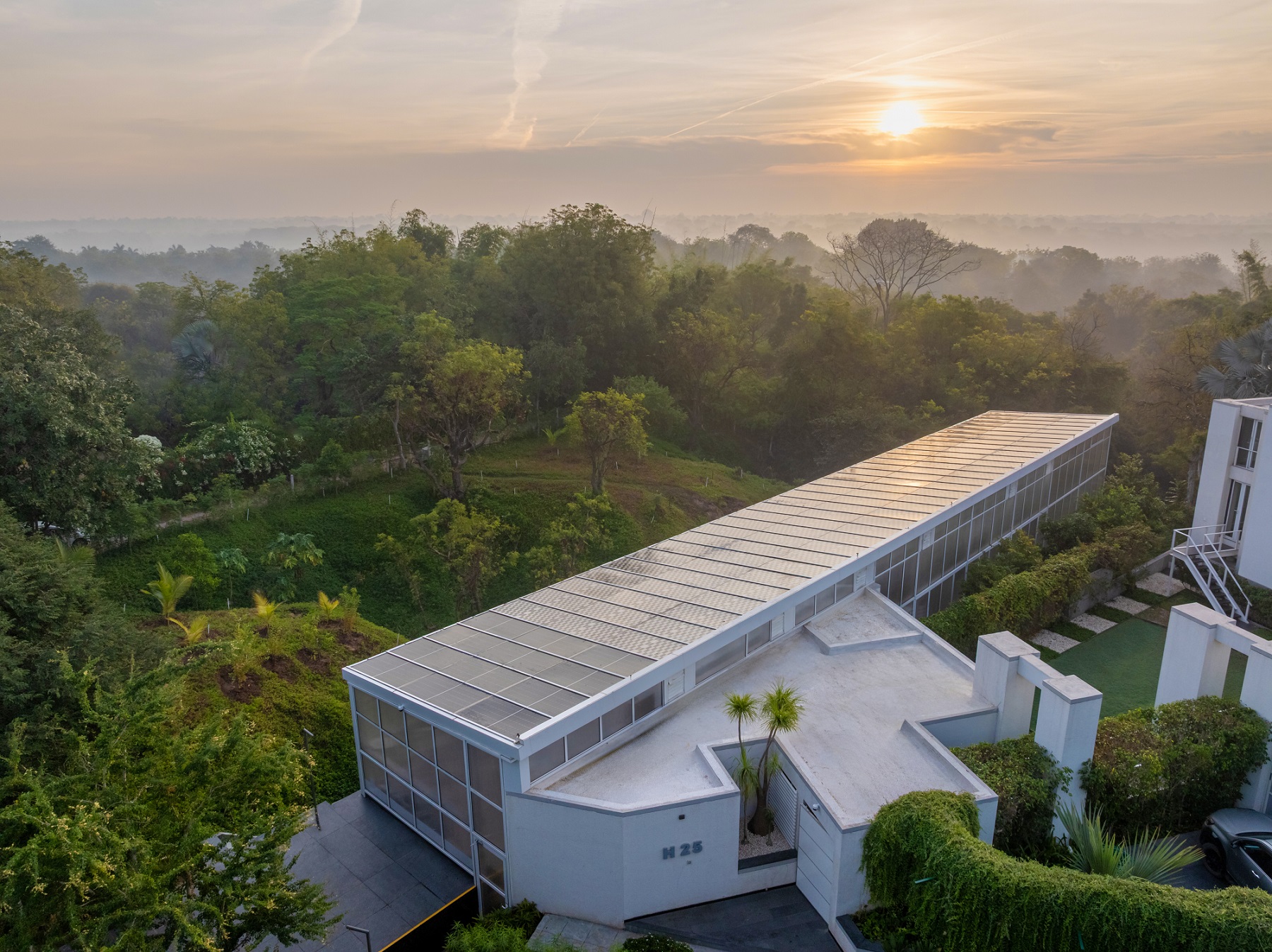
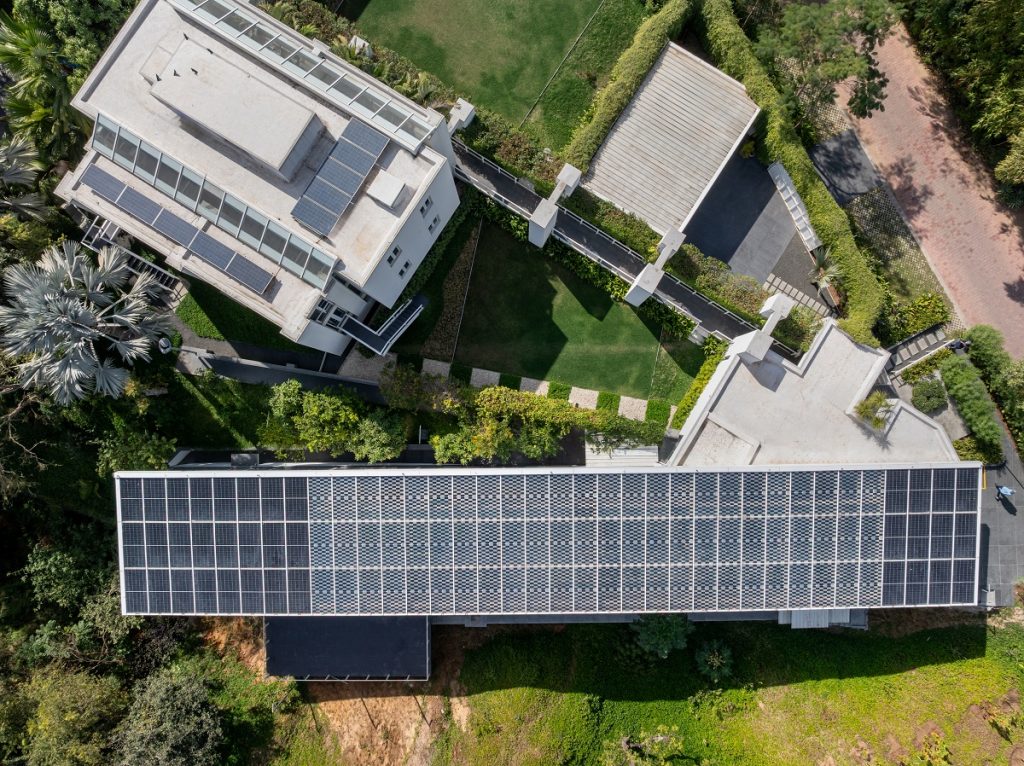
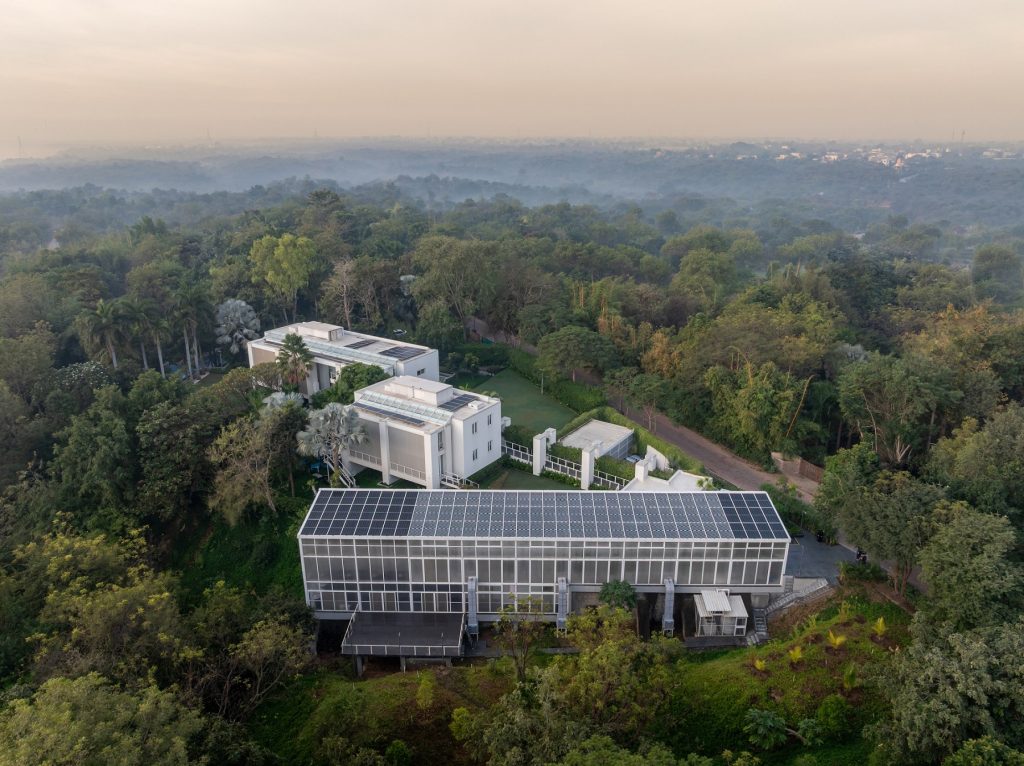
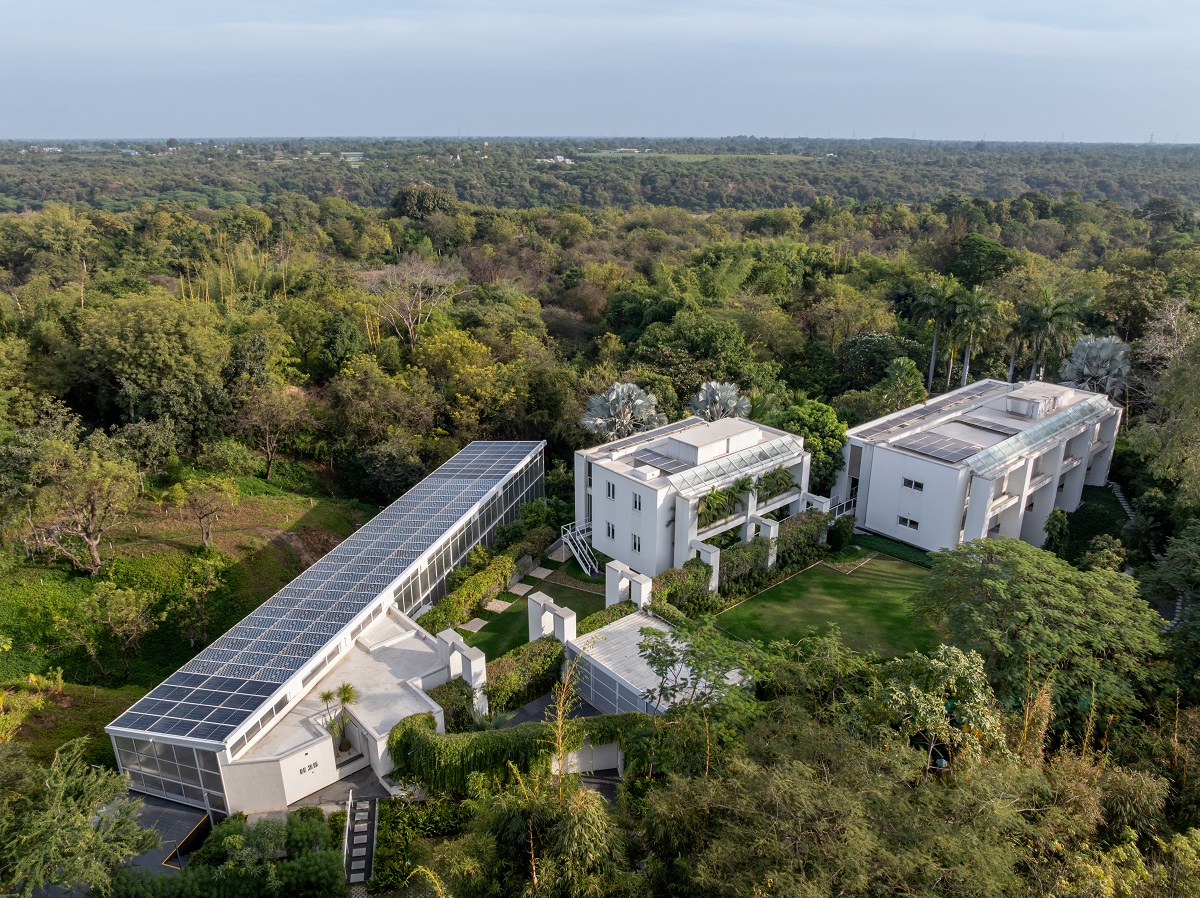
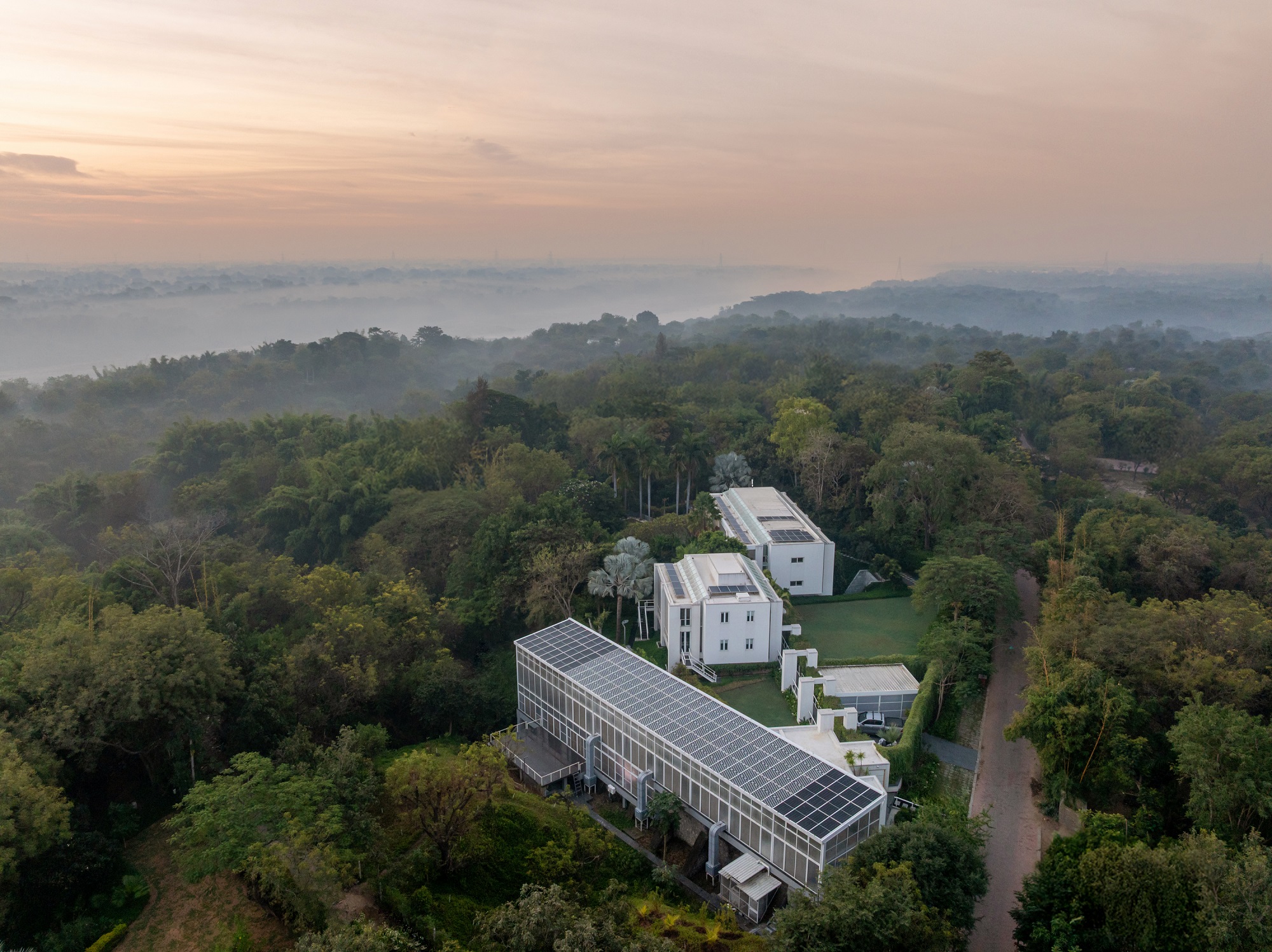
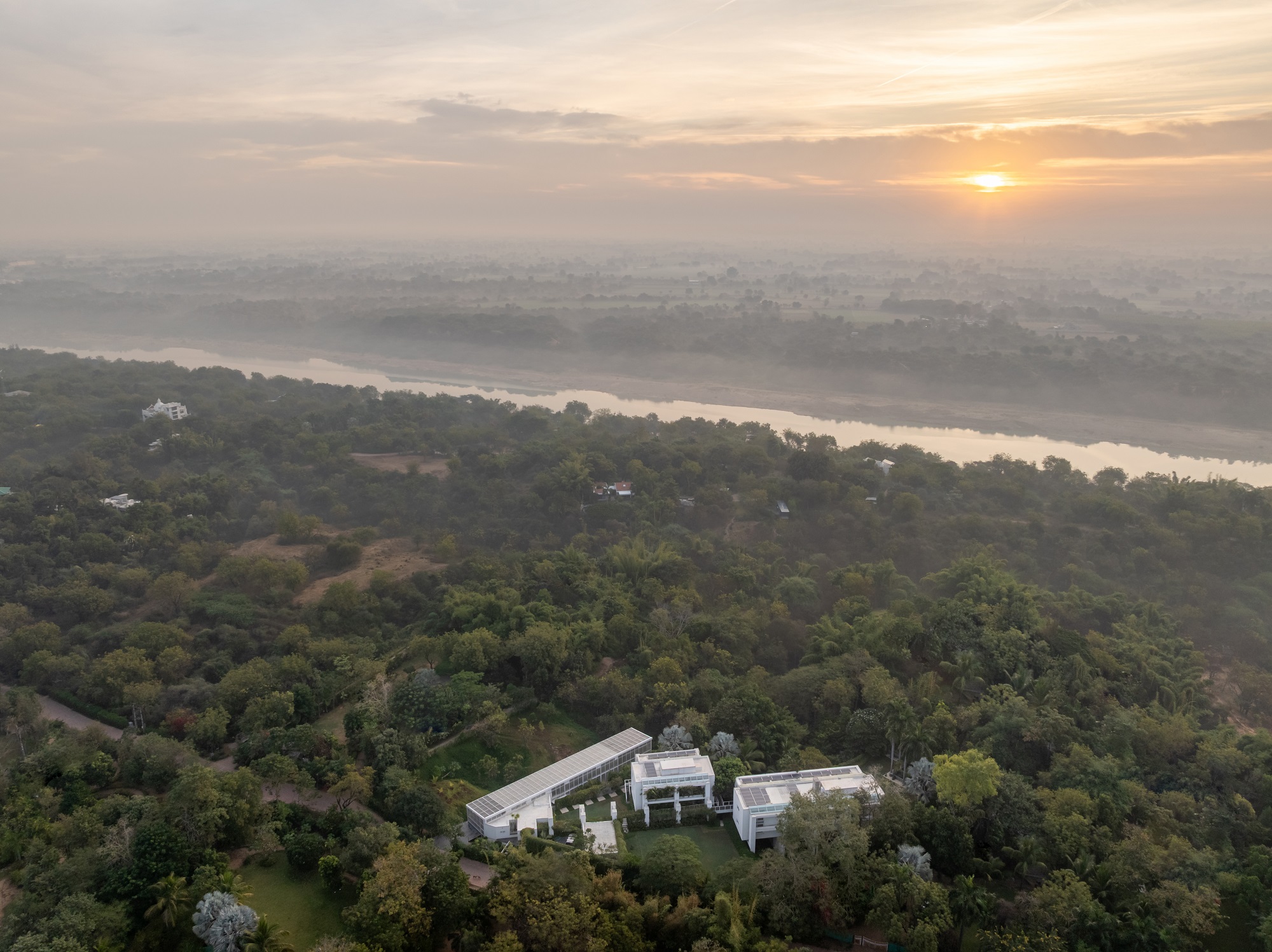
orn from a fundamental inquiry into whether cities can evolve from extractive systems to regenerative ecosystems, Bharatponic is conceived as a net-zero urban farm prototype. Positioned at the intersection of architecture, planning, engineering, and environmental science, the project repositions food production as a critical layer of urban infrastructure, integral to health, resilience, and responsible urban growth.
Adopting a systems-based approach, Bharatponic Farm design recognizes that responsible urbanization cannot be achieved without reintegrating farms into cities. It therefore becomes both a question and a proposition: what if urban farms were designed with the same rigor, intelligence, and beauty as our buildings and cities?
A Design Process Anchored in Clarity and Rigor
The project began with a precisely articulated problem statement and design brief, one that demanded architectural clarity, environmental performance, financial viability, technological appropriateness, and scalability.
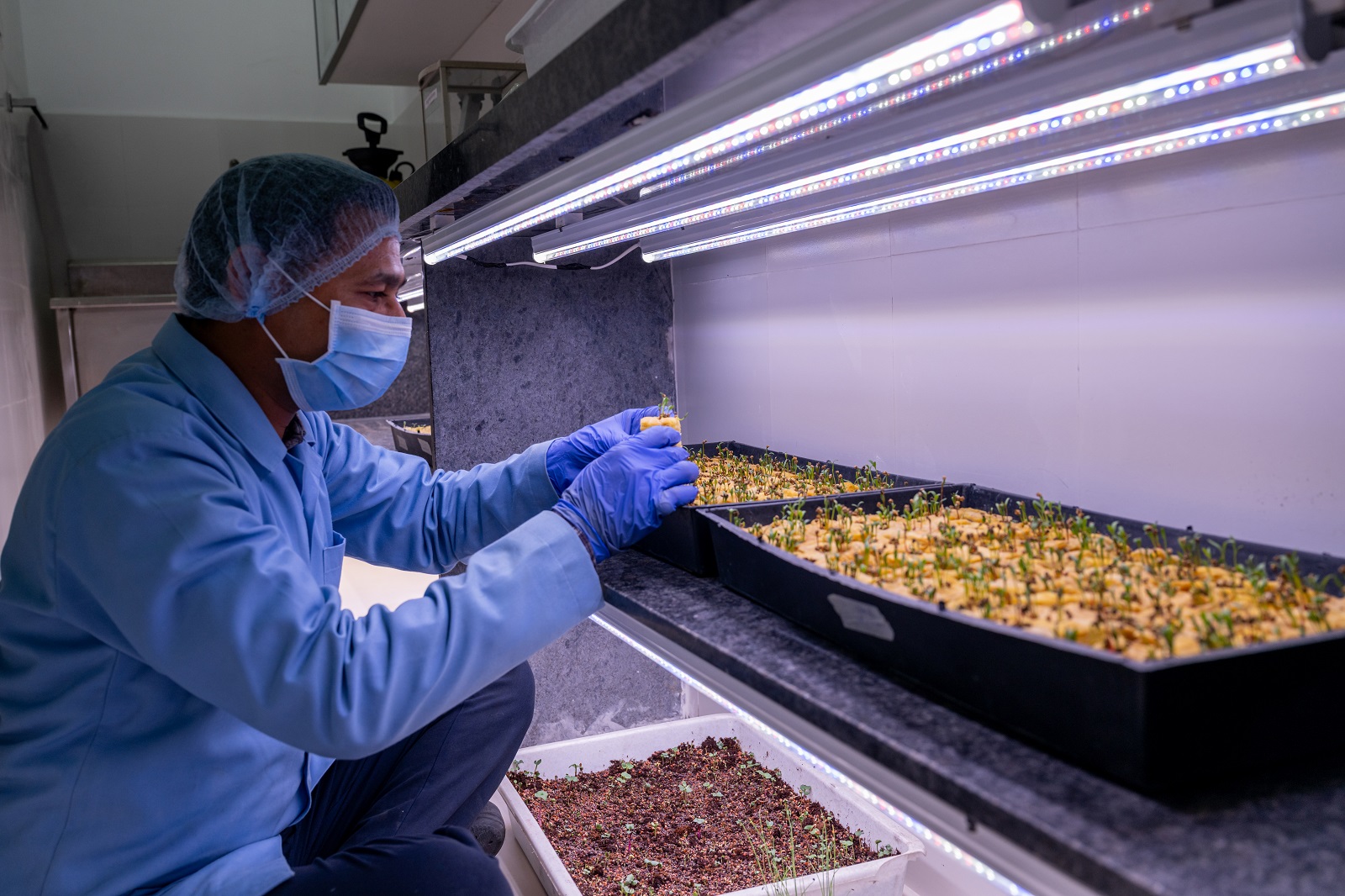
This was followed by an extensive research and benchmarking exercise, analyzing soil-based farming, organic and natural agriculture, and soilless systems including hydroponics, aquaponics, and aeroponics. Each approach was evaluated against key performance indicators (KPIs) such as yield per square meter, resource efficiency, consistency in quality, disease risk, growth cycles, capital expenditure, and life cycle, including operational costs.
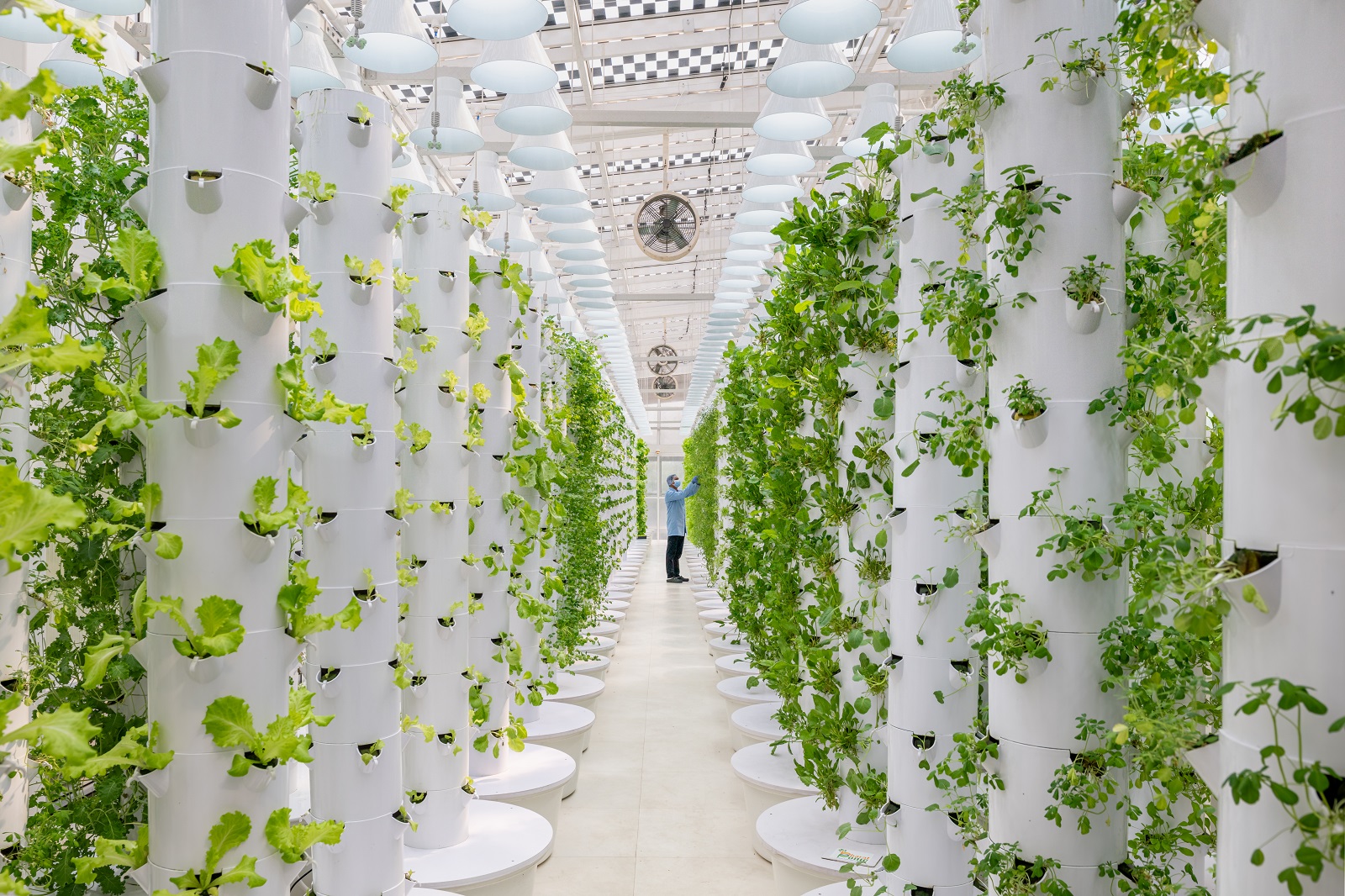
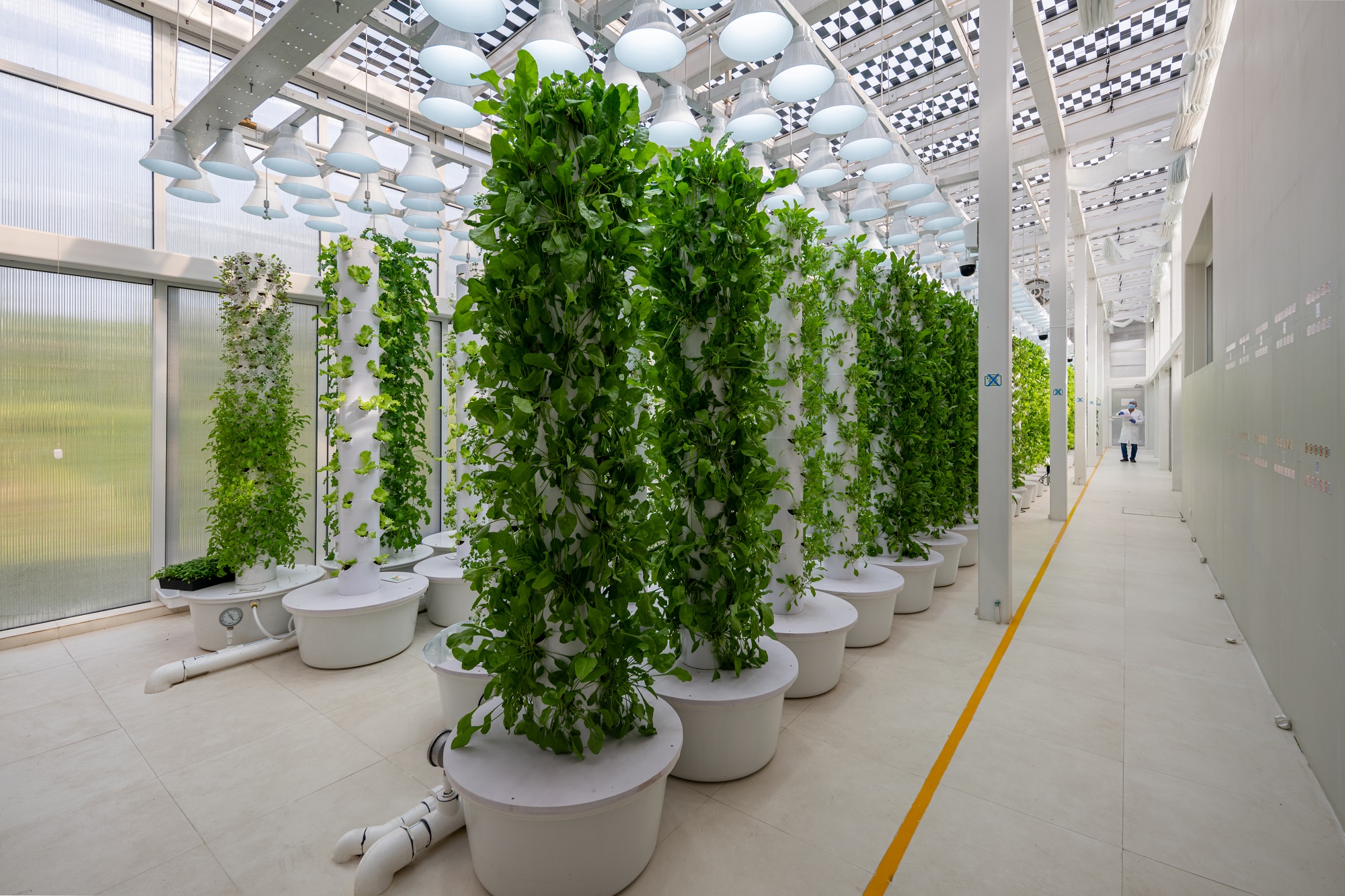
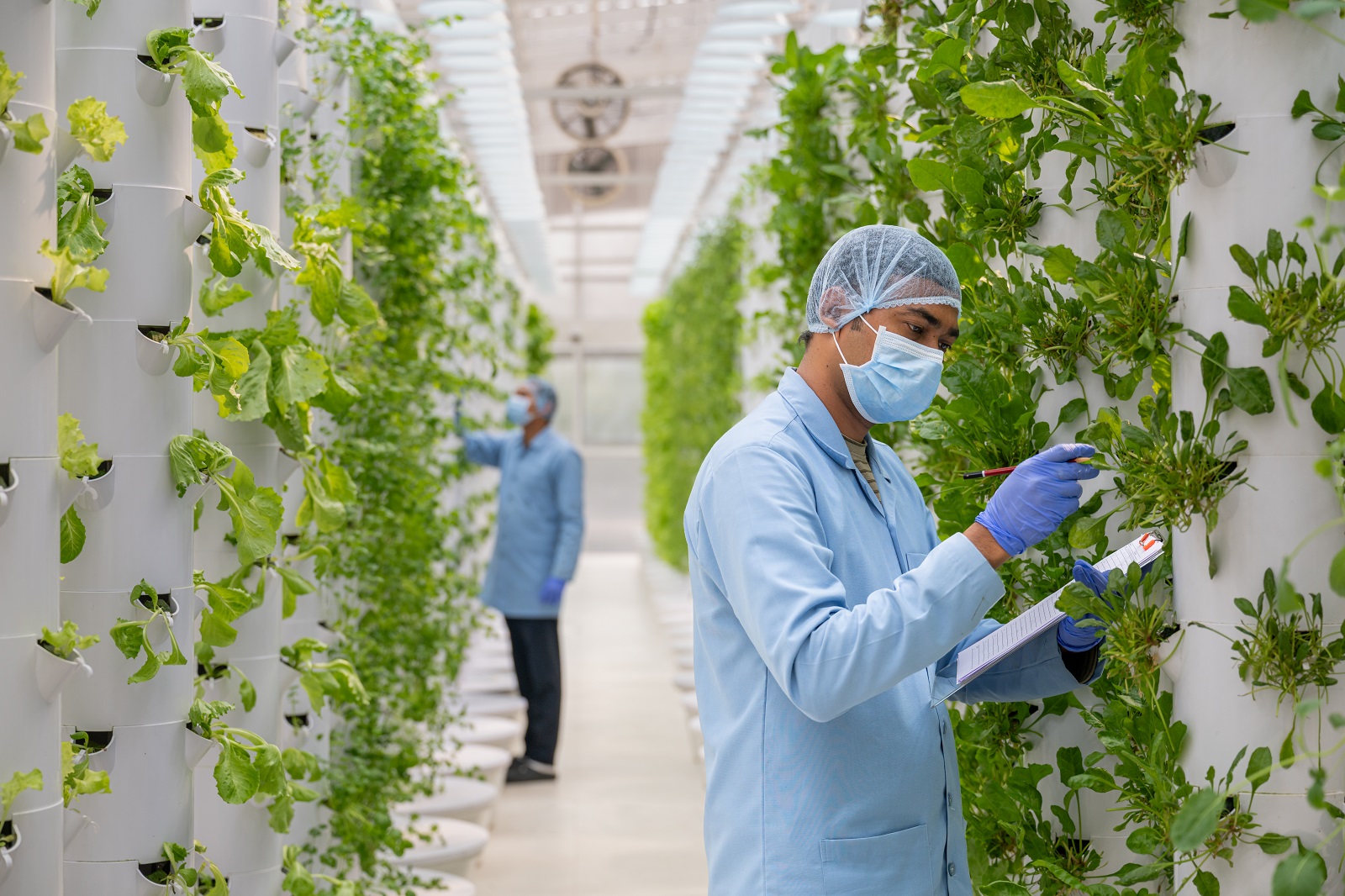
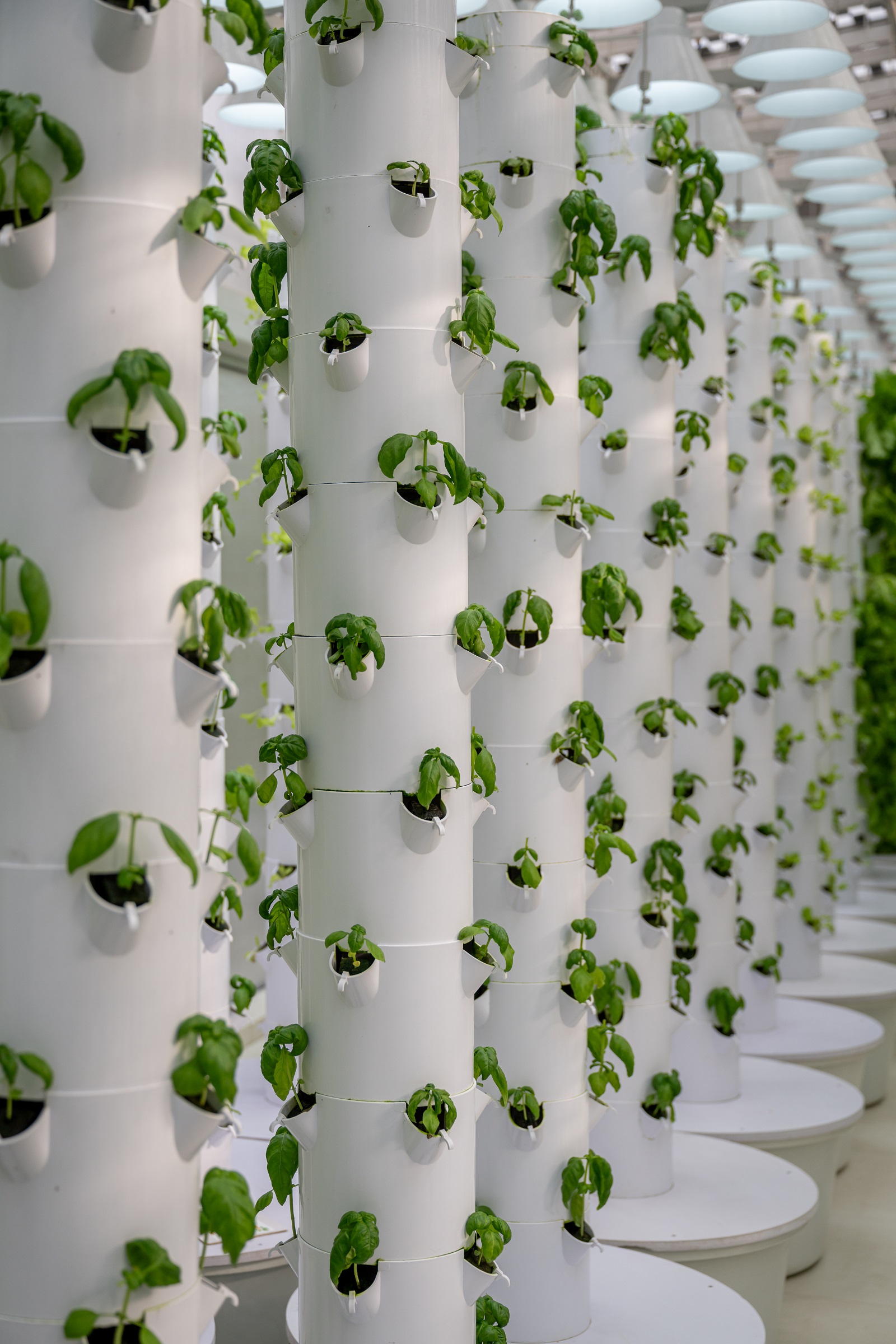
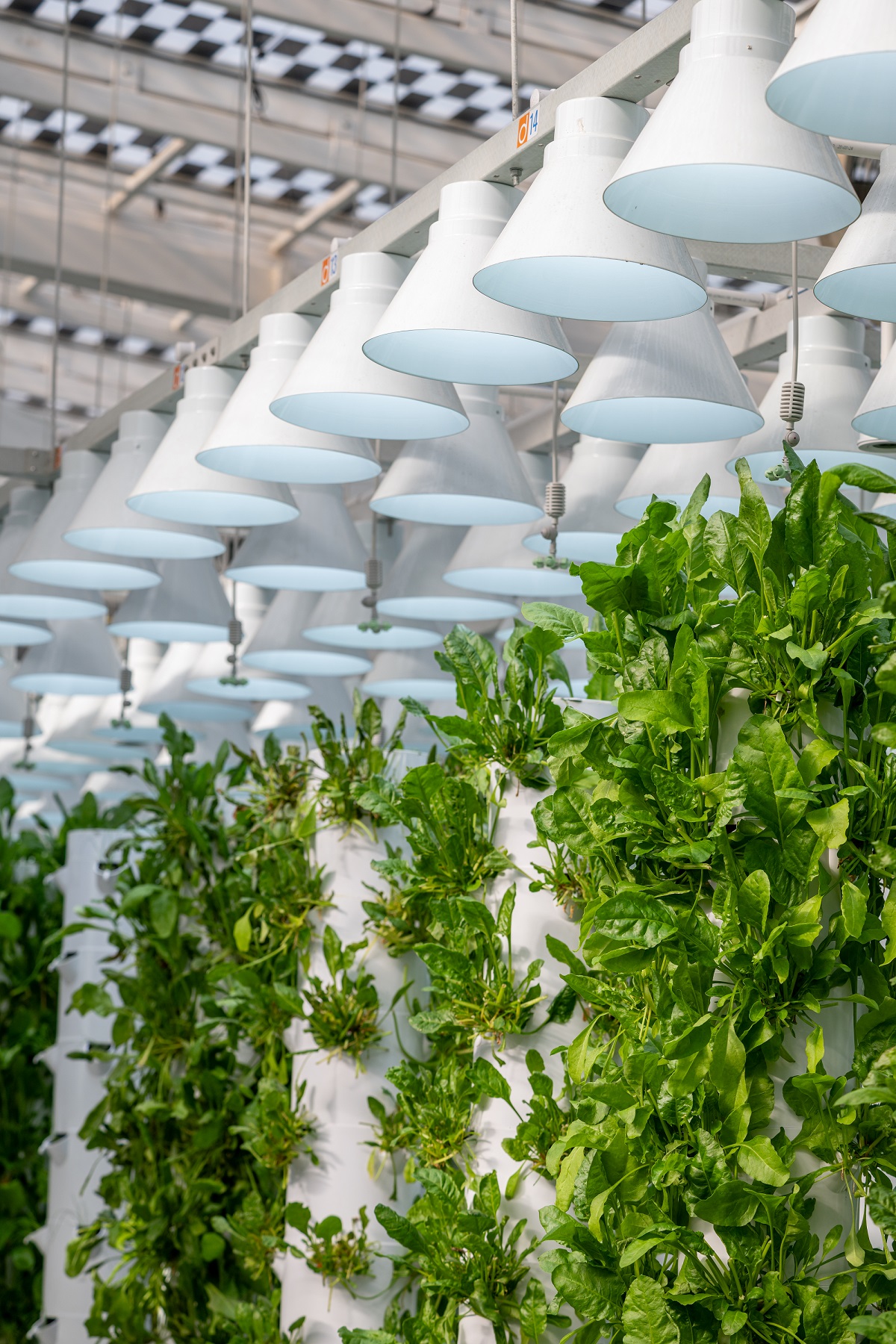
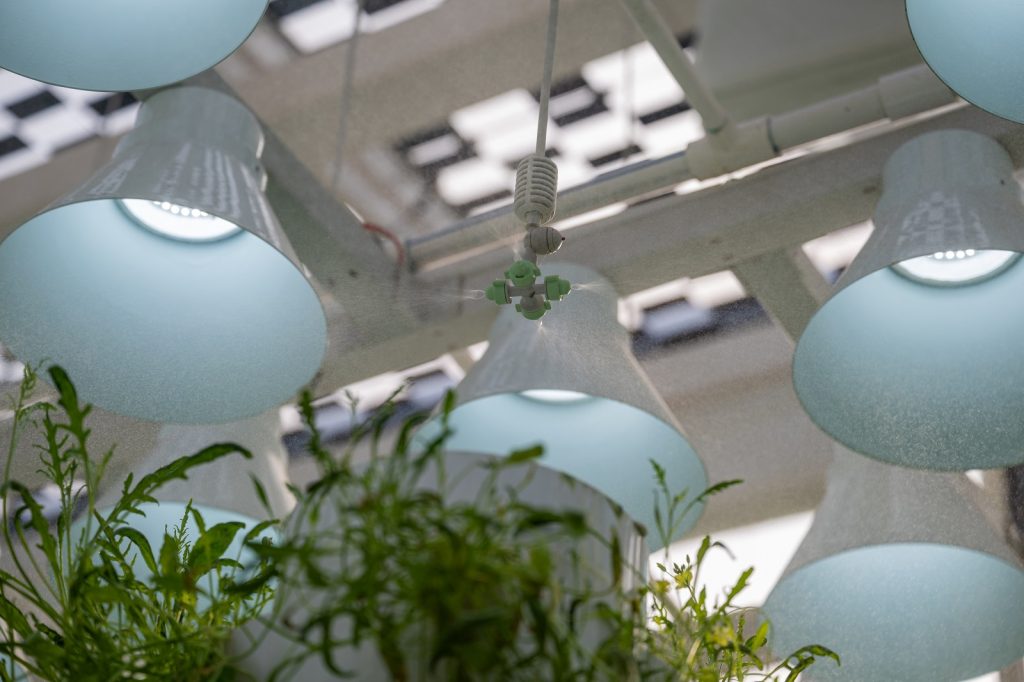
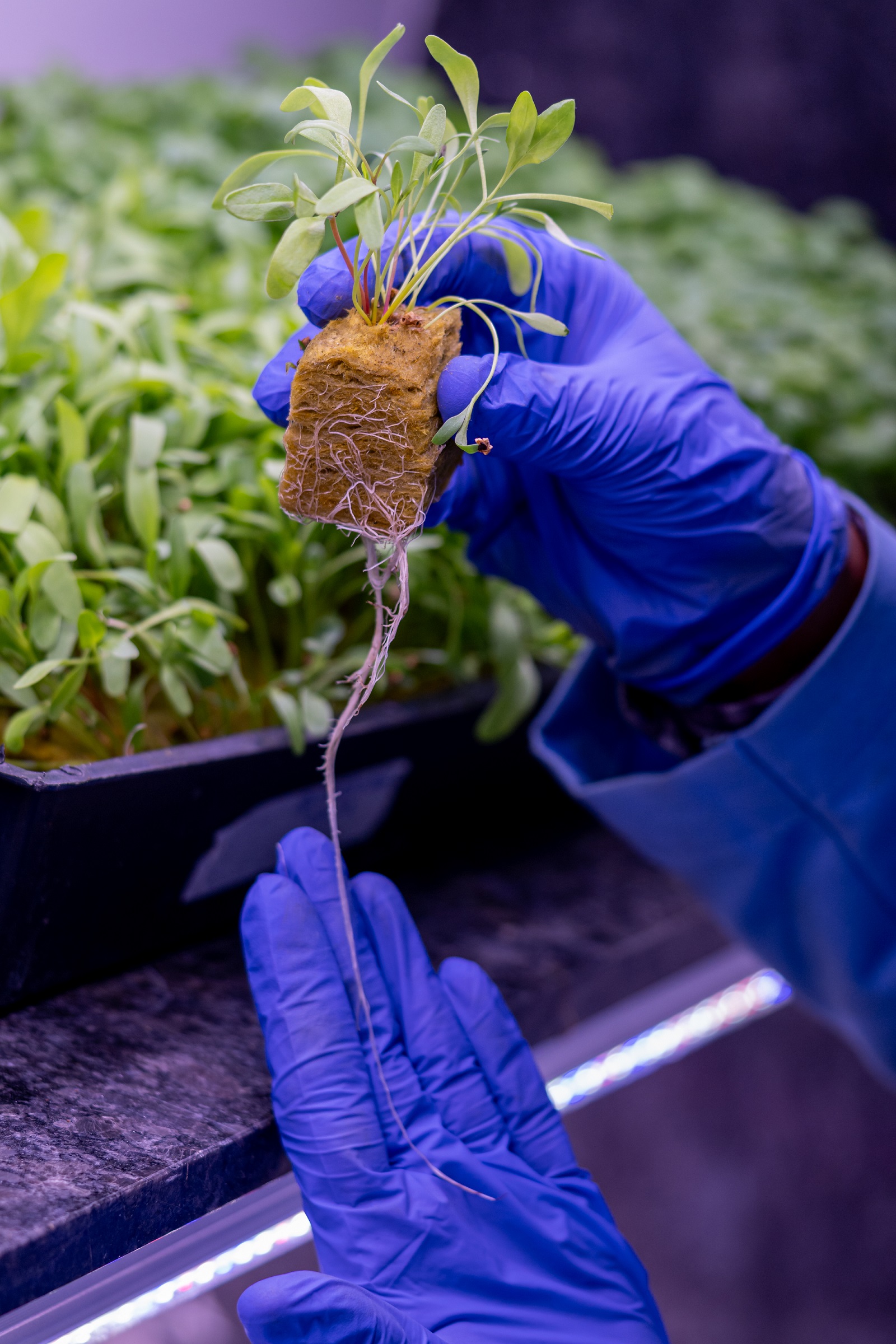
Aeroponics emerged as the most compelling response, offering precision, predictability, and the ability to decouple food production from land and climate constraints. What followed was an iterative, interdisciplinary design process in which architecture, process engineering, agronomy, lighting technologies, water systems, nutrient chemistry, and automation converged into a single integrated framework.
An Architecture of Growth and Adaptability
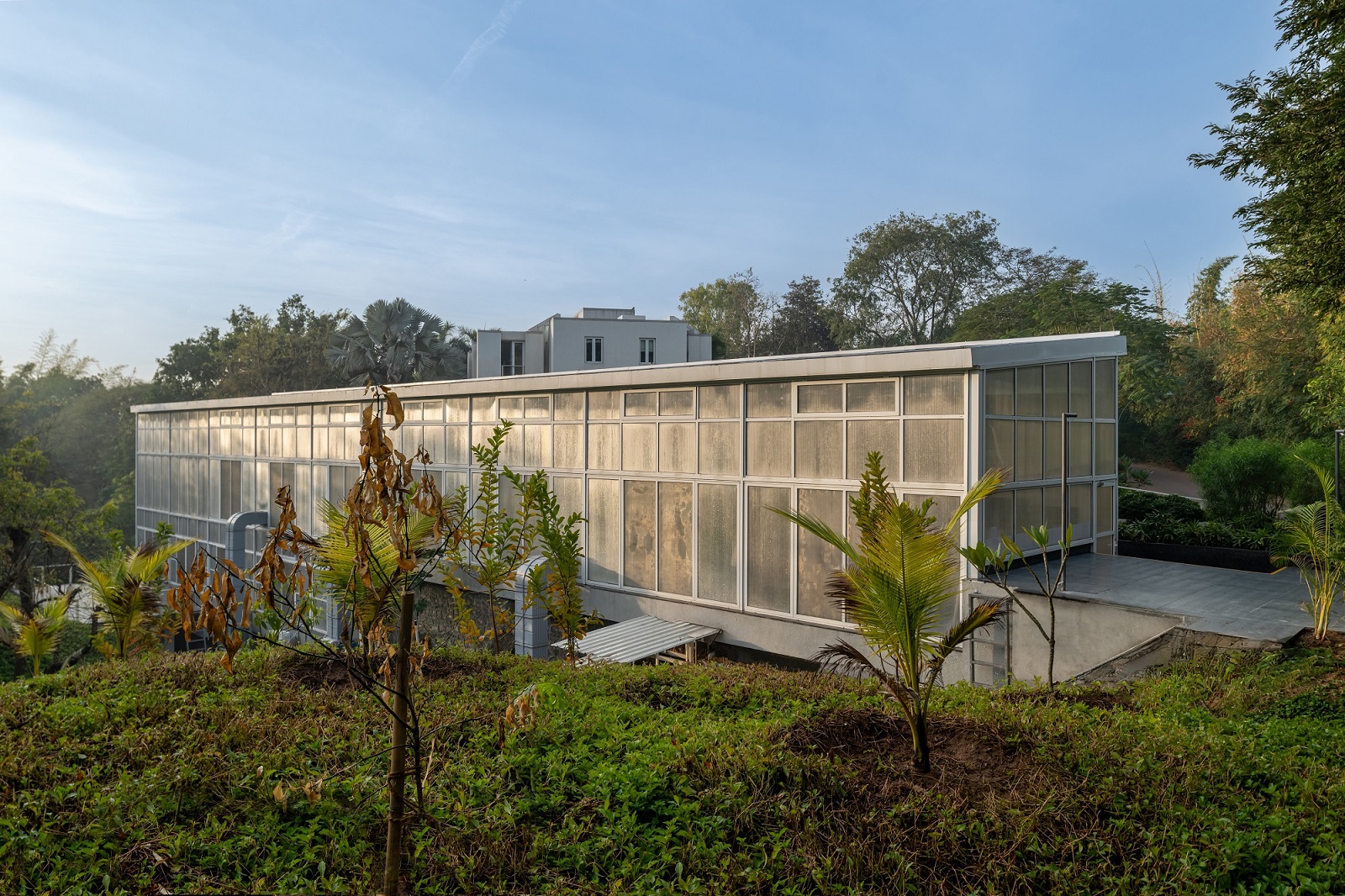
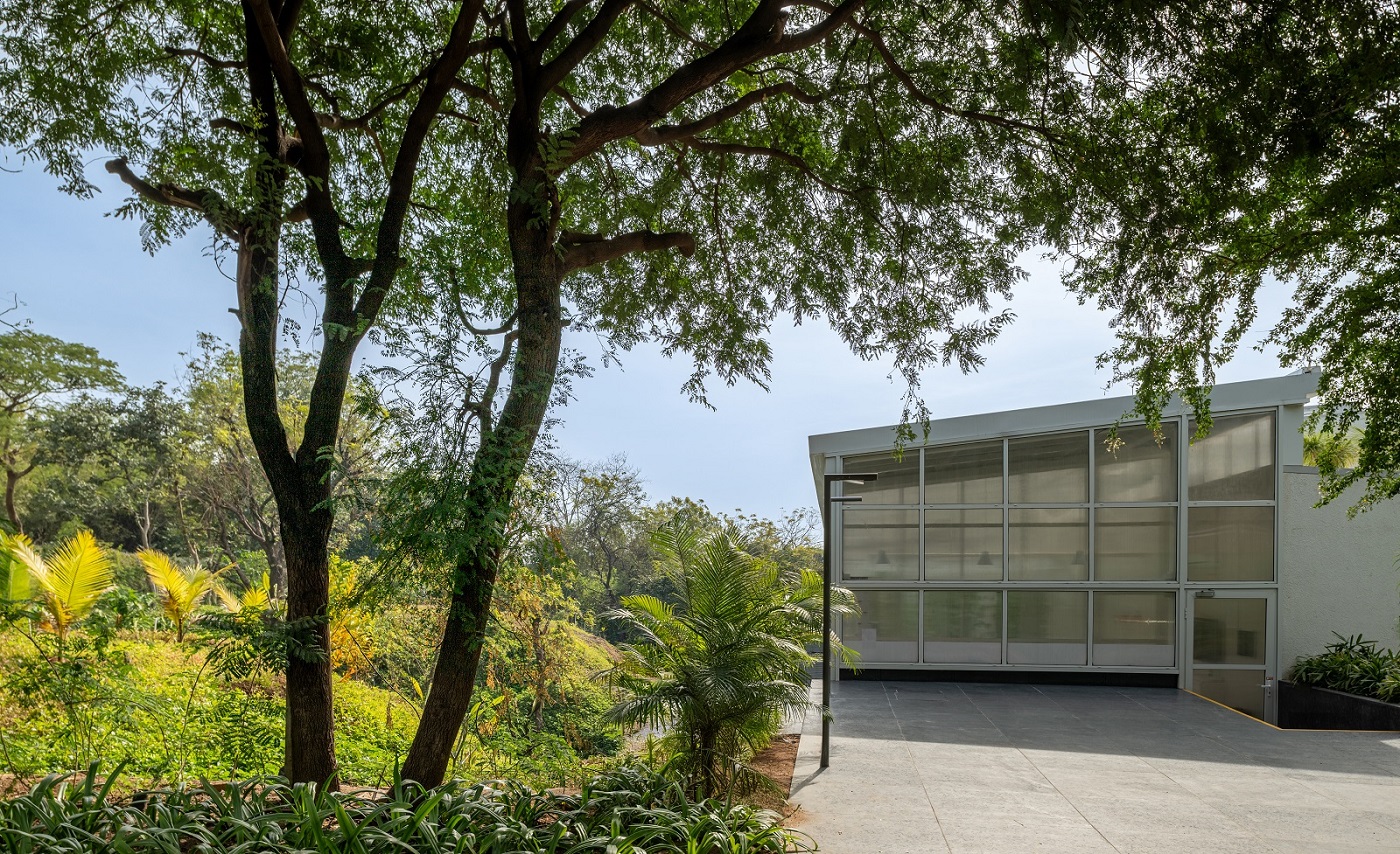
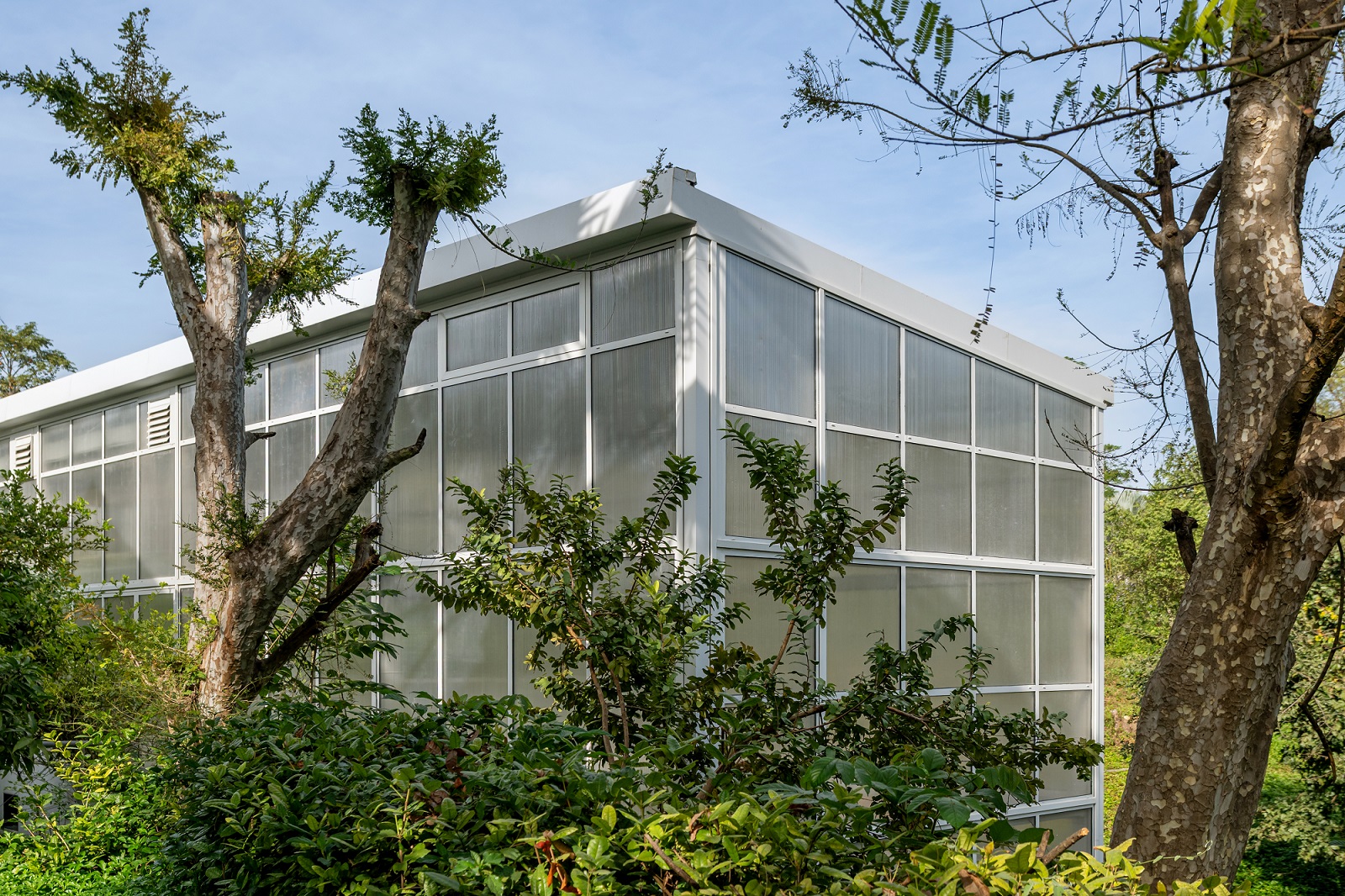
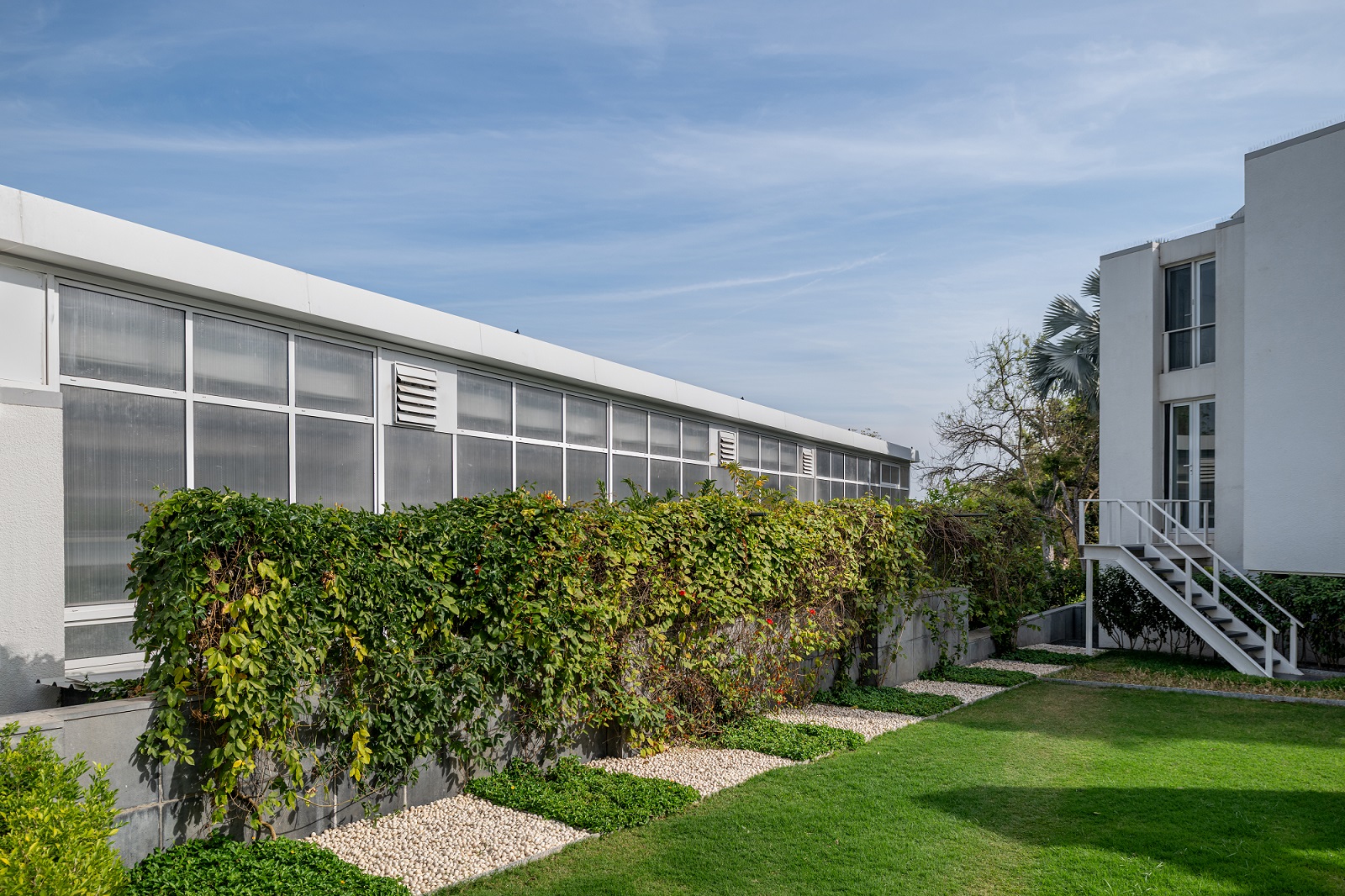
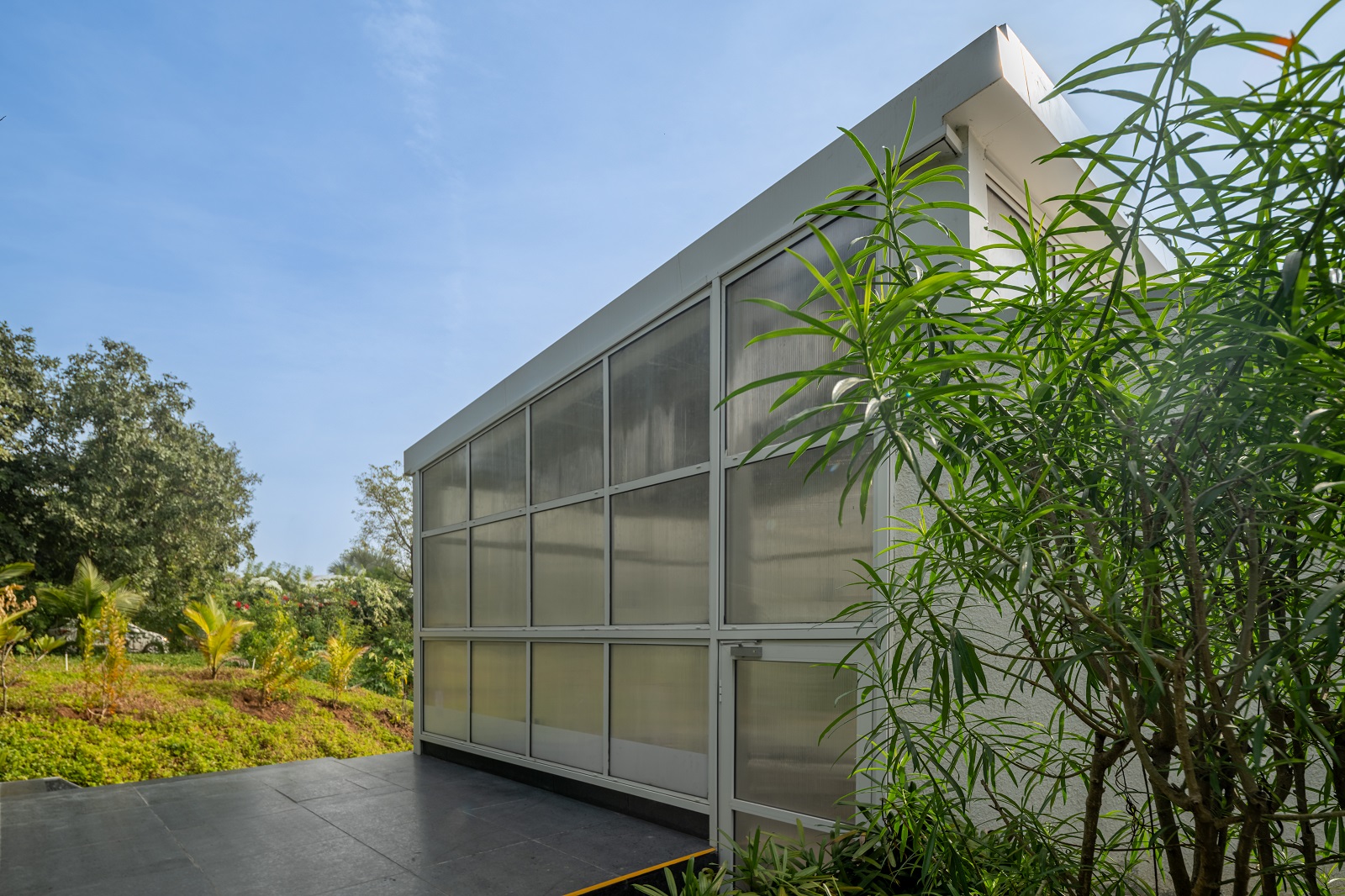
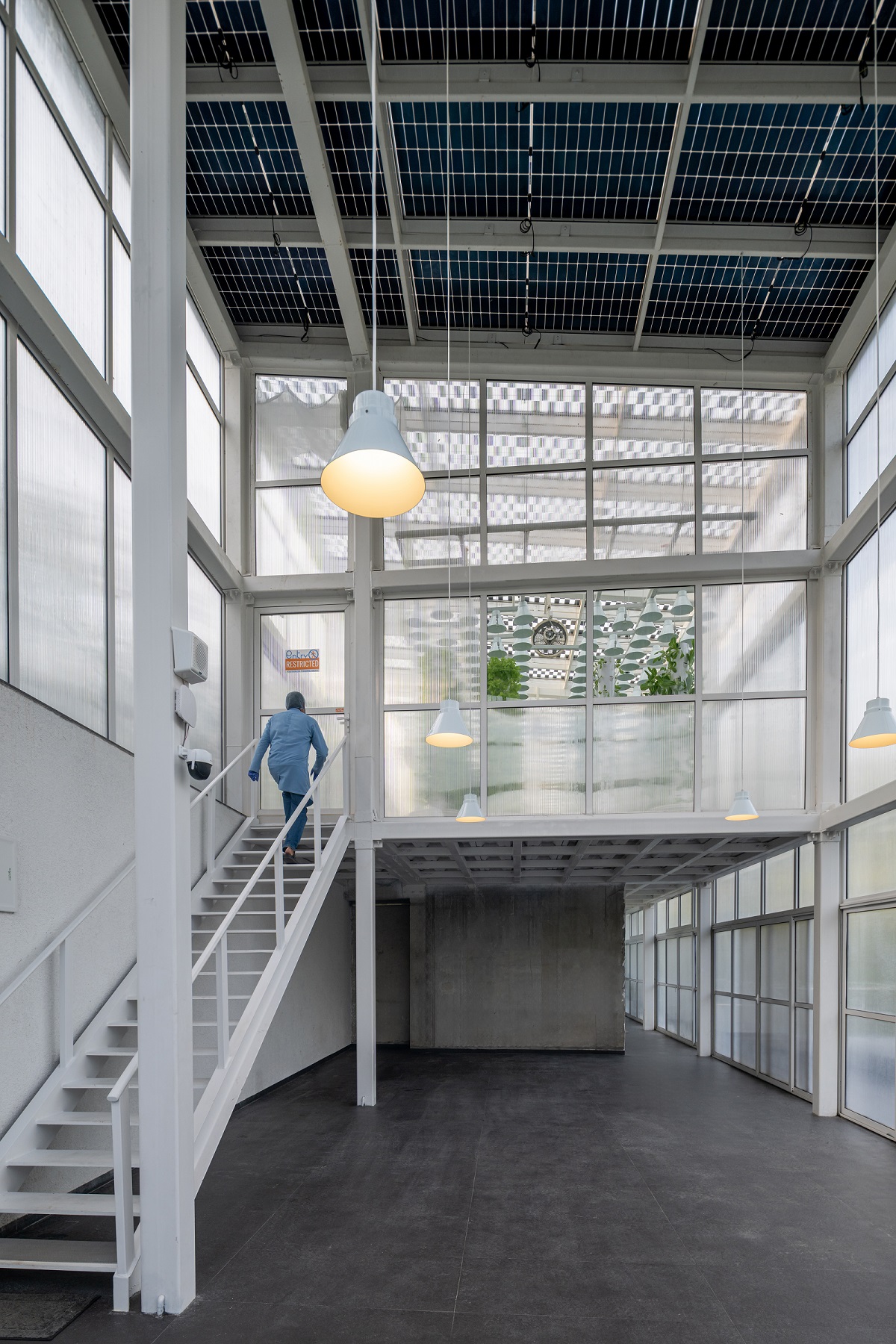
The architectural expression of Bharatponic farm is intentionally restrained, defined by simplicity, modularity, and timelessness. Here, beauty is not ornamental but systemic. Every spatial decision is informed by plant health, airflow, light distribution, hygiene, ease of maintenance, and operational efficiency.
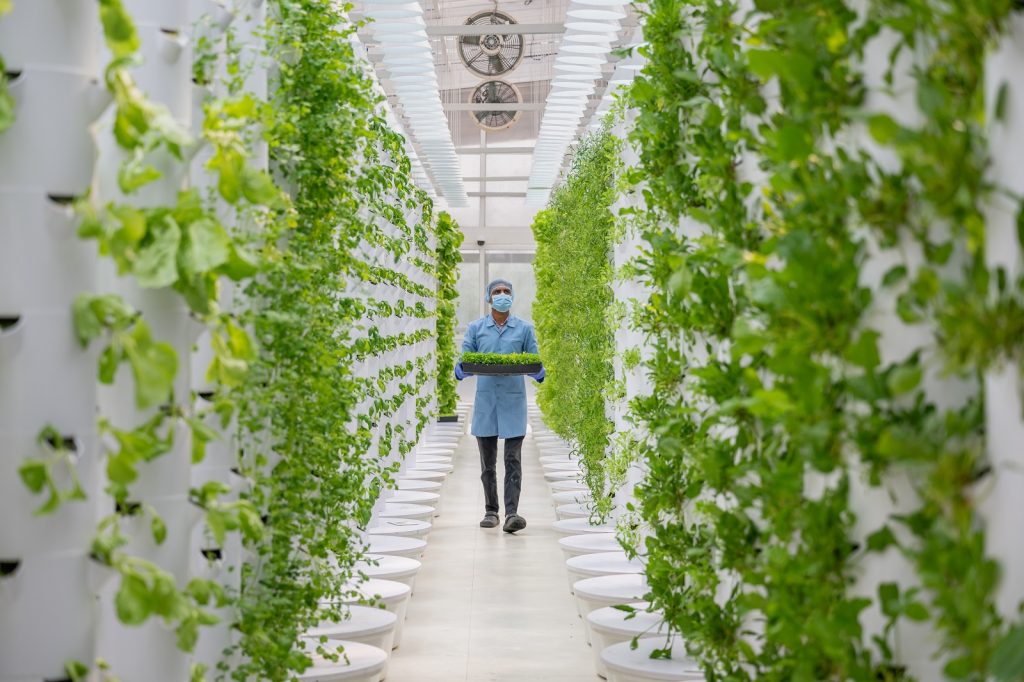
Conceived as a flexible and modular system, the farm is capable of adapting well across scales, from individual residences and housing societies to institutional campuses and urban clusters. Aeroponic towers can be configured in varying densities and heights, allowing the system to grow organically in response to demand, context, and ambition.
Net-Zero as a Design Imperative
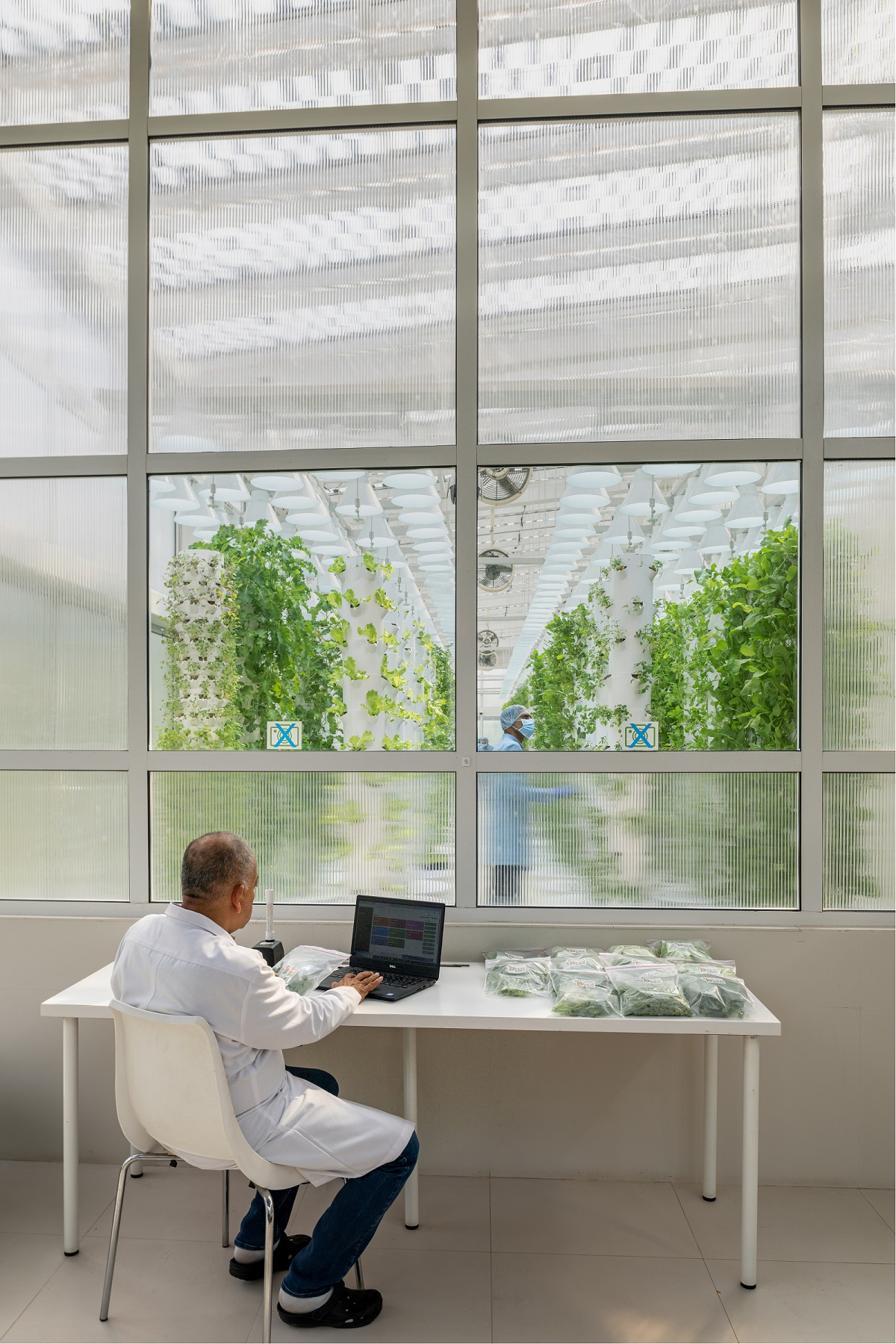
Bharatponic functions as a net-zero prototype, dramatically reducing water consumption, eliminating soil dependency, and achieving yields up to fifteen times higher than conventional farming per square meter. By localizing food production, the project shortens supply chains, reduces transportation emissions, and strengthens urban food resilience, while enabling the cultivation of fresh, pesticide-free nutrient rich produce within controlled environments.
Beyond quantifiable metrics, the project generates softer yet equally critical benefits, including improved air quality, reduced urban heat and noise, as well as a renewed relationship between people and the food they grow and consume. In doing so, Bharatponic reframes food production as a participative, decentralized urban system, integrated within everyday life.
A Living Prototype for Locally Rooted Solutions to
Global Challenges
The name Bharatponic embodies the ethos of the project, expressing solutions rooted in local realities yet scalable to global contexts. It reflects a belief that India must develop its own responses to the challenges of climate change, health, and urbanization.
Bharatponic is not presented as a finished answer, but as a living prototype, an evolving system that invites learning, adaptation, and collaboration. It represents a broader commitment to expanding the role of design in shaping urban systems, where integrated thinking becomes a catalyst for healthier cities and more responsible ways of living. At its core, it expresses a belief that design, guided by inquiry and compassion, can quietly yet meaningfully reshape the future of our cities.
"Architecture Beyond Buildings. Food as Urban
Infrastructure."
 Rajkot, Gujarat, India